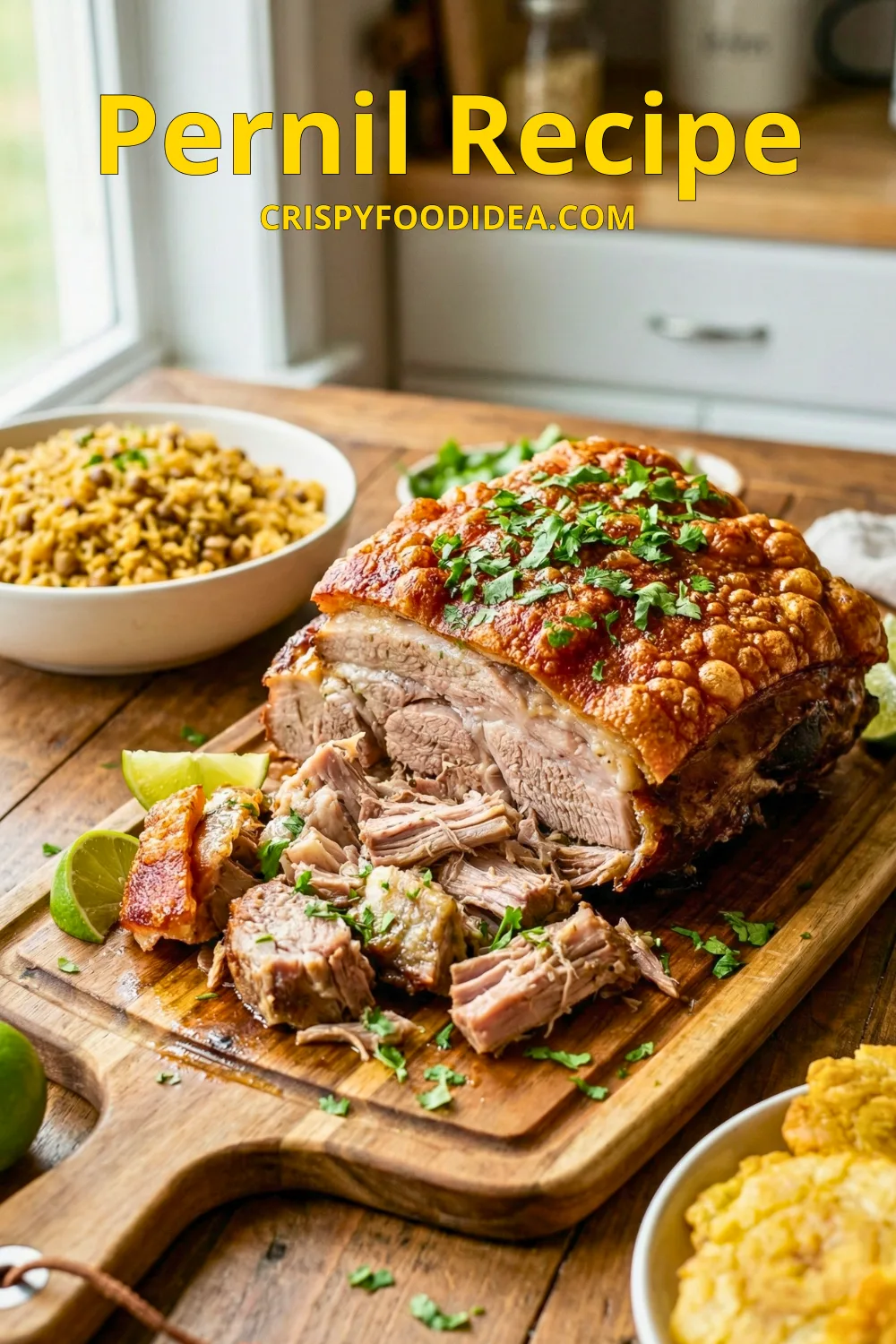
Authentic Pernil Recipe — Crispy Puerto Rican Roast Pork (Best Holiday Roast)
I’ve shared many pork recipes with you before, and today I’m bringing you a wonderful pork recipe called Puerto Rican Pernil. This best Pernil recipe that delivers crispy chicharrón skin, juicy slow-roasted pork shoulder, and bold Puerto Rican flavors. This authentic Puerto Rican Pernil is more than just a Christmas or Nochebuena tradition—it’s a flavorful, budget-friendly, high-protein, family-style main dish that brings comfort, culture, and celebration straight to your table.
What makes this version different—and better—than anything else online is the chef-tested garlic marinade, the deep seasoning technique, and the precise roasting method that guarantees fall-apart tender meat with perfectly crispy, golden-brown skin every single time. This has been my favorite pork shoulder recipe since the day I was scrolling through Instagram and saw a reel where the crackling sound of the chicharrón impressed me.
So without further ado, let’s learn about this recipe in detail.
Related: Turkey Brine Recipe
Pernil Recipe (Authentic Puerto Rican Roast Pork)
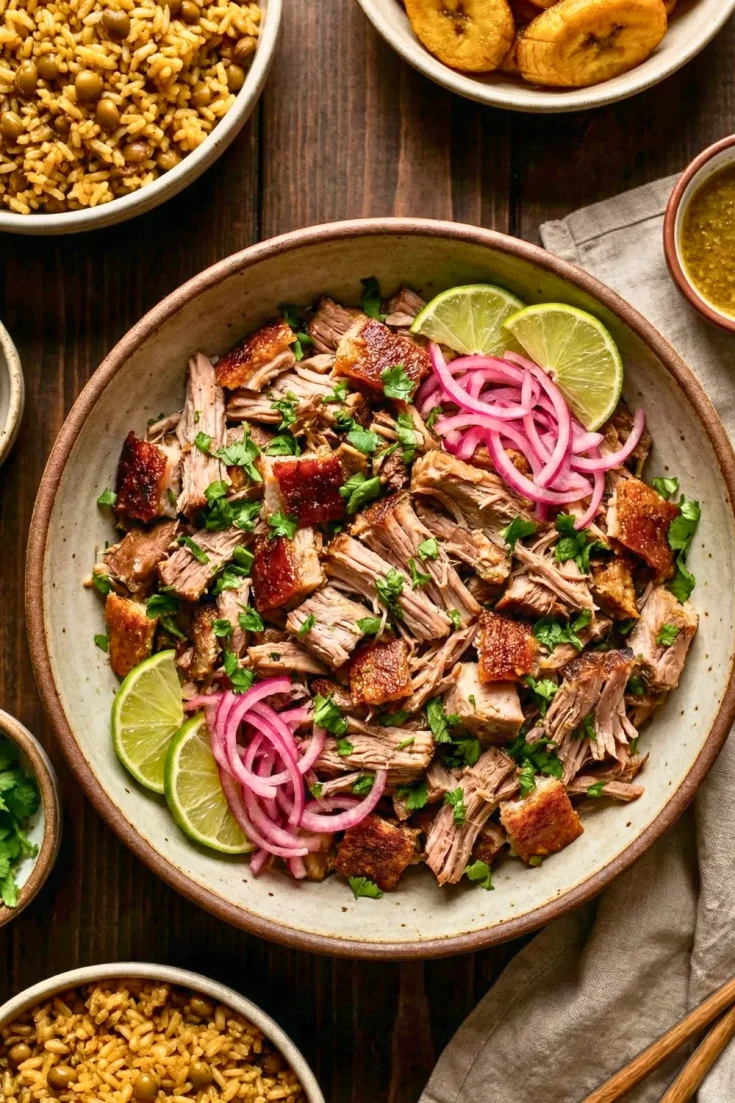
This Authentic Pernil Recipe features a slow-roasted pork shoulder marinated with a bold combination of garlic, oregano, olive oil, and adobo. The long roasting time creates fall-apart tender meat with incredibly crispy crackling
Ingredients
For the Pork
- 1 bone-in pork shoulder (7–9 lbs) – pork butt works too
- 1 tbsp kosher salt
- 2 tsp black pepper
- 1 tbsp adobo seasoning
- 1 tbsp sazón (optional but traditional)
For the Garlic Marinade (Sofrito Mix)
- 10–12 garlic cloves
- 1 tbsp dried oregano
- 1 tbsp olive oil
- 1 tbsp vinegar or lime juice
- 1 tsp cumin
- 1 tsp smoked paprika
- 1 tsp onion powder
- 1 tsp crushed red pepper flakes (optional)
Instructions
1. Prepare the Garlic Marinade
Mash or blend garlic, oregano, olive oil, vinegar, cumin, paprika, and onion powder into a paste.
2. Prep the Pork Shoulder
- Pat the pork dry.
- Lift the skin gently without removing it completely.
- Make deep cuts into the meat.
3. Season the Meat
- Rub salt, adobo, sazón, and pepper all over.
- Stuff the garlic marinade deeply into the cuts.
- Replace the skin back in place.
4. Marinate
Cover and refrigerate for at least 8 hours, ideally overnight for maximum flavor.
5. Roast Slowly
- Preheat oven to 325°F (165°C).
- Place pork skin-side up in a roasting pan.
- Cover with foil and roast for 3.5–4 hours until the meat is tender.
6. Crisp the Skin
- Remove foil.
- Increase oven temperature to 450°F (230°C).
- Roast an additional 30–45 minutes until skin becomes crackling and crispy.
7. Rest and Serve
Let the pernil rest for 20 minutes before slicing or pulling apart.
Notes
- Dry the skin well for ultra-crispy chicharrón.
- Marinate overnight for the best flavor penetration.
- Add mojo sauce or sazón with coriander & annatto for authentic Caribbean flavor.
- Cook low and slow for juicy, fall-apart meat.
- Perfect for Christmas dinner, Nochebuena, Thanksgiving, Easter lunch, and meal prep.
- Leftovers make amazing pernil sandwiches, tacos, rice bowls, and empanada fillings.
Serving Suggestions
- Serve with Arroz con Gandules (Puerto Rican rice with pigeon peas)
- Tostones or maduros
- Fresh salad or cabbage slaw
- Sofrito rice bowl
- Garlic mashed potatoes
- Plantain stuffing
Nutrition Information:
Yield:
10Serving Size:
1Amount Per Serving: Calories: 35Total Fat: 2gSaturated Fat: 1gUnsaturated Fat: 1gCholesterol: 8mgSodium: 1006mgCarbohydrates: 3gFiber: 1gSugar: 0gProtein: 3g
Related: Oyster Stuffing Recipes
What Is Pernil?
Pernil is a slow-roasted pork shoulder that’s deeply seasoned with a bold blend of garlic, oregano, adobo, sazón, olive oil, and vinegar, then roasted until it becomes incredibly tender and juicy inside—with that signature crispy chicharrón-style skin on top. It’s one of the most iconic dishes in Puerto Rican cuisine, especially during Nochebuena (Christmas Eve), holidays, family gatherings, and big celebrations. At its core, Pernil is the perfect combination of comfort food, holiday tradition, and high-flavor Latin cooking.
⭐ A Simple Definition
Pernil is a traditional Puerto Rican roasted pork shoulder, marinated overnight in garlic and herbs, and slow-roasted until the meat becomes fall-apart tender and the skin turns crispy and golden.
Parnil is native to Puerto Rican cuisine, but you’ll also find a variety of dishes in the Dominican Republic, Cuba (often called “parnil asado” with mojo), and other Caribbean and Latin American regions. Here, parnil is juicy, garlicky, slightly sour, and full of the deep roasted pork flavor. The crispy skin, often called “cuero” or “chicharrón,” adds an irresistible crunch.
For many families, parnil is the centerpiece of Nochebuena (Christmas Eve dinner), Three Kings Day, Thanksgiving, New Year’s Eve, and more. Many home cooks also love parnil recipe because it’s affordable (a huge crowd-feeding piece of meat), easy for beginners, almost foolproof, perfect for meal prep, and can feed a large group without the expense.
Related: Wendy’s Chili Recipe
Ingredient Breakdown For — What you’ll need & why For Nochebuena Dinner
Check out the ingredients needed to make the best parnil recipe, which is given in detail here.
A. Main ingredients (must-haves)
Start here — these ingredients are essential for authentic flavor and for achieving that signature tender meat + crispy chicharrón skin.
- 1 bone-in pork shoulder (7–9 lbs) — the ideal cut for pernil; look for a decent fat cap to keep meat juicy.
- 10–12 garlic cloves — fresh garlic drives the classic Puerto Rican garlic pork flavor.
- 1 tbsp dried oregano — earthy, aromatic; use fresh if available for brighter flavor.
- 1–2 tbsp kosher salt — seasoning & brining role; essential for both taste and crackling formation.
- 1 tbsp adobo seasoning — an all-in-one Latin spice blend.
- 1 tbsp sazón (optional) — for authentic color and depth; contains annatto/coriander notes.
- 1–2 tbsp olive oil or neutral oil — to bind the marinade and help heat transfer.
- 1–2 tbsp vinegar or lime juice — acid helps tenderize and brightens the marinade.
- 1 tsp smoked paprika / cumin — optional, adds warmth.
B. Pantry staples & optional flavor boosters
- Onion powder / minced onion — adds depth without extra prep.
- Crushed red pepper — optional for a gentle heat.
- Fresh cilantro or parsley — garnish & brightness.
- Annatto (achiote) or sazón — for authentic color and aroma.
- Fresh lime or orange juice — alternate to vinegar for a citrus mojo variant.
| Ingredient | Substitution | Why & When |
|---|---|---|
| Pork shoulder (bone-in) | Pork butt (boneless) or picnic roast | Boneless is easier to carve and fits smaller ovens; bone gives more flavor. Use bone-in for traditional texture. |
| Vinegar | Lime or orange juice | Citrus gives fresher mojo; vinegar gives deeper tenderizing. Use citrus for a brighter Cuban-style pernil. |
| Sazón | Smoked paprika + coriander + garlic powder | |
| Garlic cloves | Pre-minced garlic or garlic paste | Faster prep for busy cooks. Recommend fresh if possible for best aroma. |
| Adobo seasoning (store-bought) | Homemade mix: salt + pepper + garlic powder + oregano |
Suggested: Brigadeiro Recipe
Step-by-Step Pernil Recipe (Slow-Roasted Pork Shoulder with Crispy Skin)
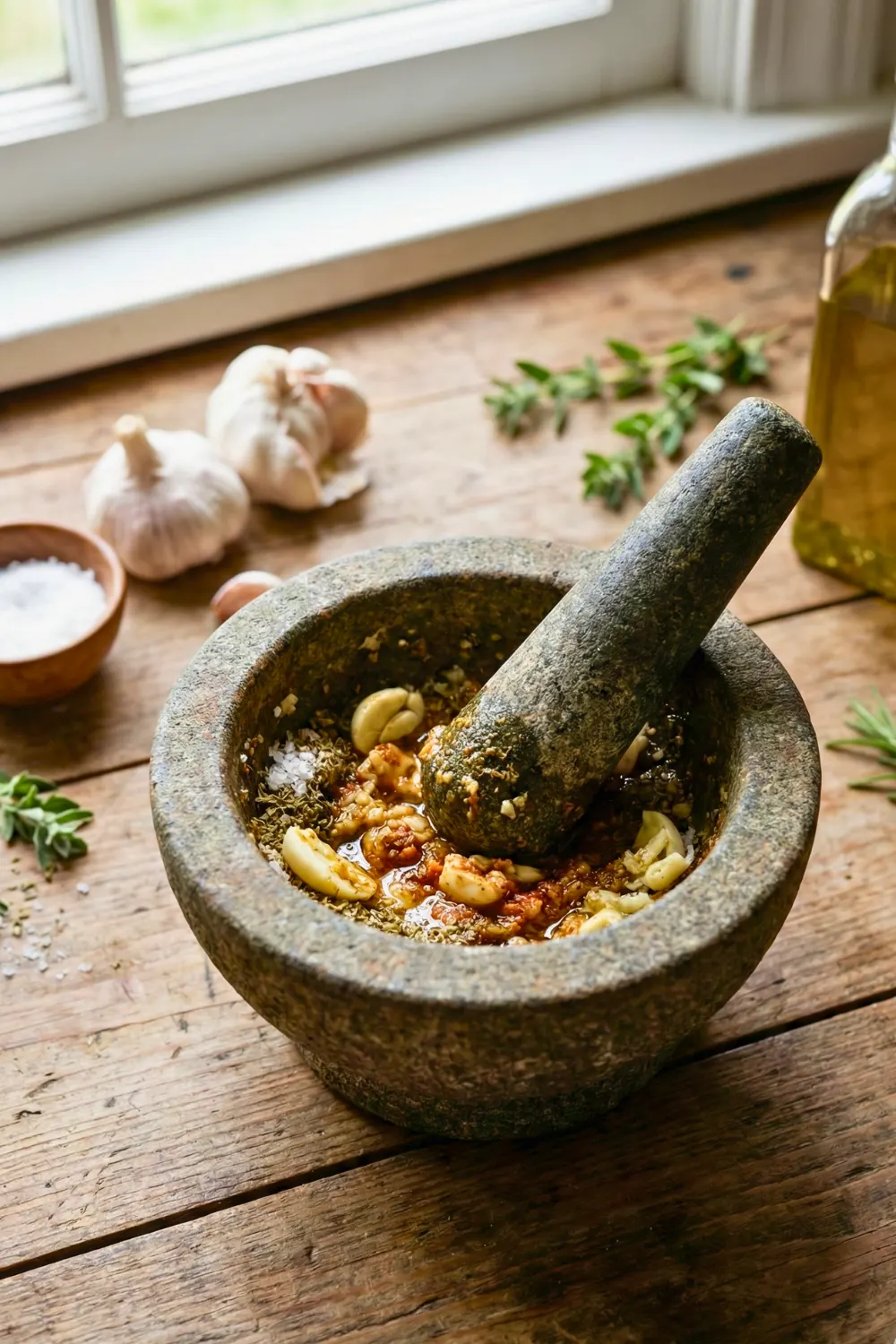
Step 1 — Make the Garlic Marinade (Mojo-Style)
In a blender or mortar, smash 10–12 garlic cloves with 1 tbsp salt, 1 tbsp dried oregano, 1 tsp cumin, 1 tsp smoked paprika, 1 tbsp olive oil and 2 tbsp vinegar (or lime). Blend to a coarse paste — this potent garlic marinade is the flavor backbone of authentic Puerto Rican pernil.
Garlic paste + acid helps the marinade penetrate deep into the pork shoulder — a must for juicy, flavorful meat.
Step 2 — Prepare the Pork: Deep Cuts & Dry Skin
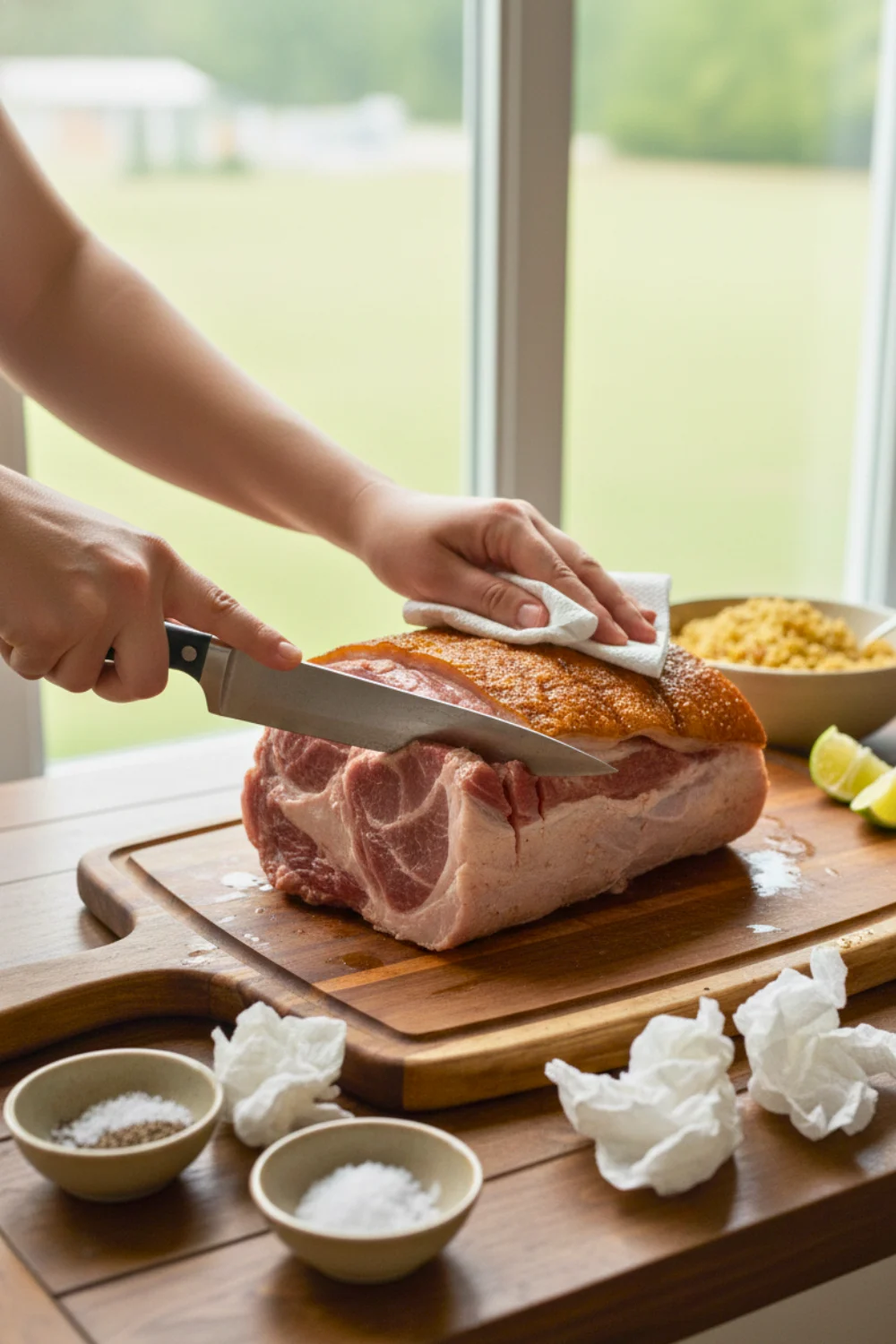
Pat the 7–9 lb bone-in pork shoulder very dry. Use a sharp knife to make deep slits into the meat (1–2 inches deep) — these pockets are where the marinade goes. If you want crispy skin, gently separate the skin from the fat but leave it mostly attached; dry the skin thoroughly with paper towels.
Pro tip: Dry skin + salt = the secret to crackling chicharrón. For best results, leave the pork uncovered in the fridge for 2–4 hours before rubbing to remove surface moisture.
Step 3 — Rub & Stuff: Season Every Pocket
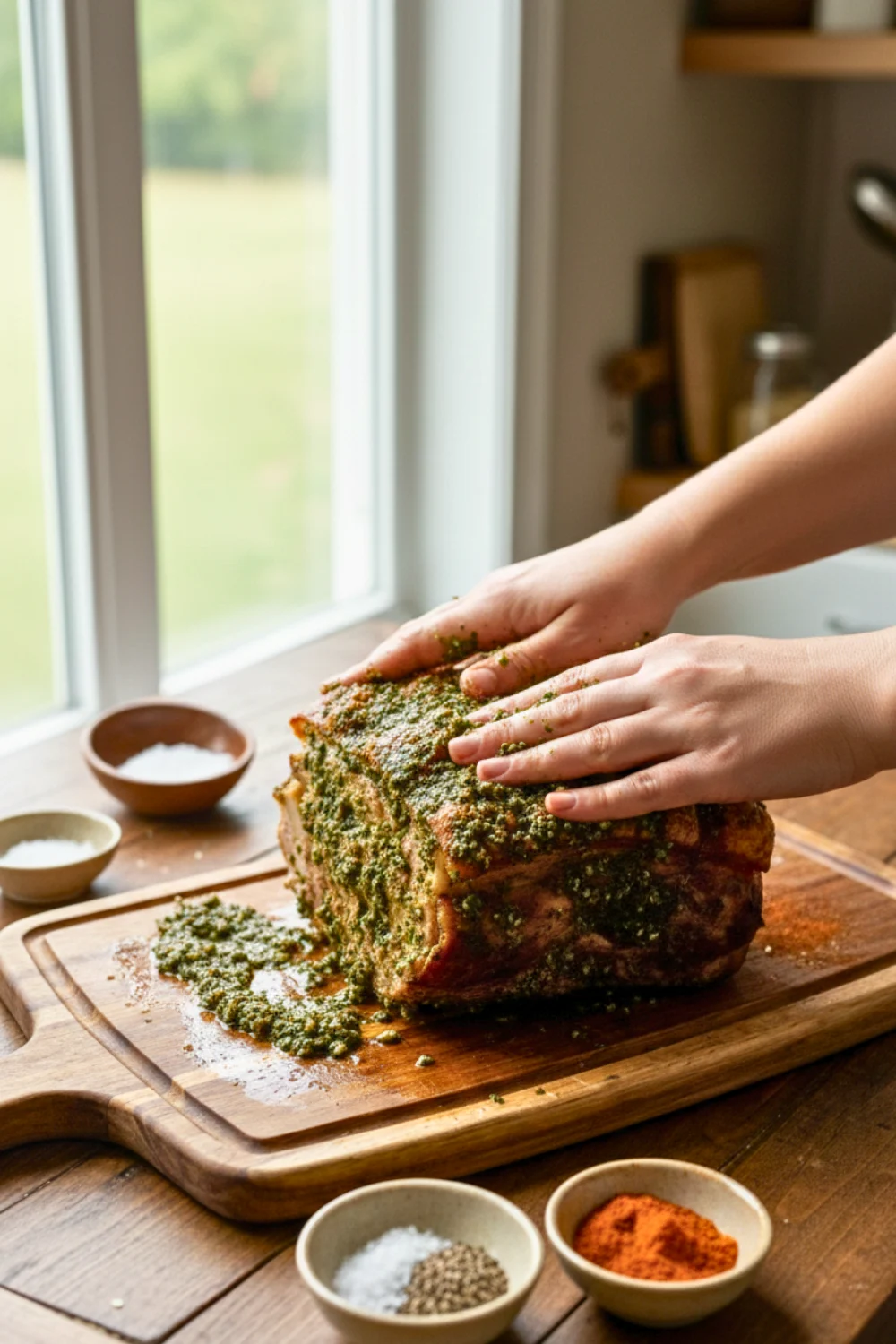
Rub the meat generously with salt and black pepper. Massage the garlic marinade deep into each cavity and under the skin if possible. Add 1 tablespoon adobo and 1 tablespoon sazon – if using – both of which provide a traditional, savory Latin flavor. Massage until the meat is evenly coated.
Step 4 — Marinate Overnight (8–24 Hours)
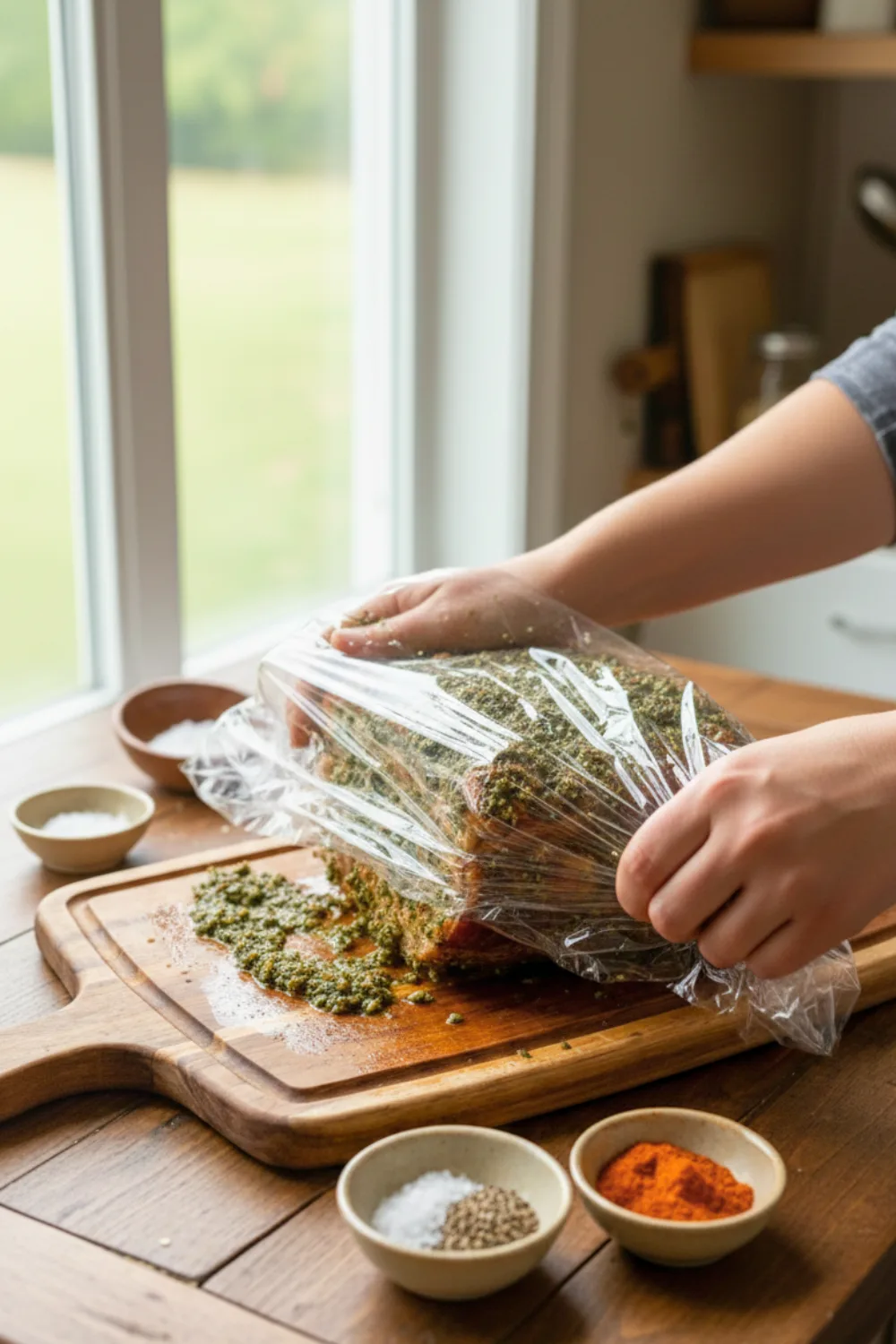
Cover tightly and refrigerate for at least 8 hours – ideally 24 hours. Overnight marinating is the best option because more time = deeper flavor. If you’re short on time, at least 4-6 hours will still enhance the flavor.
Food safety: keep the pork refrigerated below 40°F (4°C) while marinating and use a covered non-reactive container.
Step 5 — Roast Low & Slow: 325°F / 165°C
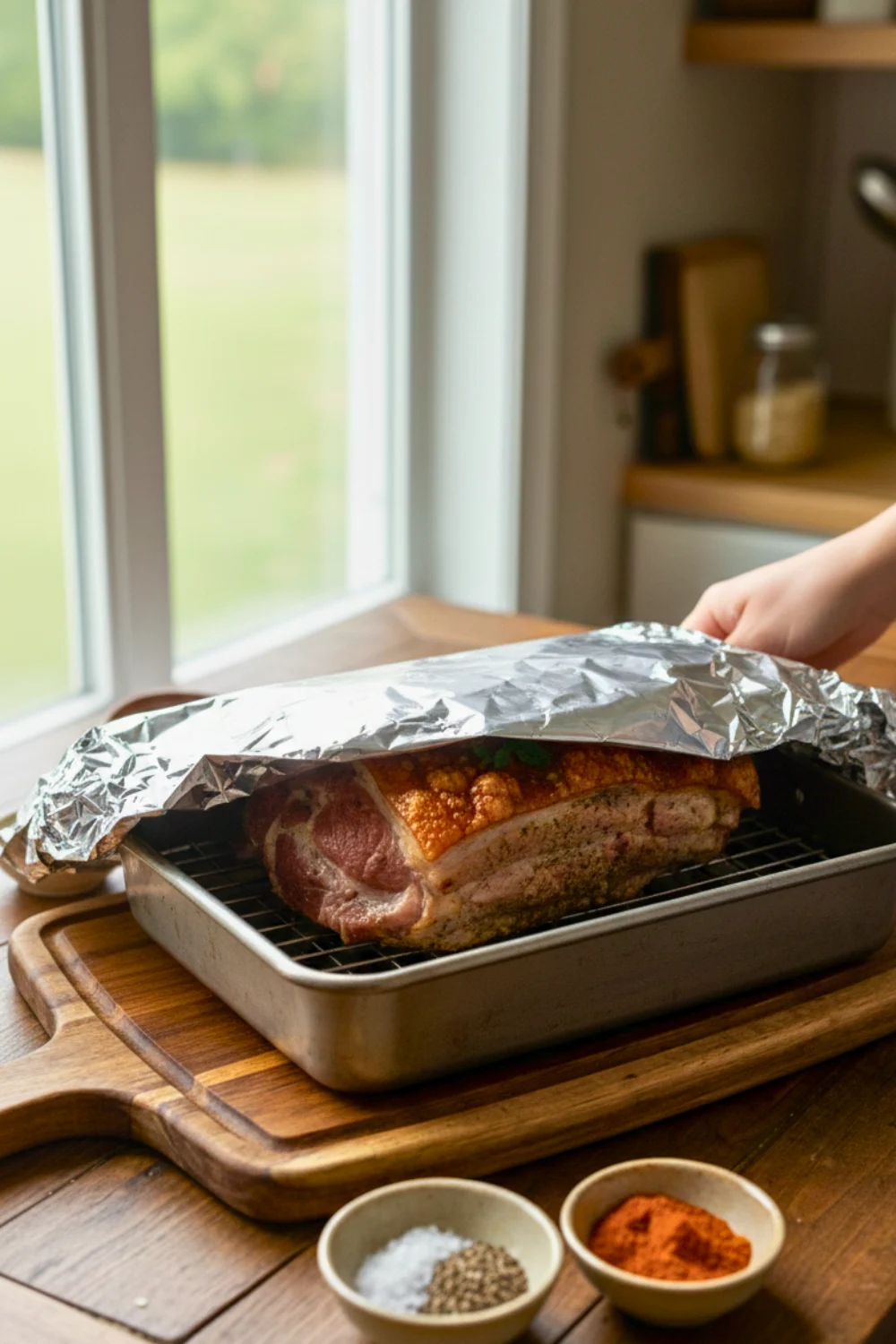
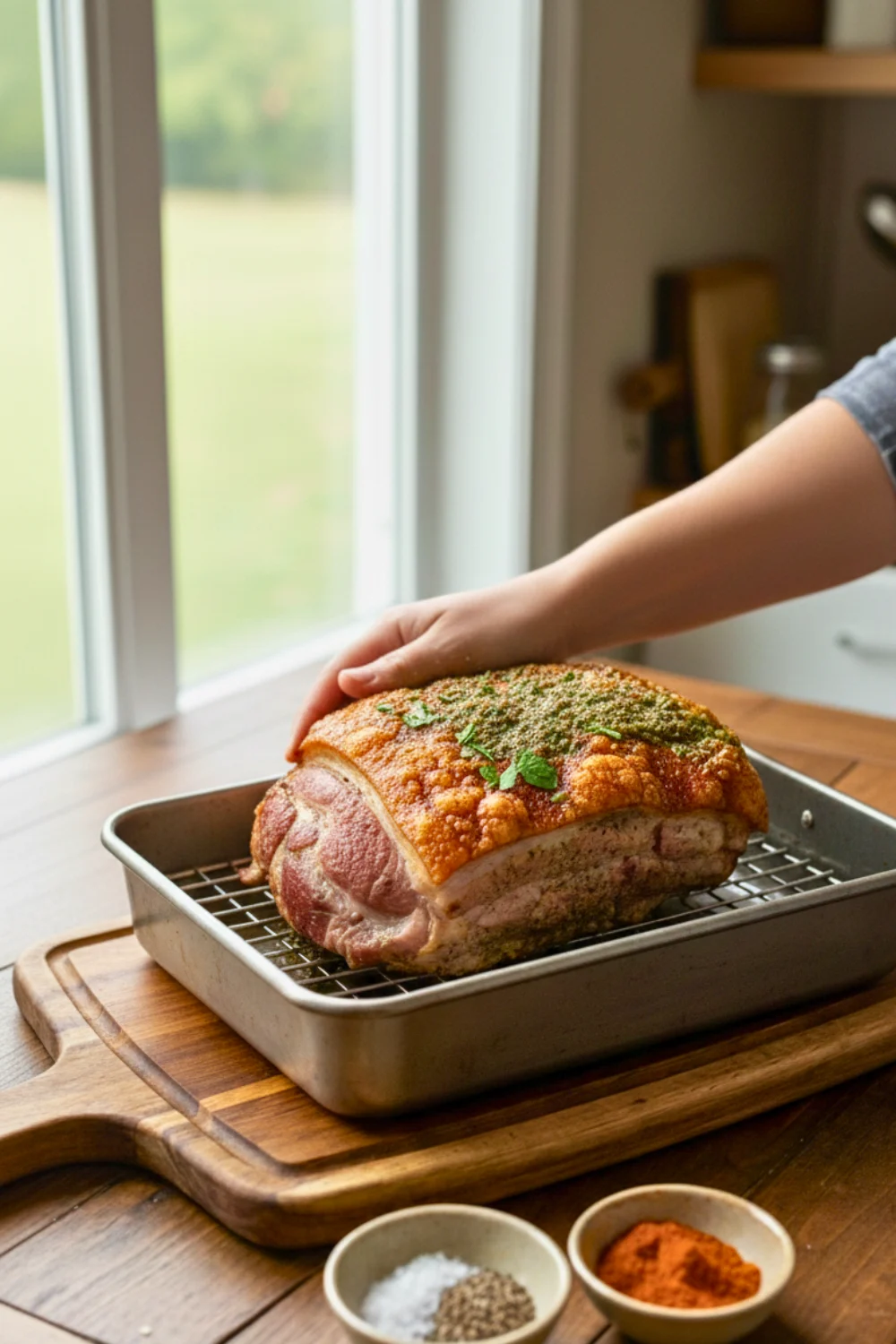
Preheat oven to 325°F (165°C). Place the pork skin-side up on a rack in a roasting pan. Cover loosely with foil and roast for about 30–35 minutes per pound until the meat is fork-tender (internal temp ~195°F / 90°C for pull-apart tenderness). For a 7 lb shoulder expect ~4 hours; adjust for weight.
Tip: use a probe thermometer to avoid overcooking — this prevents dry pernil and helps you time the final crisp.
Step 6 — Blast With High Heat to Crisp the Skin
Once internal temp and tenderness are right, remove foil and increase oven temp to 450°F (230°C) (or use broil carefully). Roast 25–45 minutes until the skin puffs and becomes crackling chicharrón. Watch closely — high heat can go from perfect to charred fast.
Pro move: if the skin isn’t crisping evenly, use a kitchen torch on stubborn spots or finish under the broiler for 2–3 minutes while monitoring constantly.
Step 7 — Rest, Carve, and Serve (Let It Breathe)
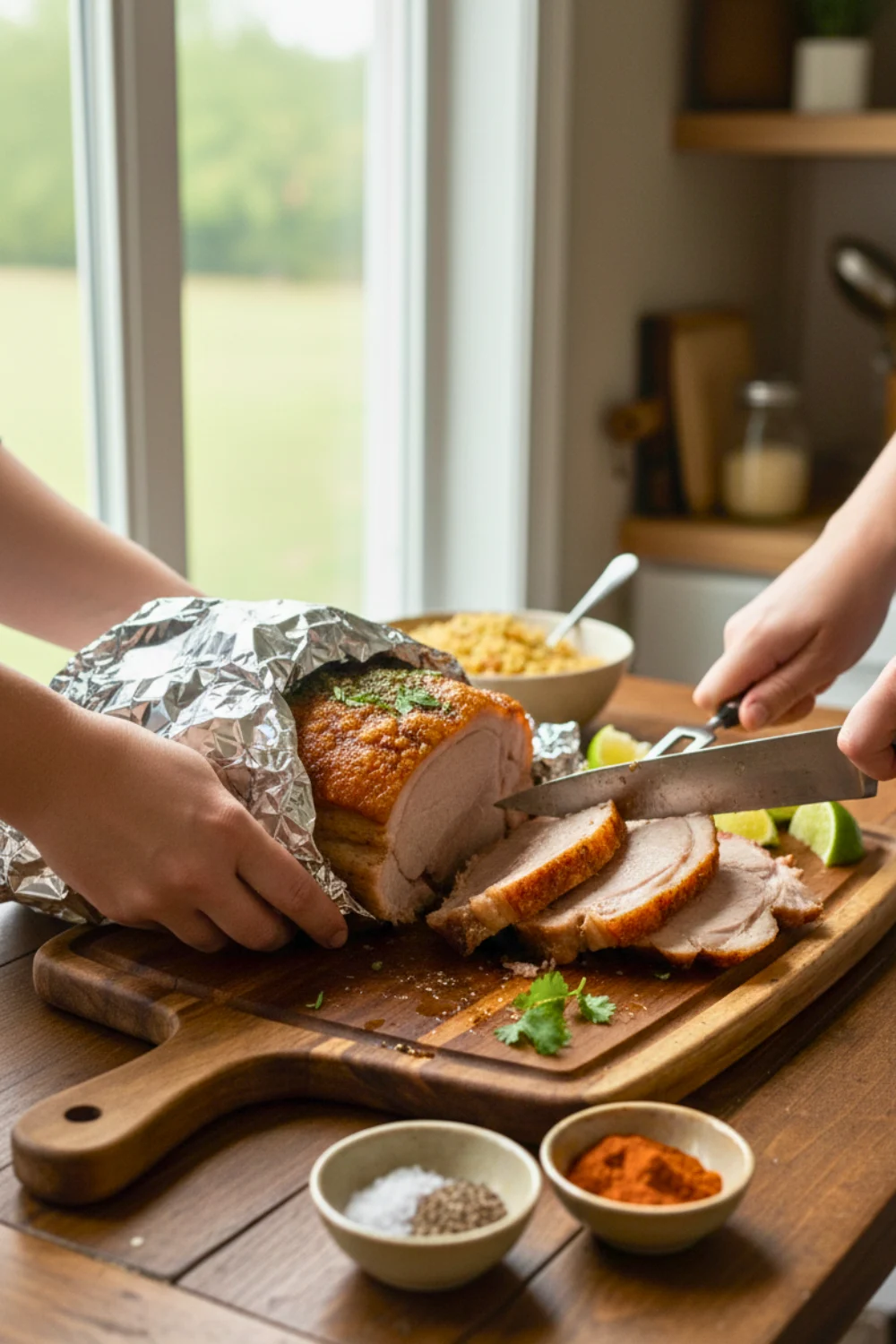
Rest the pernil at least 20 minutes (tent with foil). This lets juices redistribute and keeps meat moist. Carve against the grain for slices, or pull apart for shredded pernil — both are valid serving styles. Serve with arroz con gandules, tostones, or fresh salad.
Related: Salisbury Steak Recipe
Pernil Variations — choose your vibe: citrus, mojo, speed, or party
Mix orange juice, garlic, oregano & a splash of lime. Massage under the skin and marinate 8–24 hrs. Roast low & slow, finish with a high-heat blast for crackling.
Blend a concentrated mojo (garlic, sour orange, cumin, bay). Pour over pork, roast, and crisp the skin at the end. Use reserved mojo to spoon over slices.
Score, season, air-fry at 320°F until tender (45–60 min), then blister at 400–420°F for 8–12 min. Let rest before slicing.
Sear, pressure cook 60–75 minutes, shred, then optionally broil with reserved juices to add color and depth.
Toss shredded pork with pan juices or mojo, pile on rolls with slaw or pickles. Great for potlucks and tailgates.
Use no-sugar seasonings, avoid sweet sazon mixes. Serve with low-carb sides like roasted cauliflower or green salad.
Related: Romanian Mici Recipe
What to Do With Leftover Pernil Recipe (Easy, Profitable & Meal-Prep Friendly)
Got extra pernil? Awesome, leftover pernil can make some amazing recipes that you won’t even realize are made with so much leftover pernil.
1. Pernil Sandwich — The #1 leftover winner
Pull warm pernil (shredded), add garlicky mojo or mayo, pickled onions, avocado, and press on a hot skillet or sandwich press until the edges are crisp. Serve on crusty bolillo or Cuban bread.
2. Pernil Tacos
Warm chopped pernil, cilantro, diced onion, a squeeze of lime, cotija or queso fresco, and spicy salsa on warm corn tortillas. Add pickled jalapeños for texture.
3. Pernil Fried Rice / Rice Bowl
Sauté veg (carrot, peas, scallion), add cold day-old rice, toss in chopped pernil, splash of soy + a little mojo or garlic oil, toss until hot. Finish with sesame or scallions.
4. Pernil Hash — Breakfast that beats boring eggs
Crisp diced potatoes, add onions/peppers, fold in chopped pernil, crack eggs on top, and bake or cover until eggs set. Finish with hot sauce.
5. Pernil Empanadas
Fill empanada dough with shredded pernil + cheese, seal, bake or fry until golden. Serve with a garlicky aioli.
6. Pernil Soup or Stew
Simmer pernil bones + shredded meat with root veg, rice or yuca, and herbs until cozy. Add lime & cilantro at the end.
7. Pernil Pizza or Flatbread
Use flatbread or pizza dough, spread a thin layer of mojo or garlic sauce, top with shredded pernil, onions, cheese, and bake until melty. Finish with cilantro.
8. Pernil Sliders
Load mini brioche with warm pulled pernil, slaw, and a tangy sauce. Perfect for potlucks. This is one of my favorite leftover pernil recipes.
Pernil Recipe — Common Questions Answered
Marinate at least 8 hours, but 24 hours (overnight) yields the deepest garlic-oregano flavor.
Use a bone-in pork shoulder (a.k.a. pork butt). It gives the ideal fat content and connective tissue for slow roasting and shredding. If unavailable, a boneless pork shoulder works, but bone-in locks in more flavor and yields juicier meat.
Three simple steps:
- Dry the skin thoroughly (pat with paper towels) and leave uncovered in the fridge for several hours if possible.
- Roast low & slow (325°F / 160–165°C) until tender, then blast with high heat (425–450°F / 220–230°C) for 25–45 minutes uncovered to puff and crackle the skin.
- Optionally, score the skin or poke small holes to render fat evenly. Don’t cover when crisping.
As a rule of thumb: roast at 325°F (160–165°C) for about 30–40 minutes per pound until the meat is fork-tender. For a 7–9 lb shoulder, expect ~4–5 hours. Finish with a high-heat crisping stage (425–450°F) for 25–45 minutes.
Yes. Make the pernil a day ahead—store the meat and the crispy skin separately if possible. To reheat and restore crispiness, reheat meat covered at 325°F until warm, then place skin under a high broil or in a 450°F oven for a few minutes to re-crisp.
If you’re missing sazón, combine paprika, garlic powder, turmeric/annatto (for color), and a pinch of cumin. For adobo, a mix of salt, garlic powder, onion powder, oregano and black pepper works well. Fresh garlic + oregano are the most important flavor drivers—don’t skip them.
Yes — for food safety, cool within two hours, refrigerate in shallow containers and reheat to at least 165°F (74°C) before serving. Making pernil ahead is a great holiday strategy—just follow safe cooling and reheating steps.
Yes—use pressure cookers or slow cookers to get fork-tender meat faster or hands-off. However, you’ll still need to finish the pork under high heat in the oven or under a broiler to crisp the skin. Try Instant Pot pernil for fast shredding, then broil for crackling.
Let the pernil rest 15–20 minutes after roasting. For slices, use a sharp chef’s knife against the grain. For pulled pernil, shred with two forks or use meat claws—reserve pan juices to keep the pulled pork moist.
Classic pairings: Arroz con Gandules, tostones, maduros (sweet plantains), garlic mashed potatoes, cabbage slaw, and a simple Mojo sauce.
Use low-sodium adobo or reduce salt by 30–40%. Replace any sugar in a rub with a keto-friendly sweetener if needed. Pernil is naturally keto-friendly (high-fat, low-carb) — focus on seasoning adjustments for sodium control.
Common causes: overcooking, insufficient fat on the cut, or not resting the meat. Fixes: pick a fatty bone-in shoulder, monitor internal temp (pork is fine at 145°F but for shreddable pernil roast to 190–205°F), and rest before slicing. Always reserve pan juices to moisten meat when serving.
If you like this article about the Authentic Puerto Rican Roast Pork | Pernil Recipe, please share it with your friends on Facebook and Pinterest. Also, subscribe to my blog to get all the latest content first on your mobile.