Ugali Recipe – Authentic East African Cornmeal Staple (Easy, Gluten-Free & Budget-Friendly)
Everything you need to know before making Ugali at home – ingredients, texture control, nutrition, variations, and what to eat it with.
Today I will discuss a staple recipe from East Africa made with only maize (corn) flour and water, which is as easy to prepare as it is delicious and popular. It’s called ugali, and this authentic ugali recipe is truly simple to make and has been enjoyed by the people of Kenya, Tanzania, and Uganda for generations.
In today’s world of rising food costs, diet restrictions, and ultra-processed meals, maize flour ugali stands out as a clean, plant-based, high-energy food that is both comforting and practical. This simple cornmeal recipe is not only a wonderful example of African cuisine but also an excellent choice for gluten-free diets and budget-friendly family meals. In short, it is one of the most versatile low-cost healthy meals.
Suggested: Homemade Tartar Sauce Recipe
Ugali Recipe (Authentic East African Staple)
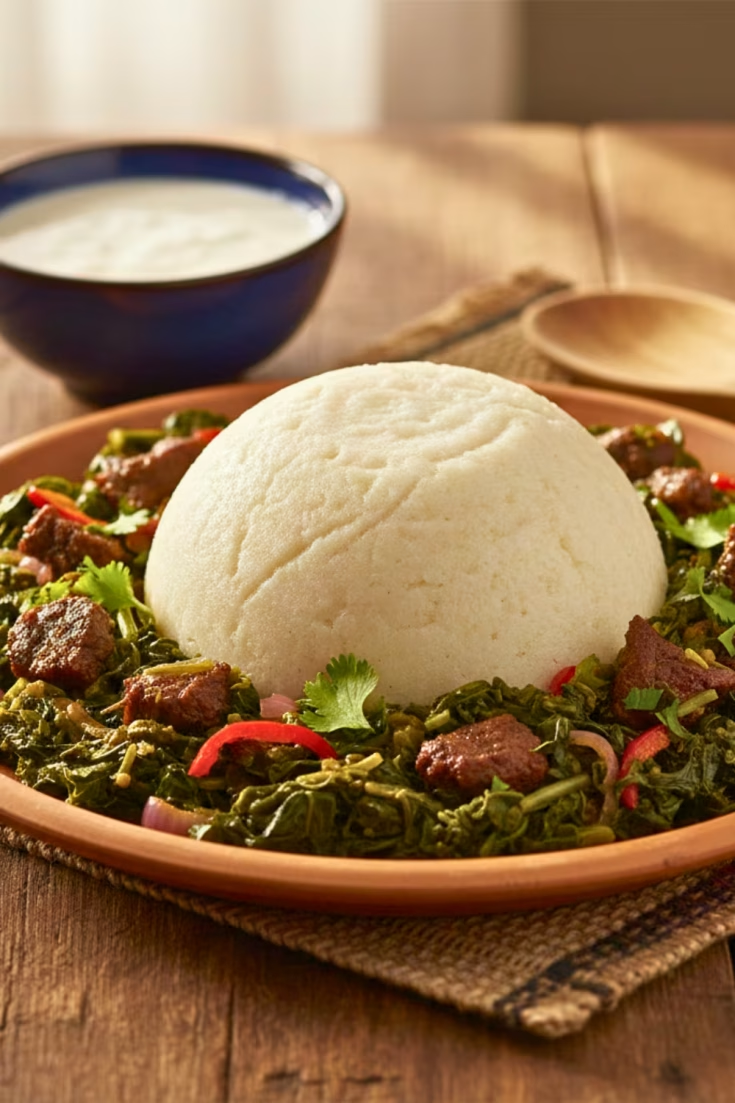
Ugali is a simple, gluten-free maize flour dish that serves as a filling staple food across East Africa, especially in Kenya, Tanzania, and Uganda. It is budget-friendly, naturally vegan, and pairs perfectly with vegetables, stews, meat, or fish.
Ingredients
- 2 cups water
- 1 cup maize flour (white cornmeal)
- ¼ tsp salt (optional)
Instructions
- Boil the water
Bring 2 cups of water to a rolling boil in a heavy-bottom saucepan. - Add maize flour gradually
Reduce heat to medium and slowly add maize flour while stirring continuously to avoid lumps. - Stir and thicken
Use a wooden spoon to stir firmly until the mixture thickens and pulls away from the sides of the pan. - Cook until firm
Lower heat and cook for 3–5 minutes, pressing and folding the ugali until smooth and fully cooked. - Shape and serve
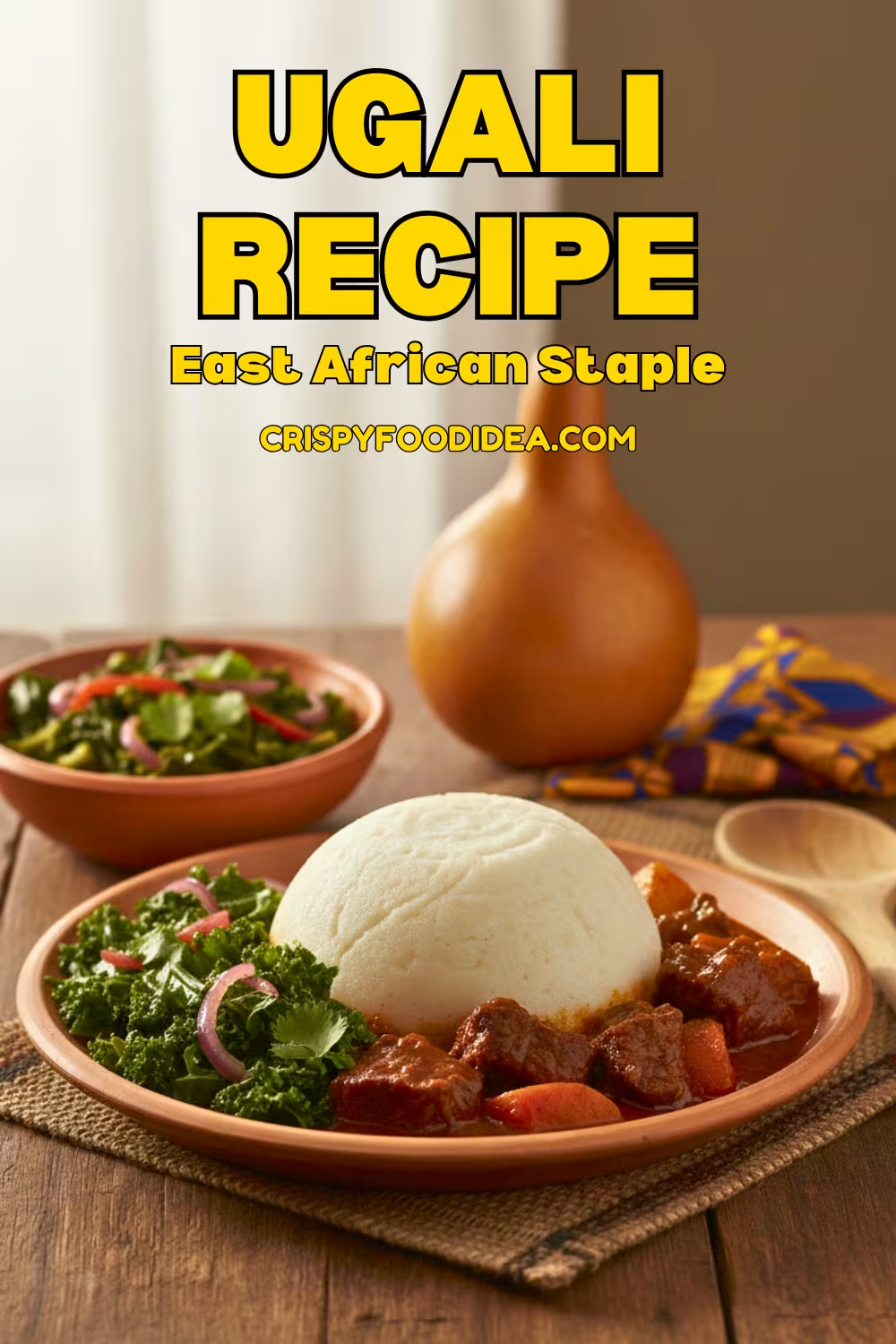
Turn onto a plate, shape into a dome, and serve hot.
Notes
- Stir continuously to prevent lumps
- Use medium heat to avoid burning
- Add flour slowly for better texture
- For softer ugali, slightly reduce flour
- For firmer ugali, cook 1–2 minutes longer
Serving Suggestions
Ugali tastes best when served with:
- Sukuma wiki (collard greens)
- Lentil or chickpea curry
- Beef or chicken stew
- Grilled fish or tilapia
- Vegetable coconut curry
Nutrition Information:
Yield:
4Serving Size:
1Amount Per Serving: Calories: 227Total Fat: 1gSaturated Fat: 0gUnsaturated Fat: 1gSodium: 143mgCarbohydrates: 48gFiber: 2gSugar: 0gProtein: 6g
Related: Authentic Onion Dolma Recipe
What Is Ugali?
Ugali is a traditional African staple food made by cooking maize flour (cornmeal) with water until it forms a thick, smooth dough. It is one of the most widely consumed foods in East Africa and is especially popular in Kenya, Tanzania, and Uganda.
Often described as the backbone of African home cooking, ugali is valued for being gluten-free, budget-friendly, naturally vegan, and highly filling. Its mild, neutral taste makes it the perfect companion to flavorful dishes like vegetable stews, lentils, beans, fish curry, or meat gravies.
Unlike porridge, ugali is cooked until firm and eaten with the hands. Small portions are rolled, pressed, and used to scoop up food — a method that makes meals feel more satisfying and culturally immersive.
Today, ugali is no longer just a traditional food — it is gaining global attention as a smart, economical, and culturally rich alternative to processed carbohydrates, especially for people interested in healthy lifestyles, sustainable diets, and authentic world cuisines.
Related: Pickled Red Onion Recipe
How to Make Ugali (Step-by-Step Traditional Method of African Ugali Recipe)
Making ugali at home is simple, fast, and budget-friendly. This authentic African ugali recipe uses just maize flour and water and is naturally gluten-free, vegan, and dairy-free. Follow these steps carefully to get smooth, lump-free ugali every time.
Step 1: Boil the Water Properly

Pour 2 cups of water into a heavy-bottom saucepan and bring it to a rolling boil over medium-high heat. This step is crucial for making perfect ugali because adding maize flour to water that is not hot enough can cause lumps.
Step 2: Add Maize Flour Slowly

Reduce the heat to medium and gradually add maize flour while stirring continuously using a wooden spoon. Adding the flour slowly prevents lumps and helps achieve a smooth cornmeal dough.
Step 3: Stir Until Thick and Firm

Continue stirring firmly as the mixture thickens. The ugali will begin to pull away from the sides of the pan and form a thick mass. This is when ugali starts to take shape.
For soft ugali, use slightly less flour. For firm ugali, add a little more flour and cook longer.
Step 4: Cook and Fold for Perfect Texture

Lower the heat and cook for 3–5 minutes, pressing and folding the ugali against the pan. This traditional technique removes raw flour taste and ensures even cooking.
Well-cooked ugali should be smooth, firm, and slightly glossy.
Step 5: Shape and Serve Hot
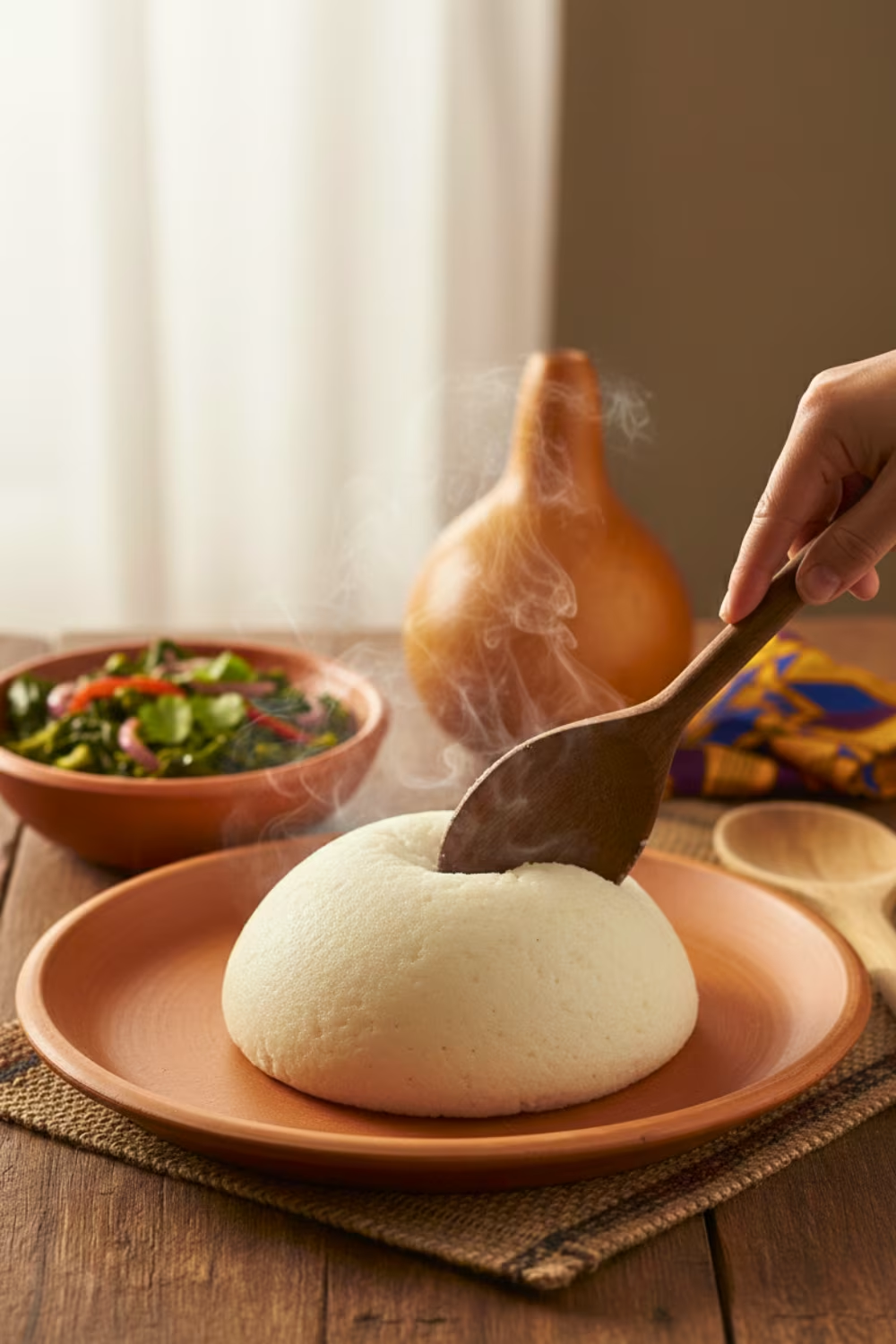
Turn the cooked ugali onto a plate and shape it into a dome using a spoon. Serve immediately while hot.
Ugali pairs perfectly with vegetable stews, lentils, beans, fish curry, chicken stew, or leafy greens, making it ideal for healthy African meals and budget-friendly family dinners.
Related: Unique Poke Bowl Recipes
Ugali Texture Control Guide (Soft, Firm & Lump-Free Every Time)
Getting the perfect ugali texture is what separates an average ugali recipe from an authentic, restaurant-style African meal.
Understanding Ugali Texture (Before You Start Cooking)
Ugali texture depends on three factors only:
- Maize flour quality (fine vs coarse grind)
- Water-to-flour ratio
- Heat control and stirring technique
How to Make Soft Ugali (Creamy & Easy to Scoop)
Soft ugali is ideal for beginners, kids, and anyone pairing ugali with vegetable curry, lentils, sukuma wiki, or light stews.
- Use slightly more water than standard
- Add maize flour slowly while stirring continuously
- Cook on medium heat to avoid over-thickening
Best keyword match: soft ugali recipe, smooth ugali, easy ugali for beginners
How to Make Firm Ugali (Traditional & Hand-Shaped)
Firm ugali is the traditional choice across Kenya and Tanzania. It should be strong enough to tear with fingers and scoop meat or fish without breaking.
- Use less water and a slightly higher flour ratio
- Cook for 1–2 extra minutes
- Press and fold ugali against the pan for structure
Fixing Common Ugali Texture Problems
Ugali Too Hard
Caused by too much maize flour or overcooking. Fix it by adding 2–3 tablespoons hot water and mixing gently.
Ugali Too Soft or Runny
Caused by excess water. Fix by adding small amounts of maize flour and cooking longer.
Lumpy Ugali
Happens when flour is added too fast. Fix by lowering heat and pressing lumps with a wooden spoon.
Best Pan, Spoon & Heat Level for Perfect Ugali
- Pan: Heavy-bottom saucepan or cast iron pot
- Spoon: Wooden spoon (prevents sticking)
- Heat: Medium to low for controlled thickening
These small equipment choices significantly improve ugali texture and reduce cooking errors.
Suggested: Lemon Pepper Zucchini Pasta With Dill
Ugali Recipe Variations Across Africa (Regional, Grain-Based & Healthy Options)
Ugali is not just one recipe—it’s a continent-wide staple food with deep cultural roots. Across Africa, ugali changes based on local grains, climate, nutrition needs, and affordability.
Below are the most popular and nutritionally important ugali variations across Africa, explained in a way that helps you choose the best option for your diet, health goals, and taste.
Kenyan Ugali (White Maize Ugali)
Kenyan ugali is made using finely ground white maize flour and cooked until firm. It has a neutral taste, making it perfect for pairing with vegetables, beans, meat, or fish.
Kenyan ugali is especially popular for people looking for cheap healthy meals, gluten-free dinner ideas, and filling family food.
Tanzanian Ugali (Stiffer & Extra Filling)
Tanzanian ugali is traditionally cooked stiffer and denser than Kenyan ugali. This texture allows it to be eaten with the hands and dipped into sauces, stews, and coconut-based dishes.
Because it keeps you full longer, this version is often recommended for manual workers, athletes, and people needing high-energy meals.
Millet Ugali (High-Protein & Diabetic-Friendly)
Millet ugali is made using finger millet or pearl millet flour. It is darker in color, slightly nutty in taste, and significantly higher in protein, fiber, and minerals than regular maize ugali.
Sorghum Ugali (Iron-Rich & Gut-Healthy)
Sorghum ugali is common in parts of Uganda, Kenya, and Southern Africa. It has a slightly tangy flavor and is naturally rich in iron, antioxidants, and resistant starch.
Health-conscious people choose sorghum ugali for gut health, anemia prevention, and clean eating lifestyles.
Cassava Ugali (Naturally Grain-Free)
Cassava ugali is made from cassava flour and is common in coastal and tropical regions. Unlike maize ugali, this version is grain-free and extremely easy to digest.
Related: Chicken Cobbler Recipe
What to Eat With Ugali (Best Side Dishes & Meal Pairings)
Ugali recipe has a mild, neutral flavor, which makes it the perfect base for a wide range of healthy African meals, budget-friendly dinners, and gluten-free comfort food recipes. Traditionally eaten with hands, ugali works best when paired with saucy, flavorful dishes that balance its dense texture.
🥬 Vegetable-Based Dishes (Healthy & Vegan)
Vegetable sides are the most common and healthiest way to eat ugali. These pairings are ideal for vegan diets, weight-conscious meals, and low-cost everyday cooking.
- Sukuma wiki (collard greens)
- Spinach or kale sautéed with tomatoes
- Okra stew
- Cabbage stir-fry
- Mixed vegetable curry
🌱 Plant Protein Pairings (High-Protein & Filling)
For those searching for high-protein vegan meals or meatless dinner ideas, legumes pair exceptionally well with ugali and improve overall nutrition.
- Lentil stew
- Chickpea curry
- Black-eyed peas
- Bean and tomato gravy
- Groundnut (peanut) sauce
🍗 Meat-Based Dishes (Traditional & Protein-Rich)
Ugali is famously served with meat stews across East Africa. These combinations are popular for family dinners, weekend meals, and high-calorie energy foods.
- Beef stew
- Goat curry
- Chicken stew
- Grilled meat with gravy
- Slow-cooked bone broth dishes
🐟 Fish & Seafood (Light Yet Satisfying)
Fish is a most loved pairing due to its balance of lean protein and heart-healthy fats. Ideal for coastal and lake-region meals.
- Fried or grilled fish
- Fish curry
- Tilapia stew
- Sardines in tomato sauce
For a high-protein dinner, choose fish, lentils, or lean meat stew.
For traditional African comfort food, ugali with sukuma wiki or beef stew is unbeatable.
Because ugali is naturally gluten-free, low in fat, and high in complex carbohydrates, it fits well into clean eating plans, budget meal prep, and family-friendly dinner ideas. The key is choosing a flavorful, nutrient-dense side dish.
Suggested: Saland-e Nakhod Recipe
🥗 Is Ugali Healthy?
✅ Health Benefits of Ugali Recipe
- Provides long-lasting energy
- Supports gluten-free diets
- Low in fat and naturally heart-friendly
- Affordable and ideal for budget healthy meals
- Vegan, dairy-free, and easy to digest
⚠️ When Ugali May Not Be Ideal
- Very low in protein if eaten alone
- High glycemic load when overeaten
- Not ideal for strict low-carb diets
- Needs portion control for diabetes
🔥 Is Ugali Good for Weight Loss?
Ugali can be part of a weight loss diet if eaten in controlled portions and paired with:
- High-protein foods (lentils, beans, fish, eggs)
- High-fiber vegetables (greens, cabbage, spinach)
- Minimal oil and no sugary sides
❌ Weight gain usually comes from large portions, not ugali itself.
🩸 Is Ugali Safe for Diabetes?
Ugali is high in carbohydrates, so diabetics should eat it carefully. The healthiest options include:
- Millet ugali
- Sorghum ugali
- Whole-grain maize ugali
Always combine ugali with fiber-rich vegetables and lean protein to reduce blood sugar spikes.
⚖️ Ugali vs Rice vs Bread (Quick Comparison)
Compared to white bread and polished rice, ugali:
- Has fewer additives
- Is naturally gluten-free
- Contains no sugar or preservatives
- Offers better satiety when eaten traditionally
🌟 Final Verdict: Is Ugali Healthy or Not?
Yes — ugali is healthy when eaten the traditional way: moderate portions, balanced with vegetables and protein, and not overloaded with oil or processed sides.
It is one of the most affordable gluten-free staple foods, ideal for families, clean eating, and sustainable diets.
Related: Italian Pasta Pie Recipe
Frequently Asked Questions About Ugali Recipe
Yes, ugali can be healthy when eaten in moderation. It is low in fat, naturally gluten-free, and made from maize flour, which provides long-lasting energy through complex carbohydrates. Ugali works best as part of a balanced meal when paired with vegetables, legumes, or lean protein. This makes it suitable for people looking for affordable healthy meals, traditional African food, and clean, simple diets.
Yes. Ugali is completely gluten-free because it is made from maize flour (cornmeal) and water. It is a safe and popular choice for people with gluten intolerance or those following a gluten-free diet. Always check the flour label to ensure there is no cross-contamination if you have celiac disease.
Ugali can fit into a weight-loss diet when portion sizes are controlled. It is filling, budget-friendly, and helps reduce unnecessary snacking. However, since ugali is high in carbohydrates, pairing it with high-fiber vegetables and protein is important for blood sugar balance and satiety.
People with diabetes can eat ugali in moderation. Choosing whole-grain maize flour, millet ugali, or sorghum ugali may help reduce blood sugar spikes. Always combine ugali with fiber-rich vegetables and protein for better glycemic control. Consulting a healthcare professional is recommended for personalized advice.
Ugali becomes lumpy when maize flour is added too quickly or not stirred continuously. To avoid lumps, always add the flour gradually to boiling water and stir firmly using a wooden spoon. Proper technique is the key to making smooth, soft ugali at home.
Ugali has a mild, neutral taste. This is why it pairs so well with flavorful dishes like vegetable stews, lentils, beans, fish, or meat. Think of ugali as a base food, similar to rice or bread, that absorbs the taste of whatever it is served with.
White ugali is made from refined maize flour and has a smoother texture. Yellow ugali uses whole maize meal, contains more fiber, and has a slightly grainy texture. Yellow ugali is often considered more nutritious and suitable for people looking for whole-grain foods.
Ugali is best eaten fresh. However, it can be stored in the refrigerator for up to 24 hours. To reheat, steam it gently or warm it with a small amount of water. Avoid microwaving without moisture, as it can make ugali hard and dry.
Yes, ugali is 100% vegan. It contains only maize flour and water, making it suitable for vegan, plant-based, dairy-free, and egg-free diets.
Ugali pairs well with leafy greens, beans, lentils, chickpea curry, vegetable stews, grilled fish, chicken, or beef. It is commonly served as part of affordable family meals and traditional African dinners.
Related: Salisbury Steak Recipe
If you like this article about the African Ugali Recipe, please share it with your friends on Facebook and Pinterest. Also, subscribe to my blog to get all the latest content first on your mobile.