Awesome One Pot Vegetarian Chili – Easy, Hearty & Flavorful
When we hear the name chili recipe, we understand that it is that amazing beef recipe that no one can ignore even if they want to. However, those who are vegetarian will ignore it, but if you ask me, I have the solution. I have made this amazing one pot vegetarian chili recipe which I think is more delicious than regular non-veg chili recipes and can be eaten by everyone.
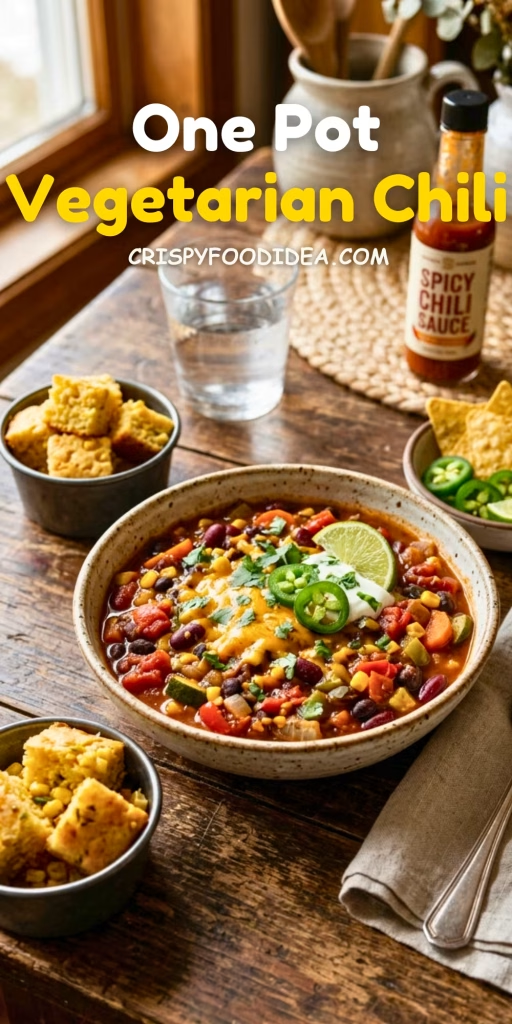
The secret to making a delicious vegetarian chili is to layer it with flavor. First, lightly sauté the onion, garlic, and other vegetables, then briefly cook the spices and tomato paste before adding the beans and tomatoes. Cooking over low heat gives the ingredients time to blend well and helps the beans hold their shape without becoming mushy. However, I have always chosen this recipe as a healthy vegetarian chili recipe and I would recommend you to make it too.
Related: Easy One Pot Dinner Recipes
One Pot Vegetarian Chili
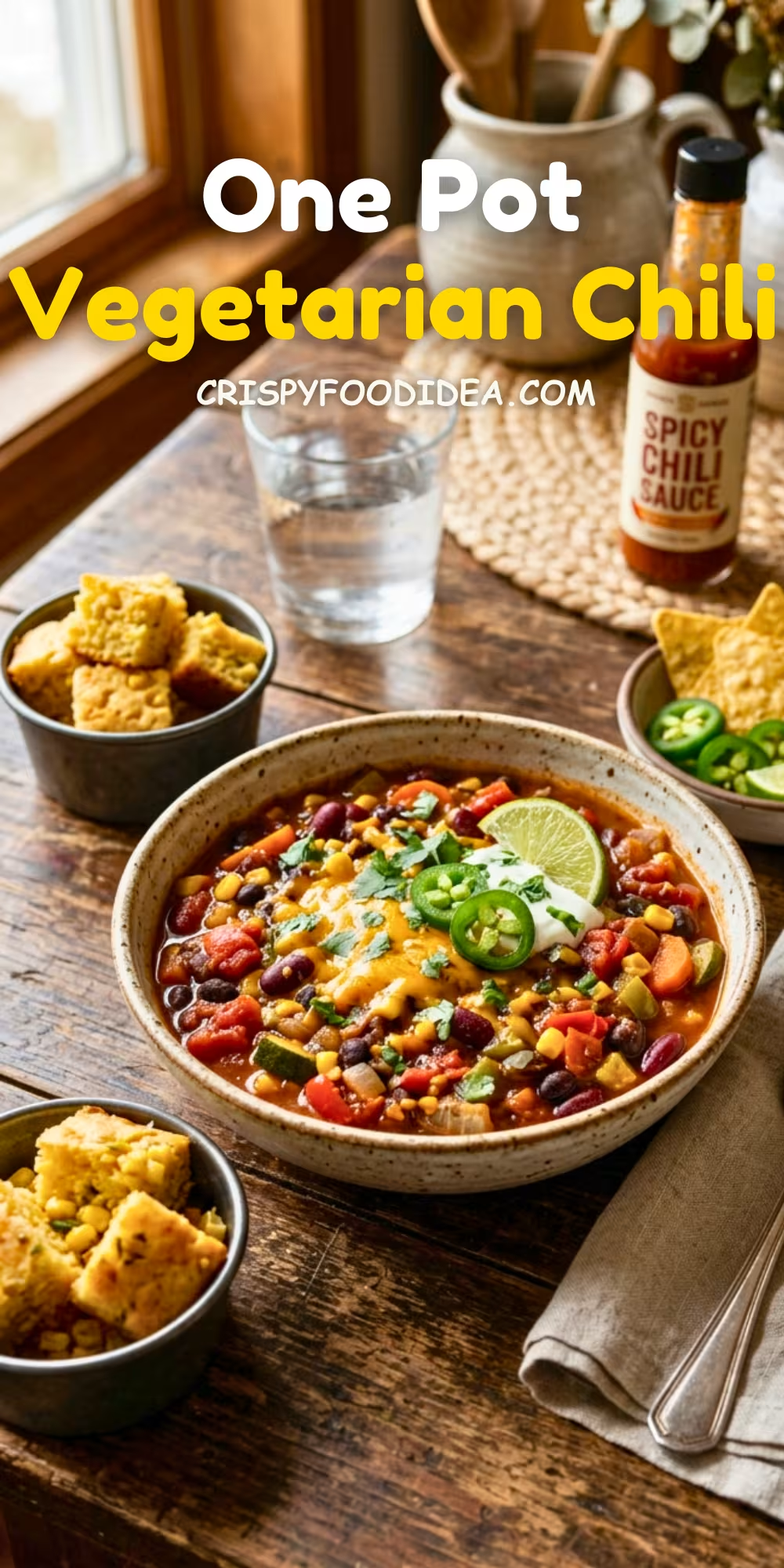
This easy One Pot Vegetarian Chili is nutritious, satisfying, and packed with beans, tomatoes, capsicum, and warm spices. Made in one pot with common kitchen ingredients, this delicious vegetarian chili is perfect for busy weeknights, vegetarian meal prep, and home-cooked family meals. Serve it with cornbread, rice, avocado, or your favorite chili toppings.
Ingredients
- 1 tablespoon olive oil
- 1 medium yellow onion, diced
- 1 medium red bell pepper, diced
- 1 medium green bell pepper, diced
- 4 garlic cloves, minced
- 2 tablespoons tomato paste
- 2 tablespoons chili powder
- 2 teaspoons ground cumin
- 1 teaspoon smoked paprika
- 1 teaspoon dried oregano
- 1 can (28 ounces) crushed or diced tomatoes
- 1 can (15 ounces) kidney beans, drained and rinsed
- 1 can (15 ounces) black beans, drained and rinsed
- 1 can (15 ounces) pinto beans, drained and rinsed
- 2 cups vegetable broth
- 1 teaspoon salt, or to taste
- ½ teaspoon freshly ground black pepper
- 1 tablespoon lime juice, or to taste
Optional Toppings
- Fresh cilantro, chopped
- Diced avocado
- Sliced jalapeños
- Shredded cheddar cheese
- Sour cream or plant-based sour cream
- Lime wedges
- Tortilla chips or sliced green onions
Instructions
- Prepare the vegetables. Dice the onion and bell peppers, mince the garlic, and drain and rinse all three types of canned beans.
- Sauté the aromatics. Heat the olive oil in a large, heavy-bottomed pot or Dutch oven over medium heat. Add the onion and bell peppers. Cook for 5–7 minutes, stirring occasionally, until softened.
- Add the garlic and spices. Stir in the minced garlic, chili powder, cumin, smoked paprika, and oregano. Cook for about 30–60 seconds, stirring continuously, until fragrant.
- Cook the tomato paste. Add the tomato paste and stir for 1–2 minutes. This helps deepen the tomato flavor and gives the chili a richer base.
- Add the beans and tomatoes. Stir in the crushed or diced tomatoes, kidney beans, black beans, pinto beans, and vegetable broth. Add the salt and black pepper, mixing until everything is evenly combined.
- Simmer the chili. Bring the mixture to a gentle boil, then reduce the heat to medium-low. Simmer uncovered for 25–30 minutes, stirring occasionally, until the vegetables are tender and the chili reaches your preferred thickness.
- Adjust the consistency and seasoning. For thicker chili, simmer uncovered for a few additional minutes or mash a small portion of the beans against the side of the pot. If it becomes too thick, add a splash of vegetable broth or water. Taste and adjust the salt and spices.
- Finish with lime juice. Remove the pot from the heat and stir in the lime juice. Allow the chili to rest briefly before serving.
- Serve and garnish. Ladle the hot vegetarian chili into bowls. Add fresh cilantro, avocado, jalapeños, shredded cheese, or your preferred toppings. Serve with rice, cornbread, or tortilla chips.
Notes
- Choose your beans: Kidney beans, black beans, and pinto beans create a satisfying combination of textures. You can substitute another variety of canned beans if needed.
- Control the heat: Use less chili powder for a milder chili or add cayenne pepper and jalapeños for extra heat.
- Build deeper flavor: Cook the tomato paste and spices briefly before adding the liquid. Avoid burning the garlic or spices.
- Make it vegan: Use vegetable broth and plant-based toppings. Check ingredient labels to ensure that all packaged ingredients are suitable for a vegan diet.
- Adjust the thickness: Simmer uncovered to reduce excess liquid, or mash some of the beans to thicken the sauce naturally.
- Reduce sodium: Choose no-salt-added canned beans and tomatoes, use low-sodium vegetable broth, and season gradually.
- Make ahead: Prepare the chili in advance and reheat it thoroughly when ready to serve.
Nutrition Information:
Yield:
6Serving Size:
1Amount Per Serving: Calories: 186Total Fat: 4gSaturated Fat: 1gUnsaturated Fat: 3gSodium: 754mgCarbohydrates: 31gFiber: 10gSugar: 5gProtein: 10g
Suggested: Crockpot Chickpea Coconut Soup Recipe
How Is My One Pot Vegetarian Chili Different From Other Recipes?
A good one pot vegetarian chili isn’t just a bowl of beans and tomatoes. It should have a rich and savory flavor, a thick and satisfying texture, and enough flexibility to adapt to a busy weeknight. This recipe focuses on building flavor with everyday ingredients, balancing spices, and making a satisfying meatless chili without making dinner unnecessarily complicated.
1. Flavor Built in Layers
Instead of adding all the ingredients at once, start by softening the onion and other aromatic spices. Add garlic, chili powder, cumin powder, and other spices of your choice at the right time to bring out a deeper and fuller flavor. If using tomato paste, cooking it for a short time can also help reduce its raw taste.
2. A Hearty Bean-Forward Texture
Beans add a satisfying flavor, vegetable protein, and fiber to vegetarian bean chili. Choose beans that hold their shape, then cook over low heat. To thicken the chili, stir a small portion of cooked beans into the chili without relying on overcooking.
3. Rich Taste Without Meat
You can create a delicious, deep flavor without the addition of ground beef. Well-seasoned vegetables, browned aromatics, tomato paste, cumin powder, smoked paprika, and a little bit of sourness can help create a satisfying meatless chili. Adjust the amount of spice to your taste rather than making it too spicy every time.
4. One Pot, Less Cleanup
The one-pot method lets you build the base, simmer the beans, and bring the flavors together in the same pot. That means fewer dishes and a practical option for weeknight dinners, meal prep, and anyone looking for an easy vegetarian dinner without a complicated process.
5. Better Control Over Thickness
Vegetarian chili can turn out too watery or overly thick. Simmer uncovered if it needs to reduce, add a little broth if it becomes too thick, and allow it to rest briefly before serving. These small adjustments help you achieve a spoonable, hearty consistency.
6. Flexible for Different Diets
This style of easy vegetarian chili can be adapted with black beans, kidney beans, pinto beans, corn, bell peppers, or sweet potato. Use vegetable broth and check ingredient labels to keep it vegan when needed. You can also adjust the salt, spice level, and toppings.
The Small Cooking Details That Make a Difference
The best results often come from a few simple choices. For a dependable one pot chili recipe, keep these practical points in mind:
- Let the aromatics soften: Give the onion and vegetables enough time to release their flavor before adding the liquid.
- Bloom the dry spices: Briefly cooking the spices in the pot can help release their aroma. Avoid scorching them.
- Watch the liquid level: Start with the amount specified in your recipe, then adjust gradually as the chili simmers.
- Season in stages: Taste near the end and balance the flavors with salt, spice, and a small splash of lime juice or vinegar if the chili needs brightness.
- Give it a short rest: A few minutes off the heat can help the consistency settle before serving.
Is This One Pot Vegetarian Chili Good for Meal Prep?
Yes, chili is a convenient food to make ahead of time, as the flavors can meld together during storage. Cool leftovers quickly, refrigerate in shallow, airtight containers, and reheat thoroughly. You can portion out chili for work lunches, quick dinners, or to keep in the freezer. For food-safety guidelines, follow the recommendations for cooling, storing, and reheating leftovers.
Related: One Pot Lentil Stew Recipe
Ingredients You’ll Need for One Pot Vegetarian Chili
The secret to making a satisfying vegetarian chili in one pot is to use common kitchen ingredients in the right combination. Beans create a satisfying and protein-rich base, tomatoes create a thick sauce, and roasted vegetables and warm spices create layers of flavor without the need for ground beef or any other meat.
This easy vegetarian chili recipe is perfect for a comforting weeknight dinner, a meatless lunch prep, or a budget-friendly family meal. You can make it with canned beans and common spices, then adjust the heat and consistency to your liking.
The Essential Vegetarian Chili Ingredients
Use the exact quantities listed in your recipe card. The amounts below are a flexible starting point for a family-size pot of chili, not a substitute for your tested recipe measurements.
1. Beans
About 3 cans (15 oz each), drained and rinsedBeans are the heart of meatless chili. Kidney beans hold their shape well, black beans add an earthy taste, and pinto beans bring a creamy texture. Combining two or three varieties makes this hearty vegetarian bean chili more interesting in every spoonful.
2. Tomatoes and Tomato Paste
1 can diced tomatoes (14–15 oz) + 2 tbsp tomato pasteCanned diced tomatoes give the chili its saucy base, while tomato paste adds concentrated savory flavor and color. Together, they help create a thick, rich vegetarian chili without relying on meat or heavy cream.
3. Onion, Bell Pepper and Garlic
1 medium onion, 1 bell pepper and 3 garlic clovesOnion creates a sweet, savory foundation, bell pepper adds freshness and texture, and garlic gives the chili its familiar aromatic depth. Red, yellow, or green bell peppers all work, so use what you have in your kitchen.
4. Chili Powder and Ground Cumin
2 tbsp chili powder + 1 tsp ground cuminChili powder supplies the main chili flavor, while cumin contributes warm, earthy notes. Depending on the blend, chili powder can vary in heat, so start with the amount in your recipe and adjust after simmering.
5. Vegetable Broth
About 1 cup, plus extra if neededVegetable broth helps the beans, tomatoes, and spices simmer together into a cohesive sauce. Choose a low-sodium vegetable broth if you want more control over the salt level, especially when using canned beans and tomatoes.
6. Olive Oil
1 tbspA small amount of olive oil helps soften the vegetables and distribute the spices. It also supports the sautéing step that builds flavor at the beginning of this easy one-pot chili recipe.
7. Salt, Black Pepper and Oregano
Season to taste; add oregano as directed in your recipeSalt brings the ingredients into balance, black pepper adds gentle warmth, and dried oregano contributes a subtle herbal note. Season gradually because broth and canned ingredients may already contain salt.
8. Fresh Lime and Optional Toppings
Lime juice, cilantro, avocado or cheese, as desiredA squeeze of lime brightens the rich tomato-and-bean base. Fresh cilantro, sliced avocado, chopped green onions, shredded cheese, or plain yogurt can add freshness or creaminess. Choose toppings that fit your dietary preferences.
Easy Ingredient Substitutions and Variations
The best thing about homemade vegetarian chili is its flexibility. You can change the ingredients to suit your kitchen supplies, preferred level of spiciness, or dietary preferences without changing the basic one-pot cooking method.
Related: Veg Pasta Recipes
How to Make Vegetarian Chili in One Pot
Making a nutritious vegetarian chili in one pot is easier than you think. First, lightly sauté the onion, capsicum, and garlic, then add tomato paste and warm spices to enhance the flavor. Then add the beans, tomatoes, and vegetable broth and simmer everything over low heat to create a thick and satisfying chili. This easy vegetarian chili recipe uses common kitchen ingredients, only requires one pot, and can be a comforting meatless dinner on a busy weeknight.
 01
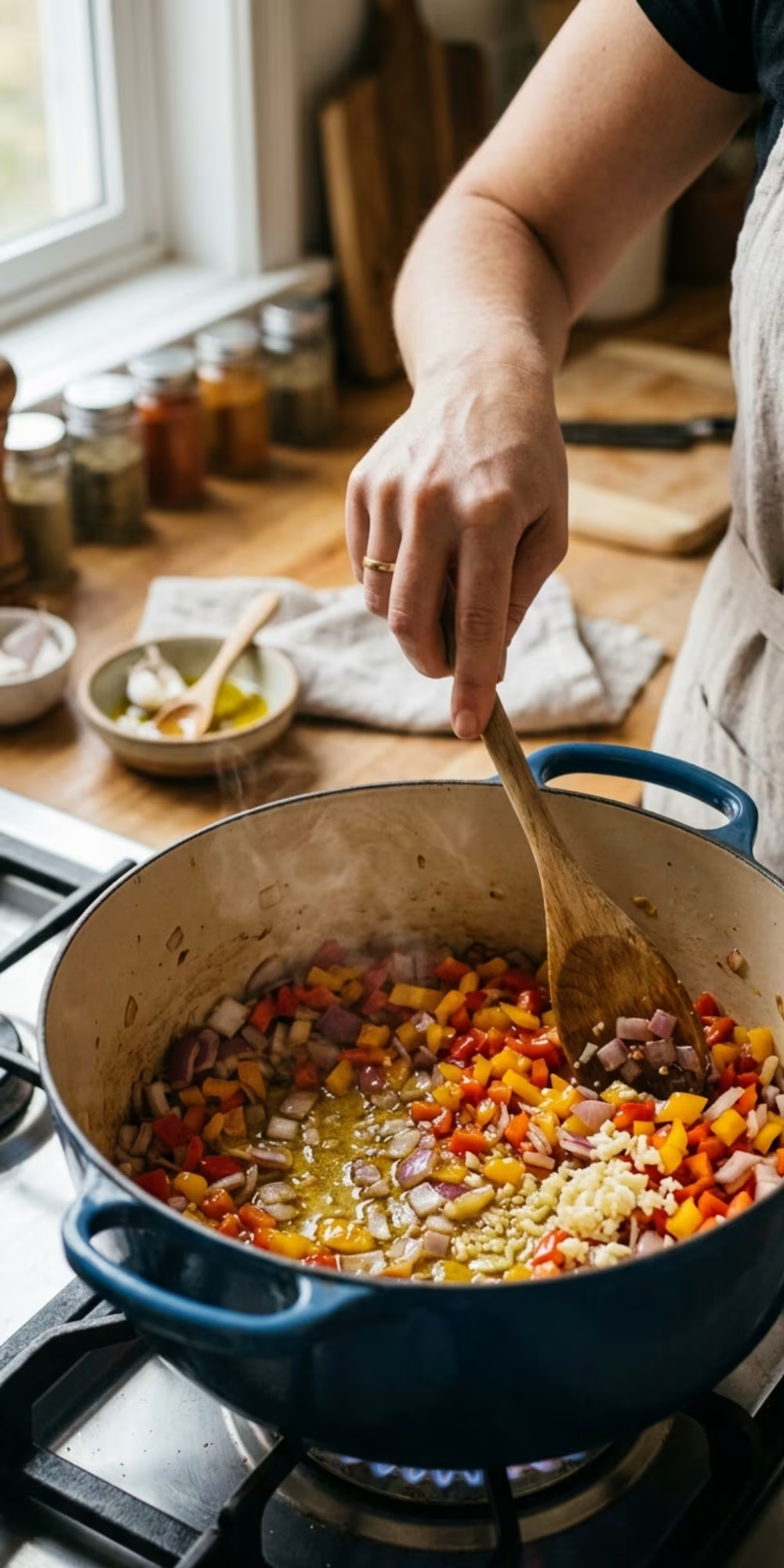
Step 1: Sauté the Onion, Bell Pepper, and Garlic
Heat a tablespoon of olive oil in a large, heavy-bottomed pot or Dutch oven over medium heat. Add the diced onion and bell pepper and cook for about 5–6 minutes, stirring occasionally, until softened. Stir in the minced garlic and cook for another 30–60 seconds until fragrant.
 02
Step 2: Toast the Spices and Tomato Paste
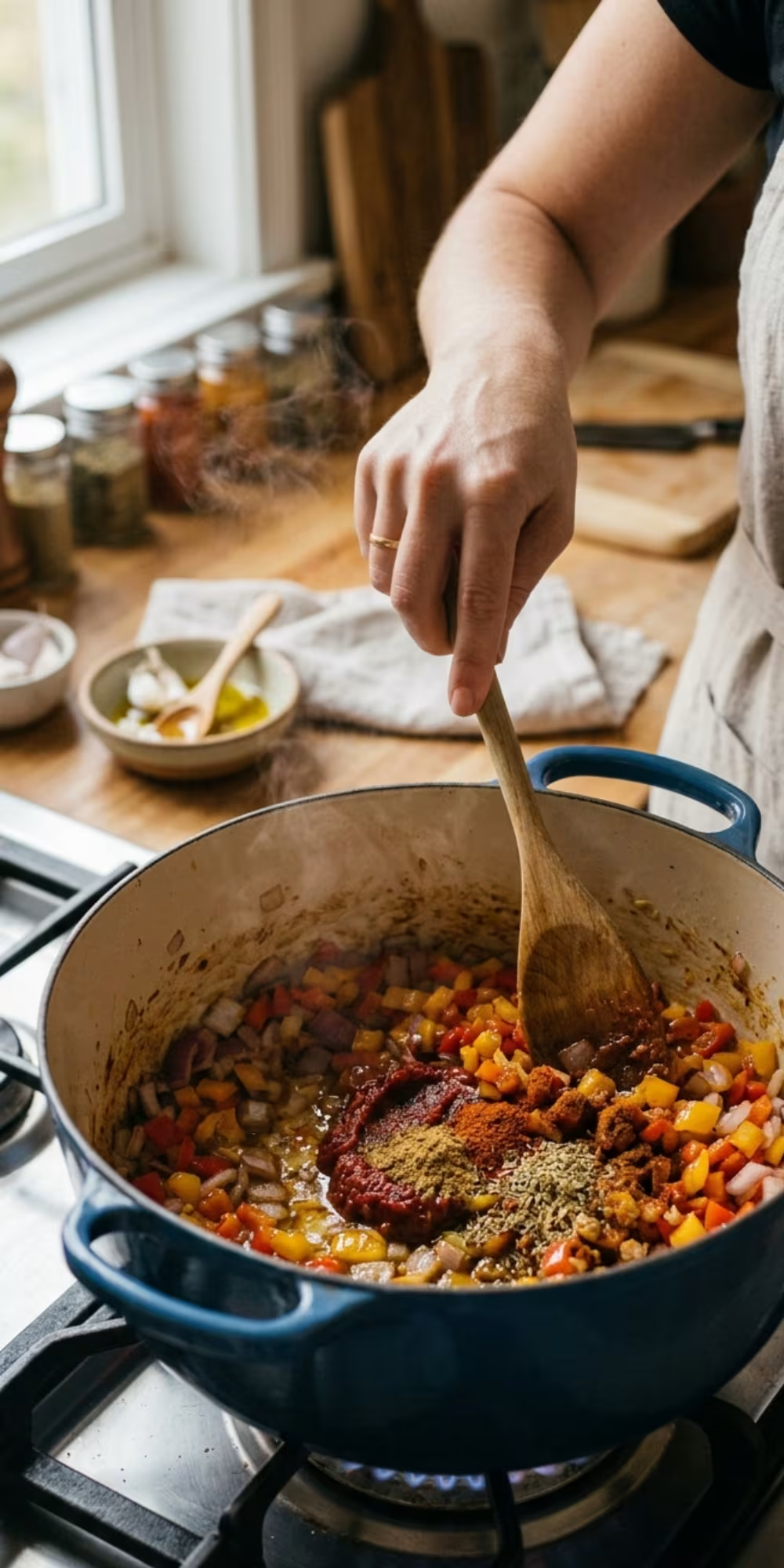
Add the tomato paste, ground cumin, chili powder, smoked paprika, and dried oregano to the pot. Stir continuously for about 1–2 minutes so the spices coat the vegetables and the tomato paste darkens slightly.
 03
Step 3: Add the Beans, Tomatoes, and Broth
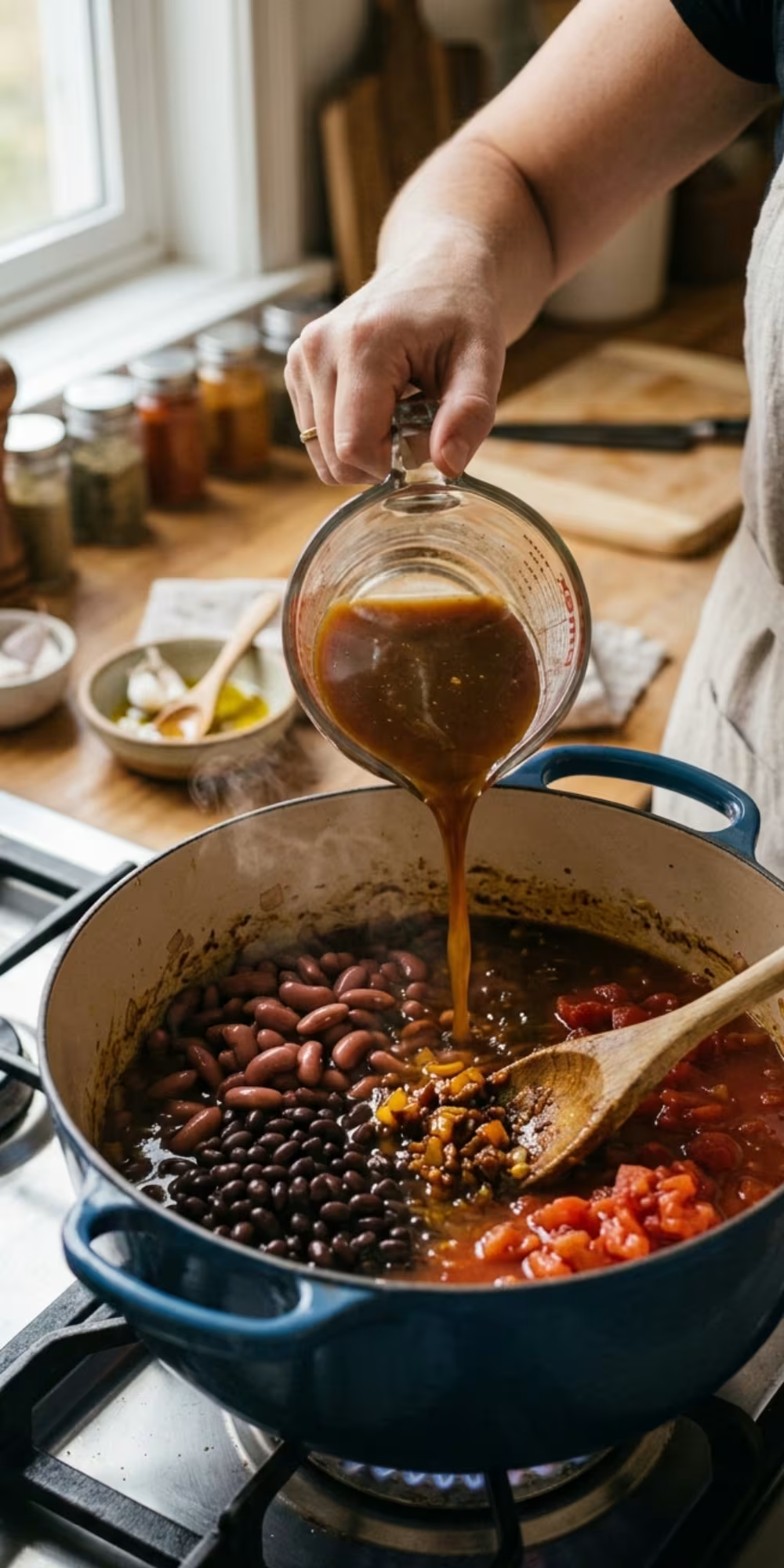
Add the drained and rinsed kidney beans and black beans, canned diced tomatoes with their juices, and vegetable broth. Stir everything together, scraping the bottom of the pot to loosen any flavorful browned bits.
Bring the mixture to a gentle boil, then reduce the heat. The combination of beans, vegetables, tomatoes, and broth makes this a filling meatless chili with plenty of texture.
 04
Step 4: Simmer Until the Chili Is Thick and Flavorful
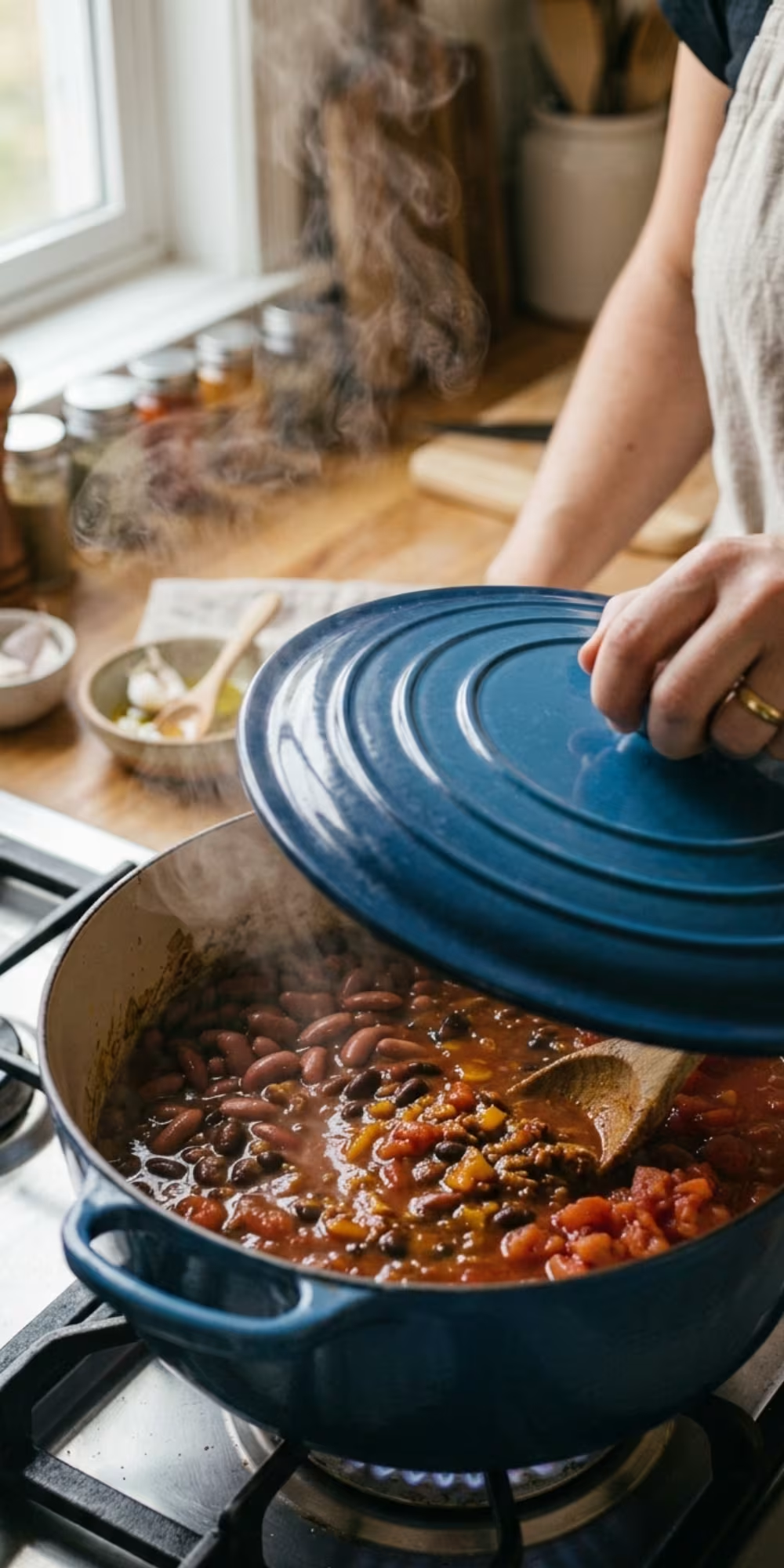
Cover the pot partially and let the chili simmer gently for about 20–25 minutes, stirring every few minutes. The tomatoes will break down, the beans will absorb some of the seasoned liquid, and the flavors will come together.
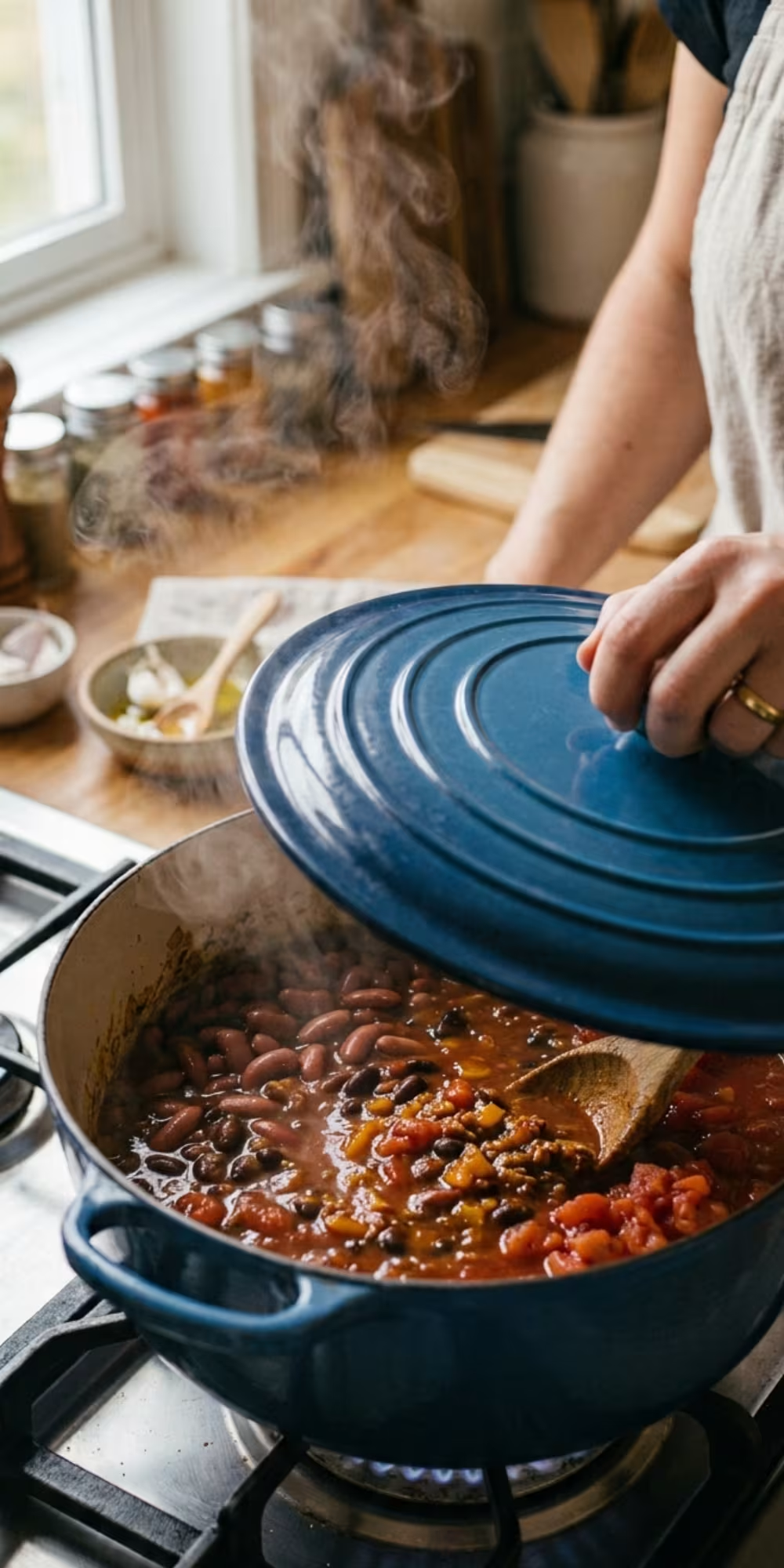
For a thicker vegetarian chili, remove the lid during the last 5–10 minutes to let excess liquid evaporate. You can also mash a small portion of the beans against the side of the pot and stir them back in.
 05
Step 5: Taste and Adjust the Seasoning
Once the chili has thickened, taste it and adjust the salt, black pepper, and chili powder as needed. A small squeeze of fresh lime juice can brighten the tomato-rich flavor. If the chili tastes too acidic, allow it to simmer a little longer and taste again before making further adjustments.
For a pinch of cayenne pepper or finely chopped jalapeño. For a milder family-friendly dinner, keep the heat gentle and let everyone customize their serving.
 06
Step 6: Serve Your Homemade Vegetarian Chili
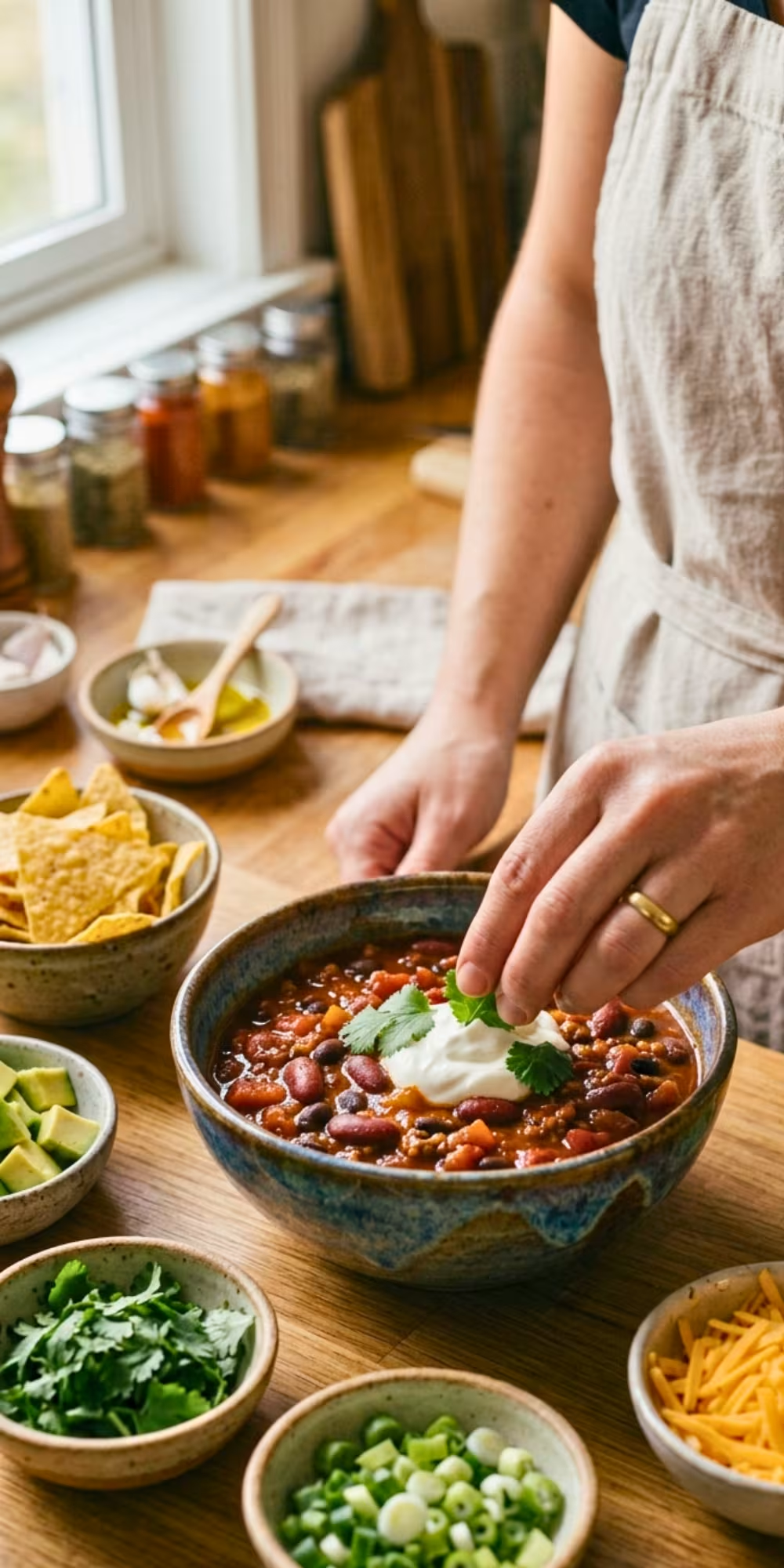
Ladle the hot chili into bowls and finish with your favorite toppings. Fresh cilantro, diced avocado, sliced green onions, shredded cheese, sour cream, lime wedges, or crunchy tortilla chips all make delicious additions.
Serve your one pot vegetarian chili on its own or alongside rice, cornbread, or a baked potato for a more substantial weeknight meal. Choose dairy-free toppings if you want to keep the entire meal vegan.
Suggested: Crockpot Soup Recipes
How to Make Vegetarian Chili Taste Rich and Flavorful
The secret to making a delicious and flavorful one pot vegetarian chili is to create layers of flavor before the beans and tomatoes start simmering. Onions, garlic, warm spices, tomato paste, and a balanced cooking liquid can transform common kitchen ingredients into a satisfying and satisfying meal. You don’t need meat to make a delicious homemade vegetarian chili. All you need is the right cooking sequence, enough time for the flavors to develop, and a few simple tricks to get the right texture.
Build Flavor with Onion and Garlic
Sauté the chopped onion in a little olive oil over medium heat until soft. Add the garlic toward the end, so it can release its aroma without burning. This aromatic base gives the vegetarian bean chili a delicious flavor before adding the liquid ingredients to the pot.
Cook the Tomato Paste Before Adding Liquid
Add the tomato paste to the softened vegetables and cook for a short while, stirring constantly. This will intensify the flavor and reduce the raw, mushy texture. Scrape the bottom of the pot as needed to prevent the paste from burning.
Bloom the Chili Spices
Before adding the broth, add the chili powder, cumin powder, smoked paprika, and dried oregano. Stir-fry for about 30 seconds, or until fragrant. Briefly heating these spices in the oil helps to release their aroma and infuse the flavors throughout the chile.
Combine Beans, Tomatoes, and Broth
Add drained and rinsed canned beans, chopped tomatoes, and vegetable broth according to your recipe. Kidney beans, black beans, and pinto beans all work well in vegetarian chili. Choose a mix that gives you a satisfying combination of soft beans and firm skin.
Let the Chili Simmer Gently
Bring the pot to a boil over low heat, then reduce the heat. Stir occasionally and cook until the flavors of all the ingredients are well blended and the broth is as thick as you like. Keeping it on low heat prevents the bottom of the pot from burning and allows the flavors of the tomatoes, spices, and beans to blend better.
Balance the Salt, Acidity, and Heat
Taste the chile before serving. Add salt gradually if the flavor seems mild, lemon juice for more brightness, or a little extra chili powder or red chili for more heat. If the tomato flavor seems too strong, let the chile simmer for a while longer before deciding if more needs to be added.
The Best Ingredients for Deep, Savory Vegetarian Chili
You can make a satisfying meatless chili with everyday ingredients. The key is understanding what each ingredient contributes to the pot.
| Ingredient | What it contributes | Helpful tip |
|---|---|---|
| Onion and garlic | Aromatic, savory flavor | Soften the onion before adding the garlic. |
| Tomato paste | Concentrated tomato richness | Cook briefly before adding liquid. |
| Chili powder and cumin | Warm, earthy chili flavor | Bloom briefly in oil without scorching. |
| Smoked paprika | Smoky depth | Use a moderate amount so it does not overpower the beans. |
| Kidney, black, or pinto beans | Substance and creamy texture | Drain and rinse canned beans before adding. |
| Diced tomatoes | Tomato flavor and cooking liquid | Allow them to simmer until the flavor mellows. |
| Vegetable broth | Seasoned liquid and body | Choose a suitable broth and account for its salt content. |
| Lime juice or fresh cilantro | Freshness and flavor contrast | Add delicate finishing ingredients near the end. |
How to Fix Vegetarian Chili That Does Not Taste Right
Even an easy one pot vegetarian chili can need a small adjustment at the end of cooking. Use the following guide to identify the problem before adding more seasoning.
| Problem | What to try |
|---|---|
| Chili tastes bland | Taste for salt, then adjust the cumin, chili powder, or other seasonings gradually. |
| Chili is too thin | Simmer uncovered, or mash a small portion of the beans into the sauce. |
| Tomato flavor tastes too sharp | Simmer a little longer and taste again. Avoid adding sugar automatically. |
| Chili is too spicy | Add more beans or unsalted tomatoes if appropriate, or serve with a cooling topping. |
| Chili is too salty | Add unsalted ingredients or a little water as appropriate, then rebalance the seasoning. |
| Chili tastes watery | Allow excess liquid to evaporate and check that the pot maintains a gentle simmer. |
My Best Tip for a Thick, Flavorful Bean Chili
Don’t rush the flavoring stage. Giving the onions, tomato paste, and spices time to develop their own flavors before adding the beans and broth can make a noticeable difference. As the chili begins to simmer, watch its thickness to decide: keep it covered or add liquid if necessary, and remove the lid toward the end if it needs to thicken more.
For a natural thickening, add a small portion of cooked beans directly to the pot. This thickens the chili without the need for flour or cornstarch.
Related: Orecchiette Salad With Halloumi Croutons
Vegetarian Chili Variations and Substitutions
This one pot vegetarian chili recipe is easy to customize. You can swap out the beans, add extra vegetables, adjust the amount of sauce, or make it completely vegan while still maintaining its delicious texture and deep tomato flavor. The different versions of this vegetarian chili make it easy to use common kitchen ingredients and make dinner with what you have in your kitchen.
1. Change the Beans
Beans make vegetarian chili satisfying and add a range of textures. You can use one variety or combine a few for a classic three-bean chili.
- Kidney beans: Hold their shape well and give chili a traditional, hearty texture.
- Black beans: Add a creamy bite and work especially well with corn and bell pepper.
- Pinto beans: Become soft and creamy, helping create a thicker chili.
- Chickpeas: Offer a firmer bite and make a useful alternative to the usual chili beans.
How to substitute: Replace beans in roughly equal amounts. If using canned beans, drain and rinse them unless your tested recipe specifies otherwise.
2. Make It Vegan
This easy vegetarian chili can be vegan when every ingredient and topping is plant-based. Beans, vegetables, tomatoes, and spices naturally make a flavorful base.
- Use vegetable broth instead of chicken broth.
- Choose olive oil or another plant-based cooking oil.
- Finish with avocado, cilantro, lime, or dairy-free yogurt.
- Check packaged broth, spice blends, and toppings if you need to avoid animal-derived ingredients.
Serving idea: Add sliced avocado and a squeeze of lime for a fresh finish without dairy.
3. Add More Vegetables
Extra vegetables are an easy way to personalize homemade vegetarian chili. Choose additions that complement the tomato, bean, and spice base.
- Sweet potato: Dice small so it softens evenly during simmering.
- Corn: Adds pops of sweetness and pairs well with black beans.
- Zucchini: Stir in during the later part of cooking so it does not become too soft.
- Mushrooms: Sauté first to release moisture and build a savory flavor.
- Carrots: Dice finely and cook with the onion and bell pepper.
4. Adjust the Spice Level
You can make this meatless chili mild enough for spice-sensitive diners or add extra heat for a bolder bowl.
- For mild chili: Use a mild chili powder and skip fresh hot peppers.
- For medium heat: Add a small amount of diced jalapeño with the aromatics.
- For spicy chili: Add cayenne or hot sauce gradually, tasting as you go.
- For smoky flavor: Use smoked paprika, checking that your spice blend is suitable for your dietary needs.
5. Swap the Tomato Ingredients
Tomatoes provide the tangy base that brings the beans and spices together. Small changes can adjust the consistency and flavor.
- Diced tomatoes: Give the chili visible tomato pieces.
- Crushed tomatoes: Create a smoother, more uniform sauce.
- Tomato paste: Adds concentrated tomato flavor; cook it briefly with the spices.
- Low-sodium vegetable broth: Lets you control salt more easily.
If you use a thicker tomato product, check the consistency as the chili simmers. Add broth a little at a time if it becomes too thick.
6. Make It Thicker or Brothier
The ideal vegetarian bean chili should be spoonable and hearty, not watery or dry. Adjust the texture near the end of cooking.
- For thicker chili: Simmer uncovered to reduce excess liquid.
- For a creamier texture: Mash a small portion of the cooked beans against the side of the pot and stir them back in.
- For thinner chili: Add warm vegetable broth in small splashes.
- If it tastes too acidic: Simmer a little longer and taste again before adjusting the seasoning.
Avoid adding lots of liquid at once. The chili will also thicken slightly as it stands.
Ingredient Substitution Guide for One Pot Vegetarian Chili
| Original ingredient | Possible substitute | What to know |
|---|---|---|
| Kidney beans | Black beans, pinto beans, or chickpeas | Texture and flavor will vary slightly. |
| Red bell pepper | Green, yellow, or orange bell pepper | Green peppers taste less sweet; other colors are generally milder. |
| Vegetable broth | Water plus carefully adjusted seasoning | Water gives less depth, so taste before serving. |
| Diced tomatoes | Crushed tomatoes | The finished chili will have a smoother consistency. |
| Fresh garlic | Garlic powder | Use a modest amount and adjust to taste. |
| Fresh jalapeño | Cayenne or hot sauce | Add a little at a time because heat levels vary. |
| Olive oil | Another neutral plant-based oil | Choose an oil suitable for sautéing. |
What to Serve With Vegetarian Chili
To be honest, I sometimes prefer to eat this one pot vegetarian chili on its own, but it takes on a whole new flavor when served with the right side dish. The best side dishes contrast a hearty bowl of beans, tomatoes, vegetables, and warm spices. From plain rice and homemade cornbread to crunchy tortilla chips, fresh salad, creamy avocado, and savory chili toppings, there are so many fun ways to serve vegetarian chili.
Here are some of my favorite easy vegetarian chili side dishes, topping ideas, and complete meal combinations that are perfect for different tastes and occasions.
Nutritious Side Dishes That Go With Vegetarian Chili
These awesome vegetarian chili sides are ideal when you want to expand a pot of chili into a full family dinner. Choose a side that complements the texture of the chili without overwhelming the flavors of the tomatoes, beans, and spices.
1. Homemade Cornbread
Cornbread is a classic side dish to serve with vegetarian chili. Its soft interior and slightly sweet flavor balance the spiciness, and each piece is perfect for soaking up the thick chili sauce.
Serve it hot, with a little butter or dairy-free spread. If you like it extra spicy, opt for the jalapeno cornbread, or opt for the mildly sweet version for a family dinner.
2. Fluffy White or Brown Rice
Rice is an easy, affordable side dish for vegetarian chili. Spoon chili over fluffy white rice for a comforting side dish, or use brown rice for a chewier texture and whole grain option.
This combination works especially well for meal prep. If you want to control the texture when reheating, place the rice and chili in separate containers.
3. Baked Potatoes or Sweet Potatoes
A fluffy baked potato makes a great base for a hearty bean chili. Cut the potato in half, add hot chilies, and top with chopped green onions, cilantro, or grated cheese.
Sweet potatoes make a natural sweet contrast to the smoky spices. For an easy dinner, bake the potatoes while the chili simmers in the oven.
4. Warm Tortillas or Flatbread
Vegetarian chili is easy to make with warm corn tortillas, flour tortillas, or plain flatbreads, and can be served as a dip, wrap, or main course. They’re perfect for family dinners and make-your-own chili nights.
For a homemade alternative to packaged chips, slice tortillas and toast until crispy.
Fresh and Light Sides for Vegetarian Chili
If your vegetarian chili is thick, spicy, or full of beans, fresh vegetables add a refreshing contrast. These light accompaniments are especially useful when serving chili for lunch or preparing a balanced meal for a weeknight.
5. Crisp Green Salad
A simple green salad made with lettuce, cucumber, tomato, and a lemon vinaigrette adds a refreshing twist to a bowl of nutritious vegetarian bean chili. This bright dressing cuts down on the tang of the thick tomato sauce without competing with the spice.
Keep the dressing light and serve the salad chilled for a refreshing contrast to the hot chili.
6. Fresh Corn Salad
Corn salad pairs well with vegetarian chili, as its sweet kernels blend beautifully with the smoky flavors of paprika, cumin, and tomatoes. Toss cooked or thawed corn with lemon juice, chopped cilantro, red onion, and chopped capsicum.
Serve it cold or at room temperature as a colorful side dish that’s easy to make ahead of time.
7. Tomato and Cucumber Salad
Juicy tomatoes and crunchy cucumbers add a cool, refreshing touch to a bowl of hot chili. Add lemon juice, a pinch of salt, and fresh herbs just before serving to keep the vegetables bright and crunchy.
This is a handy option when you want to make a quick side dish without having to turn on any other appliances.
8. Lime-Cilantro Slaw
A crunchy cabbage salad with lemon juice and cilantro adds a bright, different dimension to vegetarian chili. The crunchy vegetables balance the soft beans and thick sauce, making every bite more varied.
For the best crunch, make the dressing separately and mix it with the cabbage just before serving.
Crunchy Sides and Dippers for Chili
An easy way to make a awesome vegetarian chili more enjoyable is to add a crunchy side dish. These options are great for game day gatherings, casual dinners, and family meals where everyone can add their favorite toppings.
9. Tortilla Chips
Serve tortilla chips on the side to soak up the chile, or sprinkle a few on top for a salty, crunchy treat. Plain corn chips bring out the true flavor of the chile spice, while mildly spiced chips add extra flavor.
Keep the chips aside until ready to serve, so they stay crunchy.
10. Quesadillas
A spicy vegetarian chili with cheese quesadillas is a satisfying side dish. Its crunch goes great with the tortillas and melted bean mixture. If you want to keep the entire meal vegan, use a plant-based cheese.
Slice each quesadilla into wedges for easy dipping.
The Best Vegetarian Chili Toppings
The right vegetarian chili toppings can make even a simple bean chili special. Arrange a few toppings in small bowls so everyone can customize their serving to their liking for the level of spiciness, freshness, and creaminess.
11. Avocado or Guacamole
Sliced avocado and fresh guacamole create a creamy contrast to the spicy tomato-based chili. Add a squeeze of lemon juice and a pinch of salt to brighten the flavor. Add it just before serving to keep the avocado fresh.
12. Fresh Cilantro and Green Onions
Fresh coriander leaves add an herbal aroma, while chopped spring onions add a slightly salty taste. Sprinkle them over each bowl just before serving for color, freshness, and extra flavor. This is my favorite and is what I do most of the time.
13. Lime Wedges
A little lemon juice can brighten the flavor of the spicy chile and balance its salty and smoky flavors. Serve lemon wedges on the side, so everyone can adjust the sourness to their liking.
14. Sour Cream, Yogurt, or Vegan Alternatives
A spoonful of sour cream or plain yogurt provides a cooling contrast to the hot peppers. For a dairy-free alternative, choose a plant-based option with no added sugar. Check the label to make sure the product fits your dietary preferences.
15. Shredded Cheese
Cheddar, Monterey Jack, or another suitable melted cheese adds a delicious finish to vegetarian chili. Sprinkle it over hot peppers to soften them, or serve separately for a customizable topping station.
16. Jalapeños and Hot Sauce
For those who prefer spicy vegetarian chili, fresh jalapeno slices, pickled jalapenos, or a few dashes of hot sauce are ideal. My sister prefers it more and likes it a little spicy, so serve them separately so everyone can control the amount of spiciness in their bowl.
My Special & Easy Vegetarian Chili Meal Combinations
- Classic comfort dinner: Vegetarian chili, homemade cornbread, shredded cheese, and sliced green onions.
- Fresh and colorful meal: Vegetarian bean chili, a crisp green salad, avocado, and fresh lime.
- Easy meal-prep lunch: Chili over rice, with chopped cilantro packed separately until serving.
- Casual family dinner: Chili, tortilla chips, quesadilla wedges, and a selection of toppings.
- Plant-based dinner: Vegan chili, baked sweet potato, lime-cilantro slaw, and dairy-free toppings.
For a vegan meal, check that your cornbread, tortillas, sauces, cheese alternatives, and other accompaniments contain no animal-derived ingredients.
Storage, Freezing, and Reheating One Pot Vegetarian Chili
You can make a large batch of this one-pot vegetarian chili and store it in batches, which will help you get through the busiest days of the week without any extra hassle. With the right storage methods, your bean chili can easily be portioned for lunch, refrigerated for future dinners, and reheated while still retaining its thick, comforting texture.
How to Store Vegetarian Chili in the Refrigerator
If you plan to eat your homemade vegetarian chili over the next few days, refrigerating it is the easiest option. Properly stored leftovers can make a convenient meatless lunch or a quick weeknight dinner.
- Cool and portion the chili. Divide the chili into shallow, food-safe containers rather than leaving a large, deep pot to cool slowly.
- Seal the containers. Use airtight lids to help preserve moisture and prevent the chili from absorbing other refrigerator odors.
- Refrigerate promptly. Place the containers in a refrigerator set to 40°F (4°C) or below within two hours of cooking, or sooner in hot weather.
- Label the storage date. Mark each container so you can keep track of when the chili was made.
- Use within 3–4 days. Reheat only the portion you plan to eat and avoid repeatedly warming the entire batch.
Can You Freeze One Pot Vegetarian Chili?
Yes! Vegetarian chili freezes well, making it a useful option for batch cooking, meal prep, and future dinners. Bean-based chili may become slightly thicker after thawing, but you can usually restore a spoonable consistency with a little broth or water.
How to Freeze Vegetarian Chili Step by Step
- Cool and portion safely. Divide the chili into meal-sized portions in shallow containers. Refrigerate or freeze it promptly; do not leave it sitting out until it reaches room temperature.
- Choose freezer-safe containers. Use airtight freezer containers or suitable freezer bags. Leave enough room for expansion if using rigid containers.
- Remove excess air. If using freezer bags, press out excess air, seal securely, and lay the bags flat to save freezer space.
- Label and date. Write the recipe name and freezing date on each container.
- Freeze at 0°F (-18°C) or below. For the best flavor and texture, aim to enjoy the frozen chili within about 2–3 months.
Does Vegetarian Chili Change Texture After Freezing?
Yes, it can. As it cools and freezes, the beans may soften slightly and the sauce may thicken. This is normal for many stews made with beans. Keep stirring the chili while reheating and add vegetable broth or water a little at a time until you reach your desired consistency.
If you like fresh toppings like avocado, cilantro, scallions, or lime juice, add them after reheating instead of freezing them with the chili.
How to Reheat Vegetarian Chili Without Drying It Out
The best way to reheat leftover vegetarian chili is to warm it gently, stir regularly, and add a little liquid if the sauce has become too thick. Always reheat leftovers to an internal temperature of 165°F (74°C), checking with a food thermometer.
1. Stovetop Method — Best for Texture
Place the refrigerated chiles in a saucepan and heat over medium-low heat, stirring occasionally. Add a tablespoon or two of water or vegetable broth if necessary. Continue to heat until the chiles reach 165°F (74°C) throughout and are smoking hot.
2. Microwave Method — Best for a Quick Lunch
Place food in a microwave-safe bowl for one serving. Add a little water or stock, cover with a microwave-safe lid that allows steam to escape, and heat in short bursts. Stir between bursts and rotate the bowl as needed to ensure even heating.
Check several spots with a food thermometer and make sure the chili reaches 165°F (74°C) throughout before serving.
3. Reheating Frozen Vegetarian Chili
The most convenient way is to thaw frozen chiles in the refrigerator before reheating. If you’re short on time, frozen soups and stews can also be reheated directly in a saucepan or microwave, according to USDA guidelines. Heat for additional time, stirring well, and make sure the internal temperature reaches 165°F (74°C).
Avoid thawing chiles on the kitchen counter. Don’t use a slow cooker to reheat cold leftovers, as it can remain at temperatures where harmful bacteria can grow for too long.
Vegetarian Chili Storage and Reheating Guide
Use this quick reference when planning your next batch of meatless chili.
| Storage method | Recommended timing | Helpful tip |
|---|---|---|
| Refrigerator | 3–4 days | Keep at 40°F (4°C) or below. |
| Freezer | About 2–3 months for best quality | Use airtight, freezer-safe portions. |
| Thawing | Preferably overnight in the refrigerator | Never thaw on the counter. |
| Reheating | Until 165°F (74°C) throughout | Stir and check the center with a thermometer. |
Meal Prep Tips for Leftover Vegetarian Chili
This one pot vegetarian chili is a convenient base for planning several meals. A few simple storage habits can make the leftovers easier to use throughout the week.
- Portion the chili before storing it so you can reheat only what you need.
- Keep rice, cornbread, or other accompaniments separate when practical.
- Add fresh toppings after reheating for better texture and flavor.
- Thin thickened chili with a small amount of broth or water.
- Freeze portions you will not eat within the recommended refrigerator-storage period.
- Discard leftovers that have spent too long at room temperature, even if they look or smell fine.
Frequently Asked Questions About One Pot Vegetarian Chili
01 How do you make one pot vegetarian chili?
To make one pot vegetarian chili, sauté chopped onion, capsicum, and garlic in a large pot until soft. Stir in tomato paste and spices like chili powder, cumin, smoked paprika, and oregano. Then add canned beans, chopped tomatoes, and vegetable broth and simmer until chili is thick and flavorful. Taste and adjust salt, pepper, and seasonings as needed before serving.
For the best flavor, let the aromatics and spices cook before adding the liquid. This easy method makes for a satisfying vegetarian dinner with less dishwashing hassle.
02 Can you make vegetarian chili with canned beans?
Yes! Canned beans are a great way to make easy vegetarian chili at home. Kidney beans, black beans, and pinto beans all work well, as they provide a firm texture and absorb the flavors of the tomato sauce and spices. Drain and rinse canned beans before adding them to the pot to remove excess packing liquid and salt.
Since canned beans are already cooked, they usually require less cooking time than dried beans. Add them according to your recipe’s instructions and simmer until the broth thickens and the flavors are well blended.
03 Is vegetarian chili the same as vegan chili?
Vegetarian chili can be vegan, but it depends on the ingredients. A chili made with beans, vegetables, tomatoes, vegetable broth, and plant-based seasonings is naturally vegan if every ingredient is free from animal-derived products. However, toppings such as dairy sour cream and conventional cheese are not vegan.
To prepare vegan vegetarian chili, check the labels on your broth and seasonings, then serve it with avocado, fresh cilantro, lime wedges, or your favorite dairy-free topping.
04 How do you thicken vegetarian chili?
The easiest way to thicken vegetarian bean chili is to simmer it uncovered over low to medium-low heat, stirring occasionally so the bottom does not scorch. This allows excess liquid to evaporate and concentrates the tomato and spice flavors.
You can also mash a small portion of the cooked beans against the side of the pot and stir them back into the chili. Their natural starch helps create a thicker, creamier consistency without adding flour or cornstarch. If the chili becomes too thick, stir in a little vegetable broth or water.
05 What beans are best for one pot vegetarian chili?
Kidney beans, black beans, and pinto beans are popular choices for one pot vegetarian chili. Kidney beans hold their shape well, black beans provide a creamy texture, and pinto beans help create a thicker, heartier sauce. You can use one variety or combine several types for a more varied texture.
If you use a three-bean combination, adjust the liquid to suit the amount of beans and vegetables in your recipe. Choose canned beans for convenience or properly cooked dried beans when you prefer to prepare them from scratch.
06 How long does vegetarian chili take to cook?
One pot vegetarian chili made with canned beans often takes approximately 35–50 minutes, including preparation and simmering, depending on the recipe and how thick you like it. A longer, gentle simmer can help develop the flavor and reduce excess liquid, but the vegetables should not become unpleasantly mushy.
If you start with dried beans, cook them safely until tender before using them in a quick chili recipe. Cooking time varies with bean type, soaking, and equipment, so follow the appropriate preparation instructions.
07 How do you make vegetarian chili taste richer and more flavorful?
For a richer vegetarian chili, cook the onion, bell pepper, and garlic until fragrant, then briefly toast the spices and tomato paste before adding the tomatoes and broth. Ground cumin, chili powder, smoked paprika, and oregano add warmth and depth. A small splash of lime juice at the end can brighten the finished dish.
Taste the chili before serving. If it tastes flat, it may need a little more salt or acidity rather than more chili powder. Add spicy ingredients gradually so you can control the heat.
08 Can you make vegetarian chili without vegetable broth?
Yes. Water can replace vegetable broth in a homemade vegetarian chili recipe. The result may have a slightly less complex flavor, so season carefully with aromatics, tomatoes, cumin, smoked paprika, and other spices. You can also use a suitable low-sodium vegetable stock if you prefer more control over the salt content.
Add liquid gradually and check the consistency as the chili simmers. Different beans and vegetables release different amounts of moisture, so you may not need the entire quantity listed in a recipe.
09 Can you freeze homemade vegetarian chili?
Yes, vegetarian chili freezes well. Allow the chili to cool promptly, divide it into meal-sized portions, and transfer it to airtight freezer-safe containers, leaving room for expansion. Label each container with the date and contents.
For best quality, use frozen chili within about 2–3 months. Thaw it in the refrigerator or use a safe microwave thawing method, then reheat thoroughly until steaming hot throughout. Add a splash of water or vegetable broth if the texture has thickened during storage.
10 How long does vegetarian chili last in the refrigerator?
Properly stored cooked vegetarian chili generally keeps for 3–4 days in a refrigerator maintained at 40°F (4°C) or below. Refrigerate leftovers within two hours of cooking, or sooner in very hot conditions, using shallow containers to help them cool quickly.
Reheat only the portion you plan to eat and bring it to 165°F (74°C). Discard chili that has been held at unsafe temperatures for too long; smell and appearance alone cannot establish that leftovers are safe.
11 What can you serve with vegetarian chili?
Serve one pot vegetarian chili with cornbread, steamed rice, baked potatoes, tortilla chips, or a fresh green salad. Add toppings such as diced avocado, chopped cilantro, sliced jalapeños, lime wedges, or shredded cheese and sour cream if you eat dairy.
For a vegan dinner, choose plant-based toppings. Rice or baked potatoes can turn a bowl of bean chili into a more substantial meal, while crunchy tortilla chips add contrast to its thick, saucy texture.
12 Is vegetarian chili good for meal prep?
Yes. One pot vegetarian chili is convenient for meal prep because it can be divided into individual portions and paired with rice, baked potatoes, or vegetables. Prepare the chili ahead, cool it safely, and refrigerate portions for meals within the next 3–4 days. Freeze the remaining portions if you need to store them longer.
Store fresh toppings separately and add them just before serving. When reheating, stir the chili thoroughly and add a little water or broth if necessary to restore its texture.
13 How can you make vegetarian chili spicier or milder?
To make vegetarian chili spicier, add minced jalapeño, cayenne pepper, hot sauce, or extra chili powder in small amounts, tasting as you go. To make it milder, reduce the amount of hot pepper and choose a mild chili powder blend. Removing jalapeño seeds and membranes can also reduce heat, although it does not guarantee a completely mild result.
If the chili becomes too spicy, add more beans or tomatoes where appropriate, or serve it with rice, avocado, or a cooling dairy or plant-based topping.
14 Can you make vegetarian chili in advance?
Absolutely. You can prepare vegetarian chili ahead of time and refrigerate it in shallow, airtight containers once it has been cooled promptly. The resting time may allow the spices and tomato base to blend together, although the exact flavor and texture depend on the recipe.
Reheat the chili thoroughly before serving, adjusting the seasoning and consistency if needed. Keep fresh garnishes separate until mealtime for the best texture and appearance.
15 Is one pot vegetarian chili a high-protein meal?
Beans provide plant-based protein and dietary fiber, making vegetarian chili a satisfying meatless meal. The amount of protein per serving depends on the types and quantities of beans, the total recipe yield, and any additional ingredients.
For a more protein-rich vegetarian chili, consider adding extra beans or an appropriate plant-based protein ingredient. Calculate nutrition using the actual ingredient quantities and serving size before publishing a specific protein figure.
If you like this article about the One Pot Vegetarian Chili Recipe, please share this with your friends on Facebook and Pinterest. Also, subscribe to my blog to get all the latest content first on your mobile.