Awesoem One Pot Lentil Stew That Can Win Everyone’s Heart
This recipe is very different from the way we eat lentils in India because it contains lentils along with veggies, spices and fresh herbs. So it is a kind of lentil stew but it is very easy to make and can be made in just one pot. That is why it is called one pot lentil stew. If you want some hassle-free cooking, this is a very good choice and is high in protein which you can serve for both lunch and dinner. Actually, it’s one of my favorite One Pot Dinner Recipes.
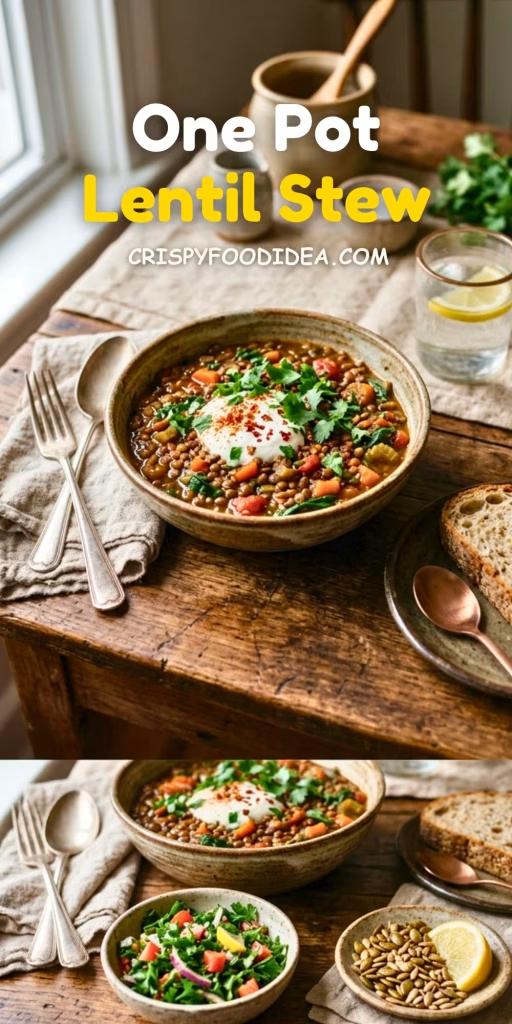
You’ll also be happy to know that this easy lentil stew recipe is very versatile and you can easily customize it to your liking. For example, you can use brown or green lentils, along with a little spinach and finally fresh herbs and a little lemon juice, for an absolutely amazing combination of taste and flavor.
Easy One-Pot Cooking
Build flavor, simmer the lentils, and cook the vegetables together with fewer dishes to wash.
Plant-Based Goodness
Lentils provide plant-based protein and dietary fiber, making this a satisfying addition to a balanced diet.
Meal-Prep Friendly
Make a batch for convenient lunches, easy weeknight meals, or freezer-friendly portions.
Related: Instant Pot Dump Dinner Recipes
One Pot Lentil Stew Recipe
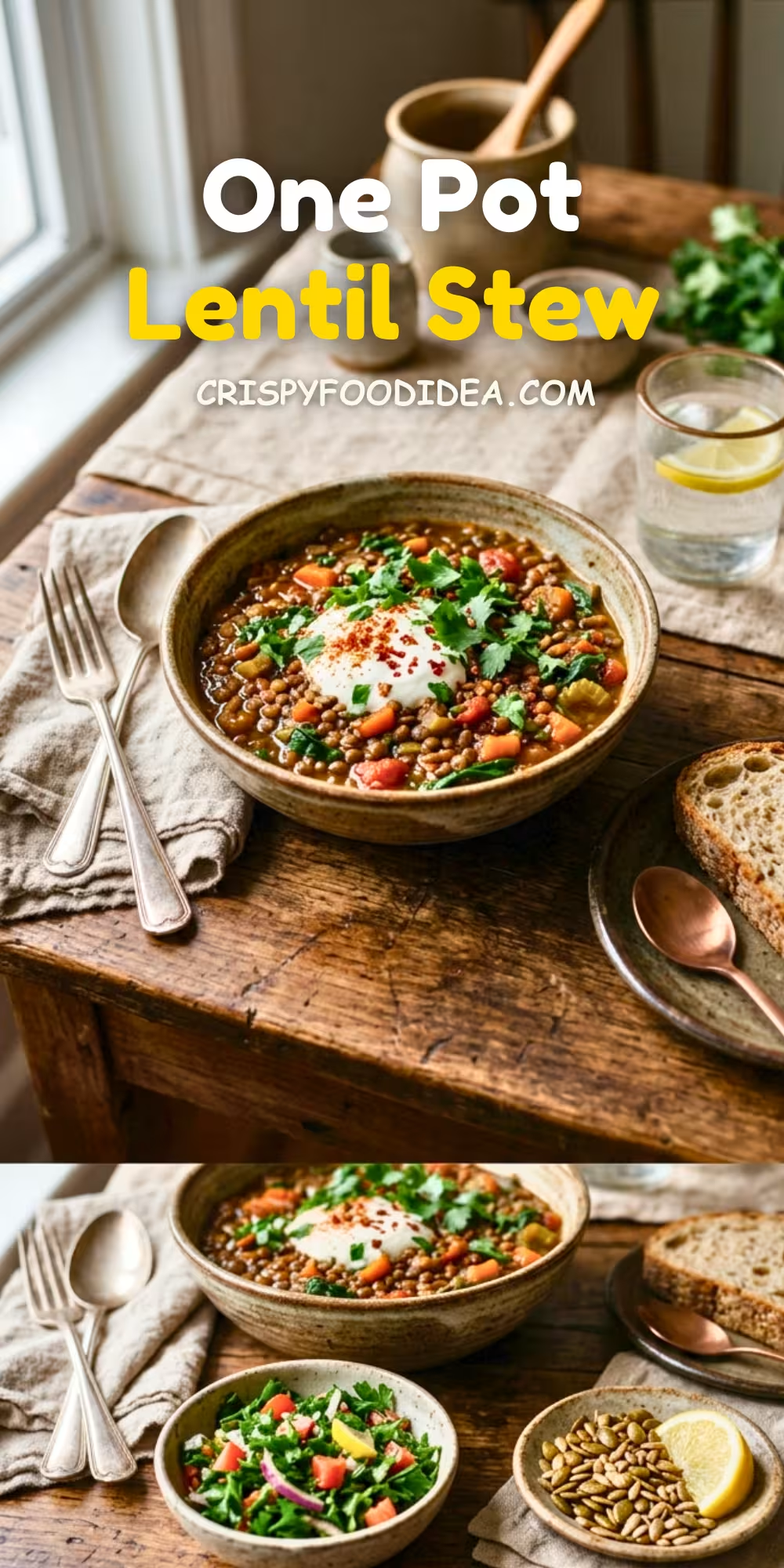
A nutritious, satisfying, and comforting vegetarian stew packed with brown lentils, soft root vegetables, and warm, aromatic spices. This One Pot Lentil Stew is ideal for making ahead and making for an easy weeknight dinner.
Ingredients
Base & Aromatics
- 2 tbsp extra virgin olive oil
- 1 large yellow onion, finely diced
- 3 medium carrots, peeled and sliced into thick coins
- 3 stalks celery, diced
- 4 cloves garlic, minced
Spices & Flavor Enhancers
- 1 tsp ground cumin
- 1 tsp smoked paprika
- ½ tsp dried thyme
- 1 bay leaf
- 1 tbsp tomato paste
- Salt and freshly cracked black pepper, to taste
Main & Liquids
- 1 ½ cups brown or French green lentils, rinsed and picked through
- 1 medium Russet or Yukon Gold potato, peeled and cut into ½-inch cubes
- 1 can (14.5 oz) diced tomatoes (fire-roasted preferred)
- 6 cups vegetable broth (low sodium)
- 2 cups fresh baby spinach or chopped kale
- 1 tbsp fresh lemon juice (for finishing)
Instructions
- Sauté the Aromatics:Heat olive oil in a large Dutch oven or heavy-bottomed pot over medium heat. Add the onion, carrots, and celery. Cook for 5 to 7 minutes until the vegetables soften and the onion becomes translucent.
- Toast Spices & Tomato Paste:Add the minced garlic, cumin, smoked paprika, dried thyme, and tomato paste. Stir constantly for about 1 minute until fragrant and the paste turns a deep brick-red color.
- Simmer the Stew:Add the rinsed lentils, cubed potato, diced tomatoes with their juices, bay leaf, and vegetable broth. Stir well to scrape up any browned bits from the bottom of the pot. Bring to a rapid boil.
- Cook until Tender:Once boiling, reduce the heat to low, cover with a tight-fitting lid, and let it simmer gently for 25 to 30 minutes, or until the lentils and potatoes are fork-tender.
- Finish & Season:Remove from heat and discard the bay leaf. Stir in the fresh spinach or kale, letting the residual heat wilt the greens (about 2 minutes). Stir in the fresh lemon juice, then taste and adjust seasoning with salt and pepper.
Notes
- Lentil Choice: Brown or French green lentils hold their shape best during cooking. Red lentils break down completely and will turn the stew into a thick puree/dal rather than a chunky stew.
- Texture Adjustments: If you prefer a creamier base without dairy, scoop out 2 cups of the cooked stew, blend it in a high-speed blender until smooth, and stir it back into the pot.
- Storage & Meal Prep: Store leftovers in an airtight container in the refrigerator for up to 5 days, or freeze for up to 3 months. The stew thickens as it sits in the fridge; simply splash in a little extra water or broth when reheating.
Nutrition Information:
Yield:
6Serving Size:
1Amount Per Serving: Calories: 169Total Fat: 6gSaturated Fat: 1gUnsaturated Fat: 5gSodium: 981mgCarbohydrates: 24gFiber: 7gSugar: 6gProtein: 8g
Related: One Pot Vegetarian Chili Recipe
Why I Love This One Pot Lentil Stew
There’s something special about a satisfying one pot lentil stew. Tender lentils, flavorful vegetables, aromatic herbs, and a flavorful tomato-based broth—it all comes together to create a comforting meal. I love the idea of a home-cooked meal that’s satisfying without the hassle of complicated prep or dishwashing. As an easy lentil stew recipe, a nutritious vegetarian dinner, or a functional vegan meal for a busy weeknight, this recipe brings simplicity and flavor to your table.
Everything Cooks in One Pot
Vegetables, lentils, spices, and broth are cooked together in one pot. Lightly sauteing the aromatic spices first helps infuse the flavors, and cooking on a low heat gives the lentils enough time to soften. The fewer cooking utensils you need, the less hassle of cleaning up after dinner.
Hearty, Plant-Based Goodness
Lentils provide vegetable protein and dietary fiber, while carrots, celery, tomatoes, and other vegetables add variety to the meal. This vegetable and lentil stew is a satisfying option for those looking to incorporate more legumes and meatless meals into their weekly diet.
Perfect for Busy Weeknights
This simple one pot meal made with familiar kitchen ingredients keeps the cooking process simple. Once the ingredients start simmering, you can set the table or prepare lunch for the next day while the stew cooks.
Flexible for Meal Prep
Make a large batch for future lunches or dinners, then portion the cooled stew into suitable containers. It may thicken if left to stand, so add a little water or vegetable broth to bring it back to your desired consistency when reheating.
The Little Details That Make It Better
For the best texture, I recommend choosing whole lentils that hold their shape when cooked over low heat, such as green or French green lentils. Let the onion, carrot, and celery soften before adding the garlic and spices. Then continue to simmer the stew until the lentils are tender. A squeeze of fresh lemon juice at the end brightens up the salty flavor, and fresh parsley adds a nice finishing touch. These little cooking details help turn a simple lentil and vegetable stew into a dish worth making again and again.
My serving suggestion: Serve this nutritious vegetarian lentil stew with crusty bread, brown rice, or a fresh green salad. To make dinner ahead of time, quickly refrigerate leftovers and reheat well with a little broth if needed.
Related: Instant Pot Recipes For Beginners
Ingredients for Easy One Pot Lentil Stew
Let me start by saying that you shouldn’t be too scared because making this amazing One Pot lentil stew requires very simple ingredients that we have in our kitchen for everyday life.
The Essential Lentil Stew Ingredients
The following quantities are a starting point for approximately 4 servings. Adjust them after testing your preferred lentils, pot, and desired stew consistency.
Brown or Green Lentils
1 cup dried, rinsedOnion
1 medium, dicedCarrots
2 medium, dicedCelery
2 stalks, dicedFresh Garlic
3 cloves, mincedCanned Diced Tomatoes
1 can, about 14–15 ozVegetable Broth
3 cups to startOlive Oil
1 tablespoonThyme and Bay Leaf
1 tsp dried thyme + 1 bay leafCumin and Paprika
½ tsp each, to tasteSpinach or Kale
2 handfuls, optionalLemon Juice and Parsley
To taste, for servingEasy Ingredient Substitutions
As I mentioned at the beginning, this one pot lentil stew can be customized to your liking. You can adapt the vegetables, lentils, and seasonings to suit your pantry while keeping the same simple cooking method.
| Original ingredient | Possible substitute | What to know |
|---|---|---|
| Brown lentils | Green lentils | Usually hold their shape; cooking time may vary. |
| Celery | Extra carrots or another aromatic vegetable | The final flavor will be slightly different. |
| Canned diced tomatoes | Crushed tomatoes | May produce a smoother, thicker stew. |
| Vegetable broth | Water with suitable seasonings | Season gradually because the flavor will be milder. |
| Spinach | Kale | Kale generally needs more cooking time. |
| Fresh garlic | Garlic powder | Use a smaller amount and adjust to taste. |
Which Lentils Are Best for Stew?
How to Get the Best Flavor from Your Ingredients
To make a delicious homemade lentil stew, first lightly sauté the onion, carrot, and celery. Add the garlic and dried spices briefly, then stir in the lentils, tomatoes, and broth. Simmer until the lentils are tender, adjusting the amount of water as needed. Finally, add fresh lemon juice and parsley for a brighter flavor.
These small steps help turn common ingredients readily available in your kitchen into a comforting, one-pot vegetarian dinner that’s easy to customize for your weeknight meal prep.
Related: Crockpot Lentil Vegetable Soup
How to Make One Pot Lentil Stew
Making a comforting one pot lentil stew is easier than you think. Green lentils, vegetables, garlic, tomatoes, vegetable broth, and warm herbs simmer over low heat to create a thick, flavorful, and hearty stew. The best part is, you can make this easy lentil stew recipe in one pot, making it a convenient option for busy weeknights, vegetarian meals, and make-ahead lunches.
Step-by-Step Instructions for One Pot Lentil Stew
Follow these simple stovetop steps for a flavorful lentil and vegetable stew. The cooking time can vary with the age of the lentils, the pot you use, and how gently the mixture simmers.
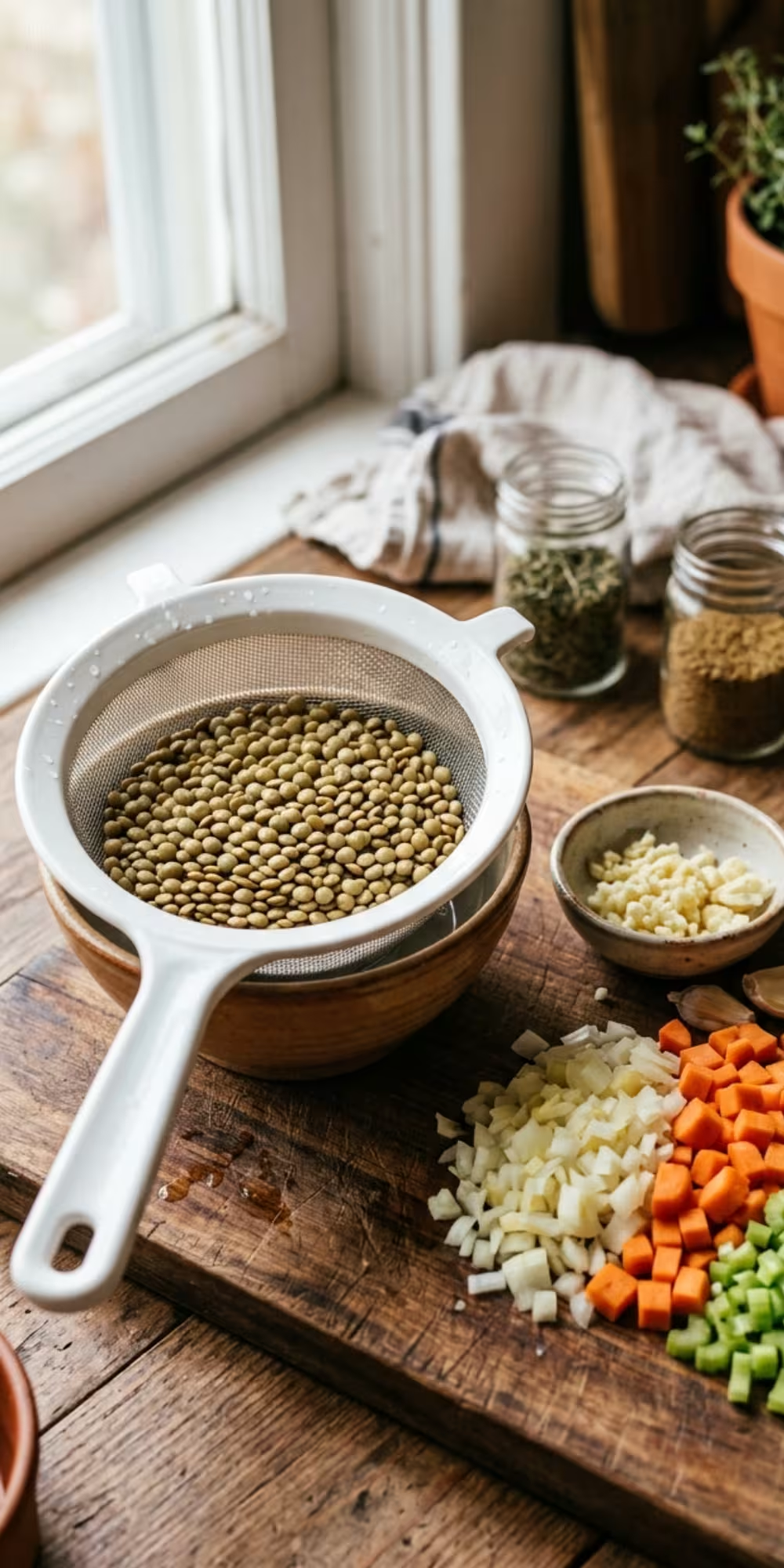
Rinse the Lentils and Chop the Vegetables
Place the dried green lentils in a fine-mesh strainer and rinse them under cool running water. Pick out any small stones or damaged lentils. Finely chop the onion, dice the carrots and celery, and mince the garlic.
Preparing everything first helps you move through the recipe without rushing. It also ensures the vegetables are ready to sauté before you add the broth and lentils.
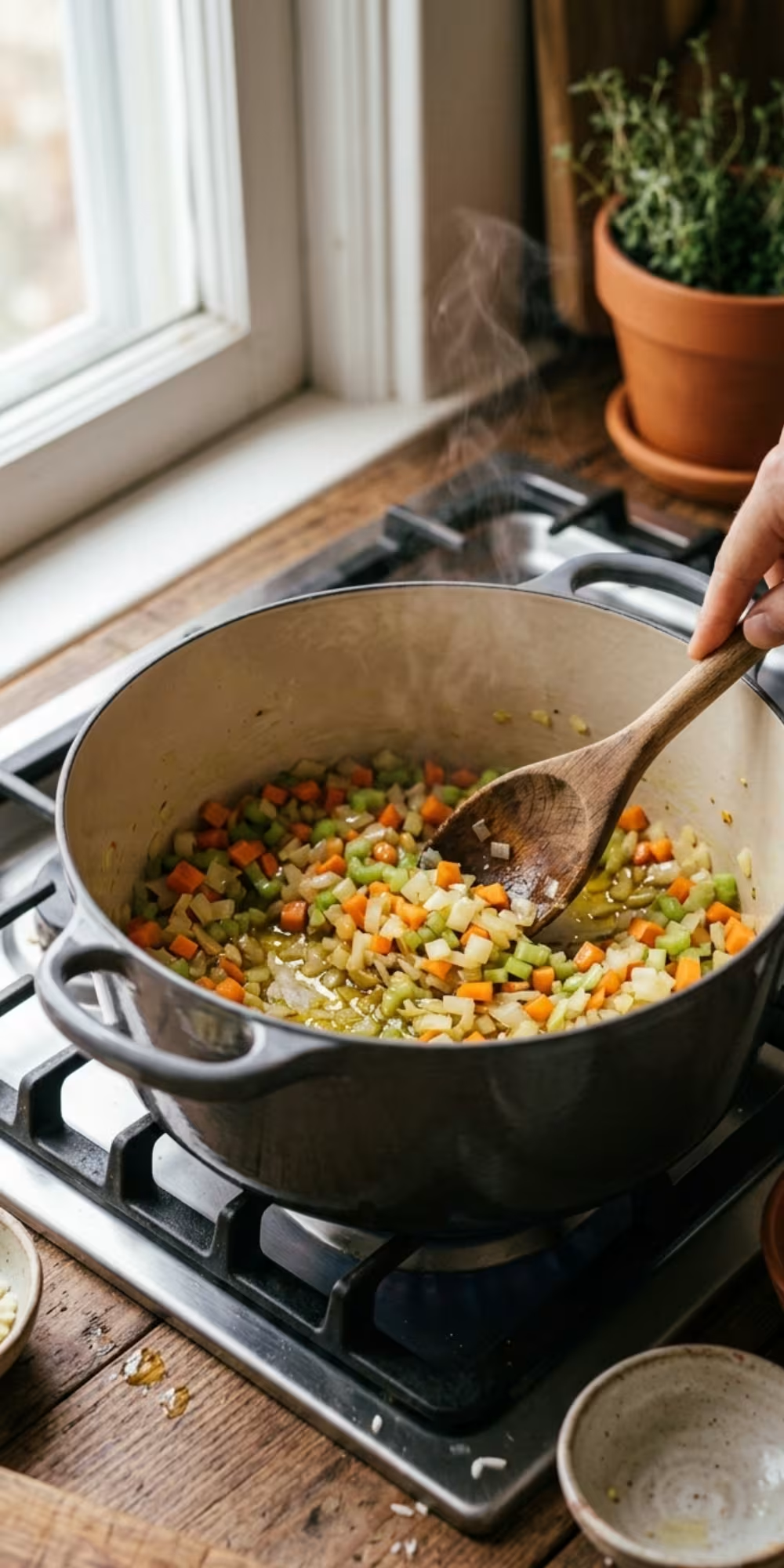
Sauté the Onion, Carrots, and Celery
Heat the olive oil in a large heavy-bottomed pot or Dutch oven over medium heat. Add the chopped onion, carrots, and celery. Cook for about 5–7 minutes, stirring occasionally, until the onion softens and the vegetables begin to release their aroma.
This first step creates the flavor base for your easy lentil stew. Allowing the vegetables to soften before adding the liquid gives the finished dish a fuller, more rounded taste.
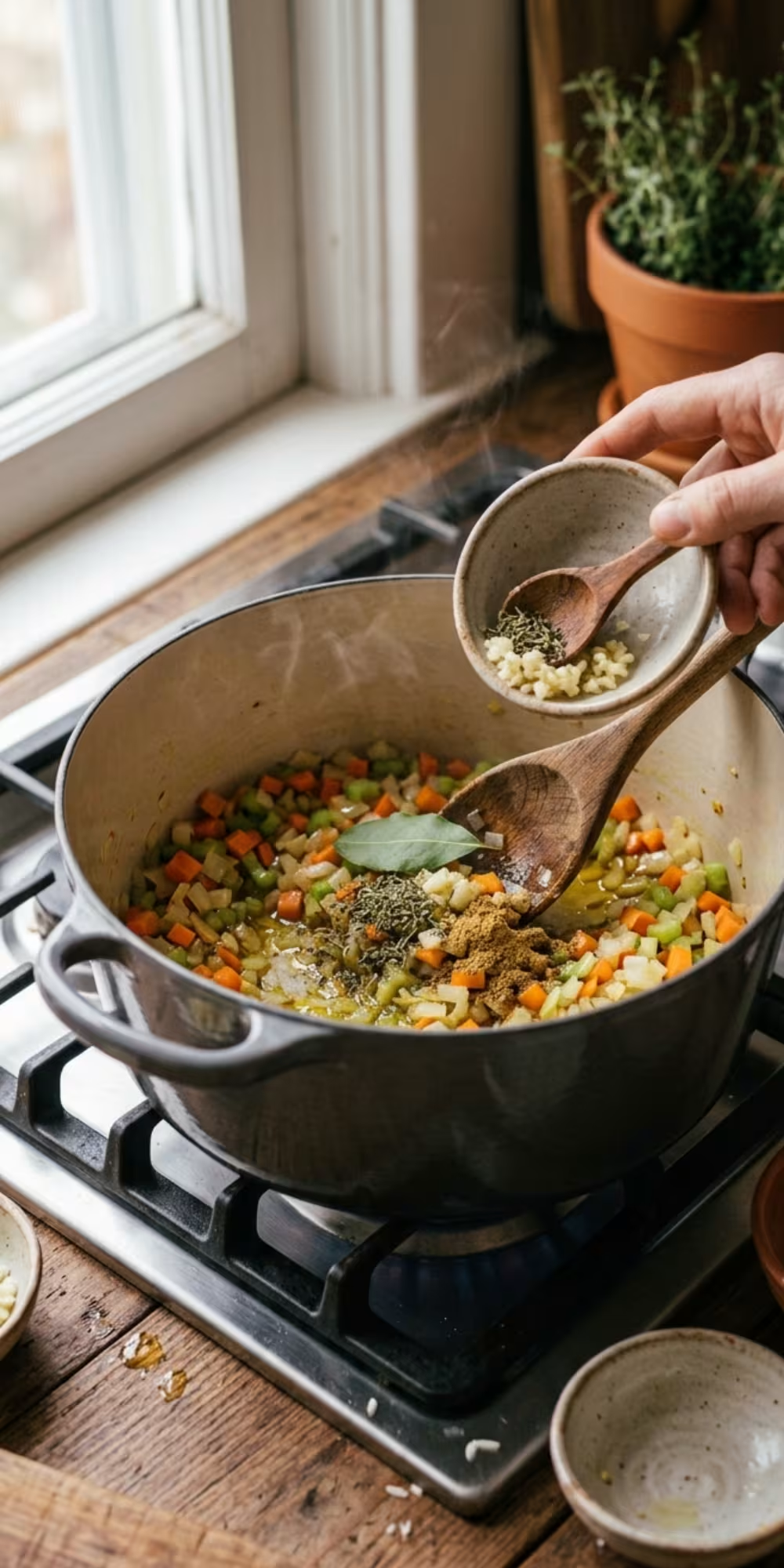
Add Garlic, Thyme, Cumin, and Bay Leaf
Stir in the minced garlic, dried thyme, and ground cumin. Cook for approximately 30–60 seconds, stirring constantly, until fragrant. Add the bay leaf and mix the seasonings evenly through the vegetables.
Thyme contributes a gentle herbal note, while cumin adds earthy warmth. Together, they complement the lentils, tomatoes, and vegetables without overpowering the stew.
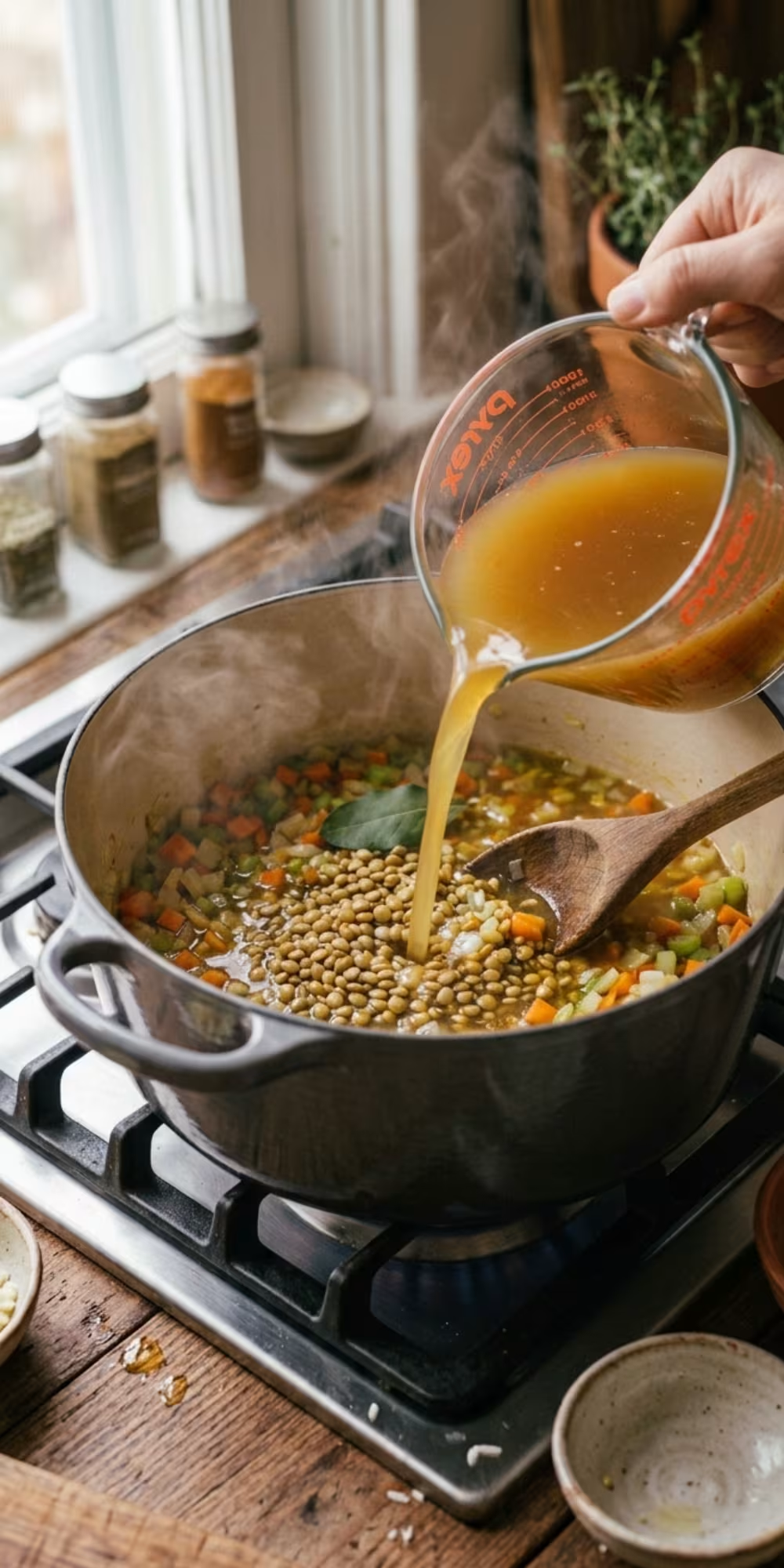
Add the Lentils and Vegetable Broth
Stir the rinsed green lentils into the vegetable mixture. Pour in the vegetable broth and scrape the bottom of the pot with a wooden spoon to loosen any flavorful bits. Bring the liquid to a gentle boil.
Once it begins bubbling, reduce the heat to maintain a gentle simmer. Partially cover the pot, leaving enough room for steam to escape.
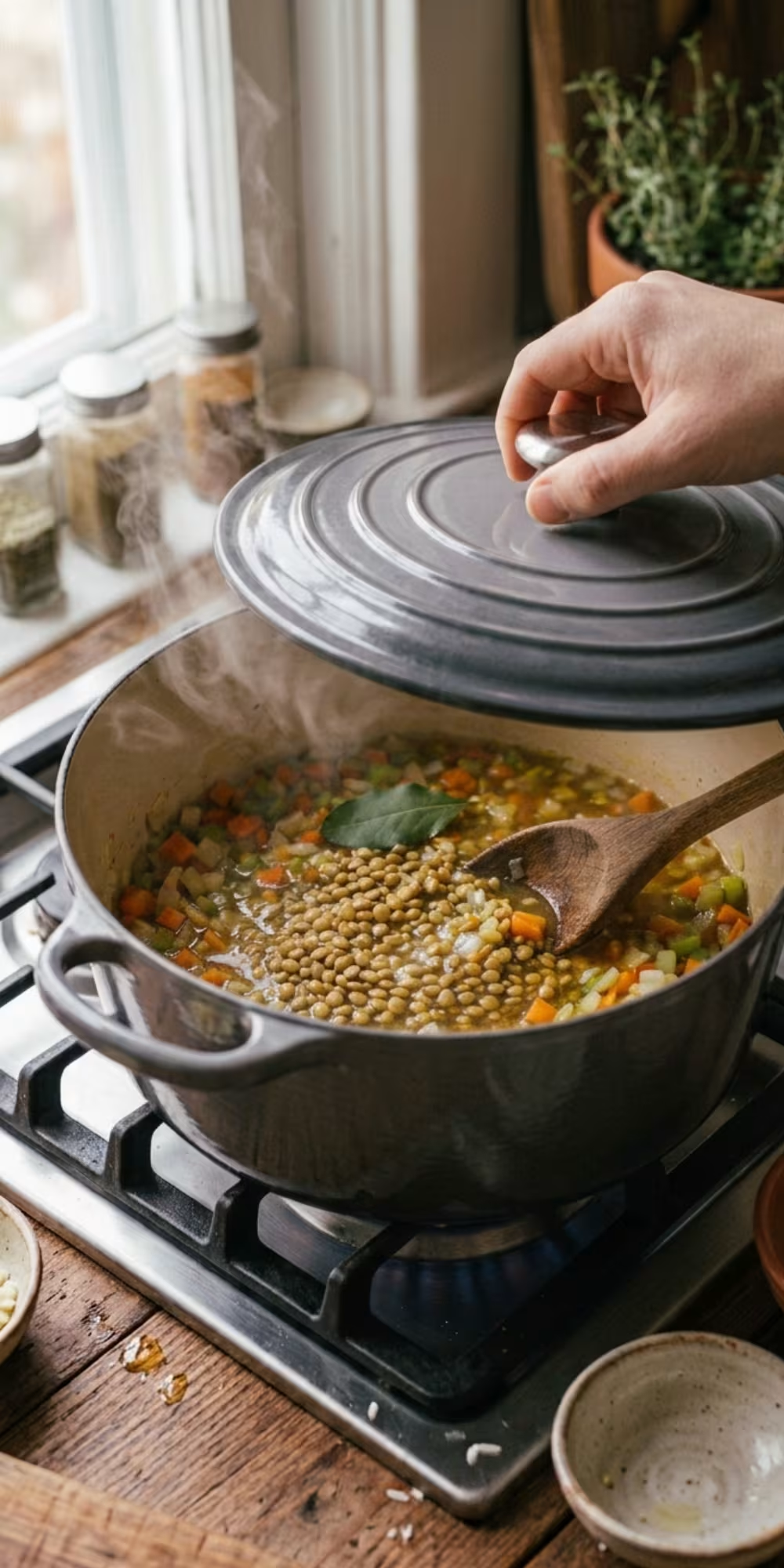
Cook Until the Lentils Begin to Turn Tender
Simmer the lentils for approximately 15 minutes, stirring occasionally. Keep the heat low enough to prevent vigorous boiling. The lentils should begin to soften while still holding their shape.
Starting the lentils in the broth before adding the tomatoes can help them soften more predictably. Acidic ingredients may slow softening in some circumstances, so the final cooking time will depend on the lentils themselves.
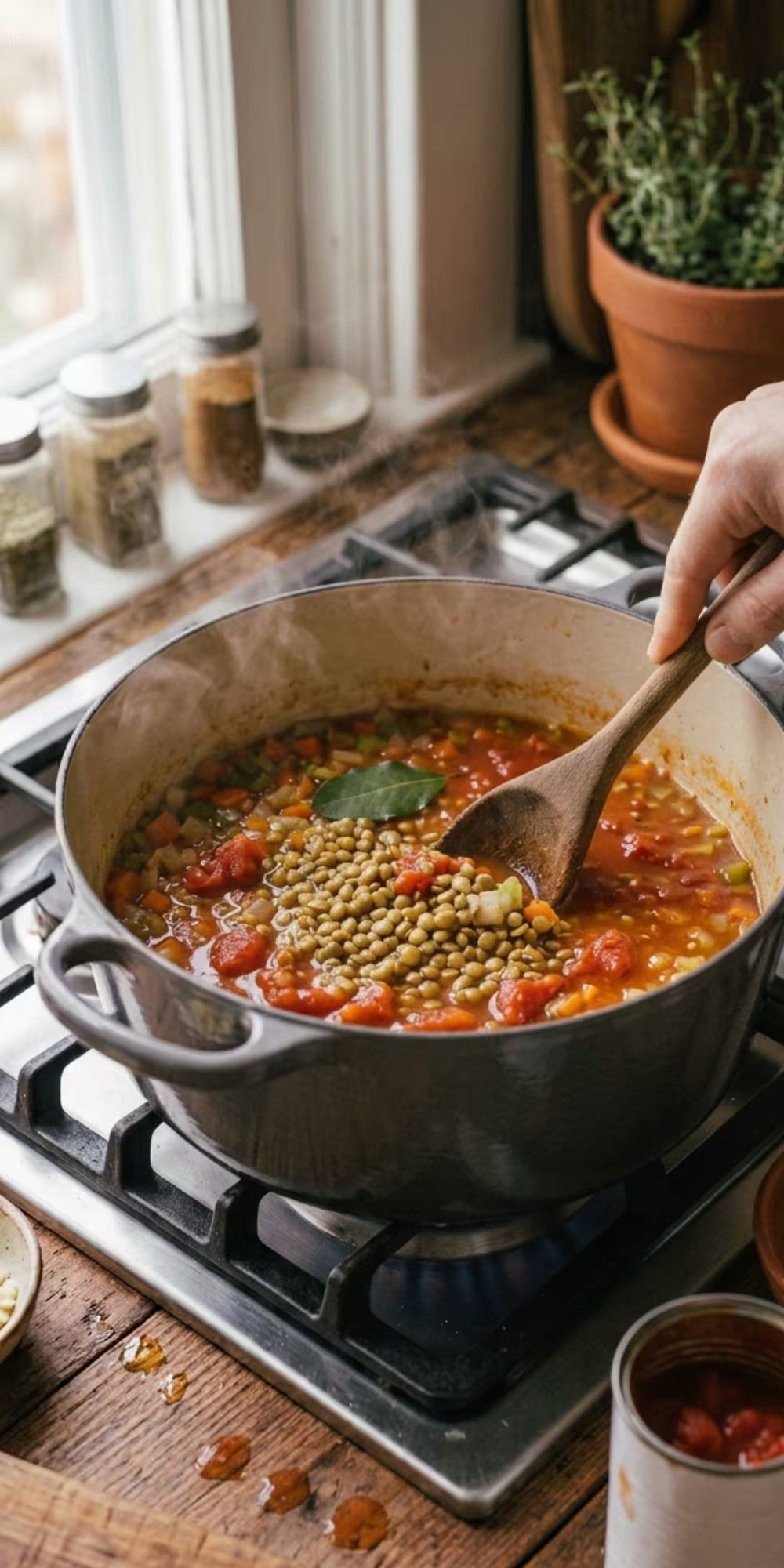
Stir in the Tomatoes and Simmer Until Tender
Add the canned diced tomatoes, including their juices. Stir thoroughly and continue simmering for another 15–25 minutes, or until the lentils are tender but not unpleasantly mushy.
Stir occasionally and check the liquid level. If the stew becomes too thick before the lentils are cooked, add more broth or water a little at a time.
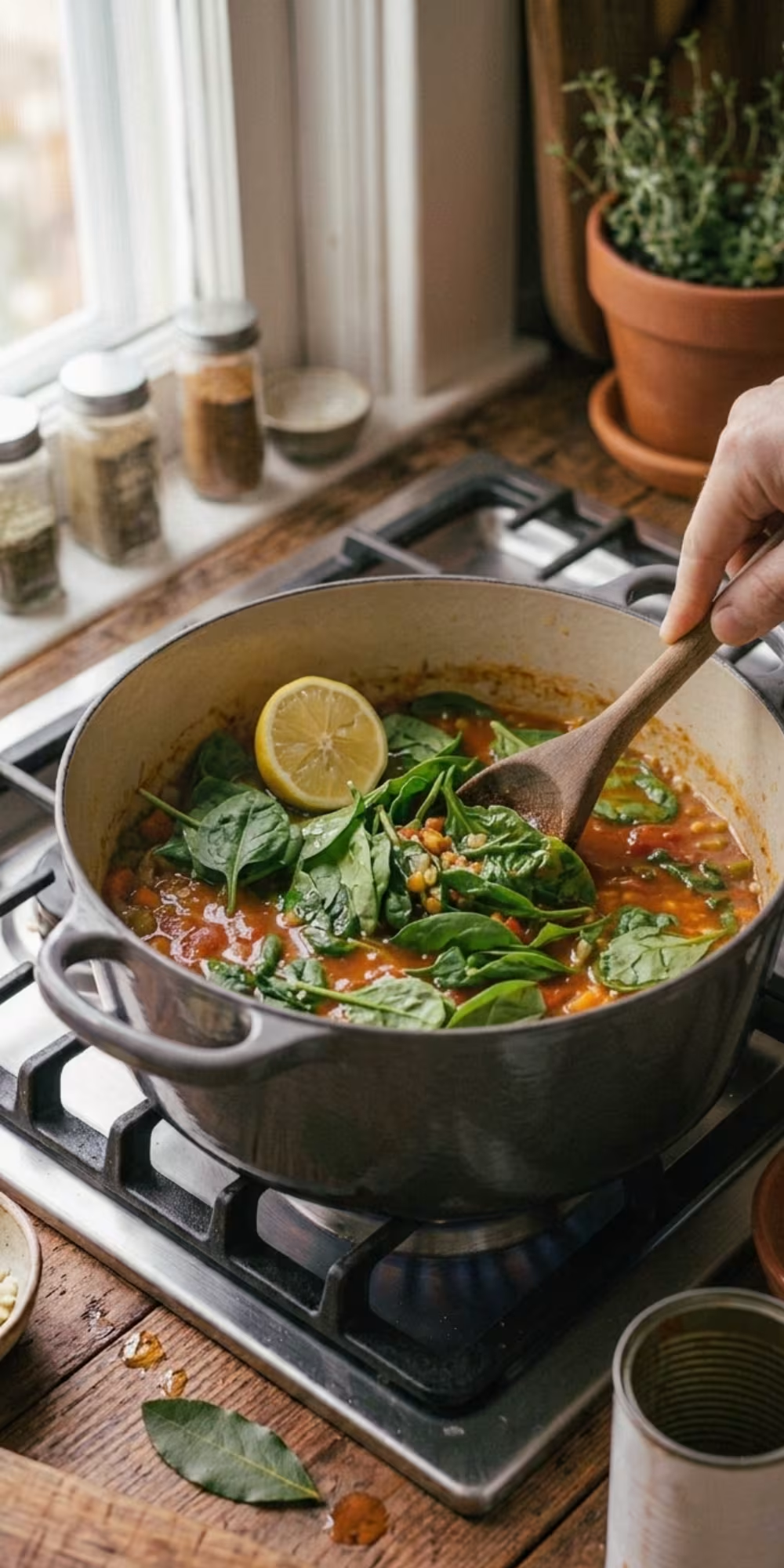
Stir in Spinach and Adjust the Seasoning
If you are using fresh spinach, fold it into the hot lentil stew during the final 2–3 minutes of cooking. Stir until the leaves wilt. Remove the bay leaf.
Taste the stew and add salt and freshly ground black pepper as needed. Finish with a small squeeze of lemon juice to brighten the savory flavors.
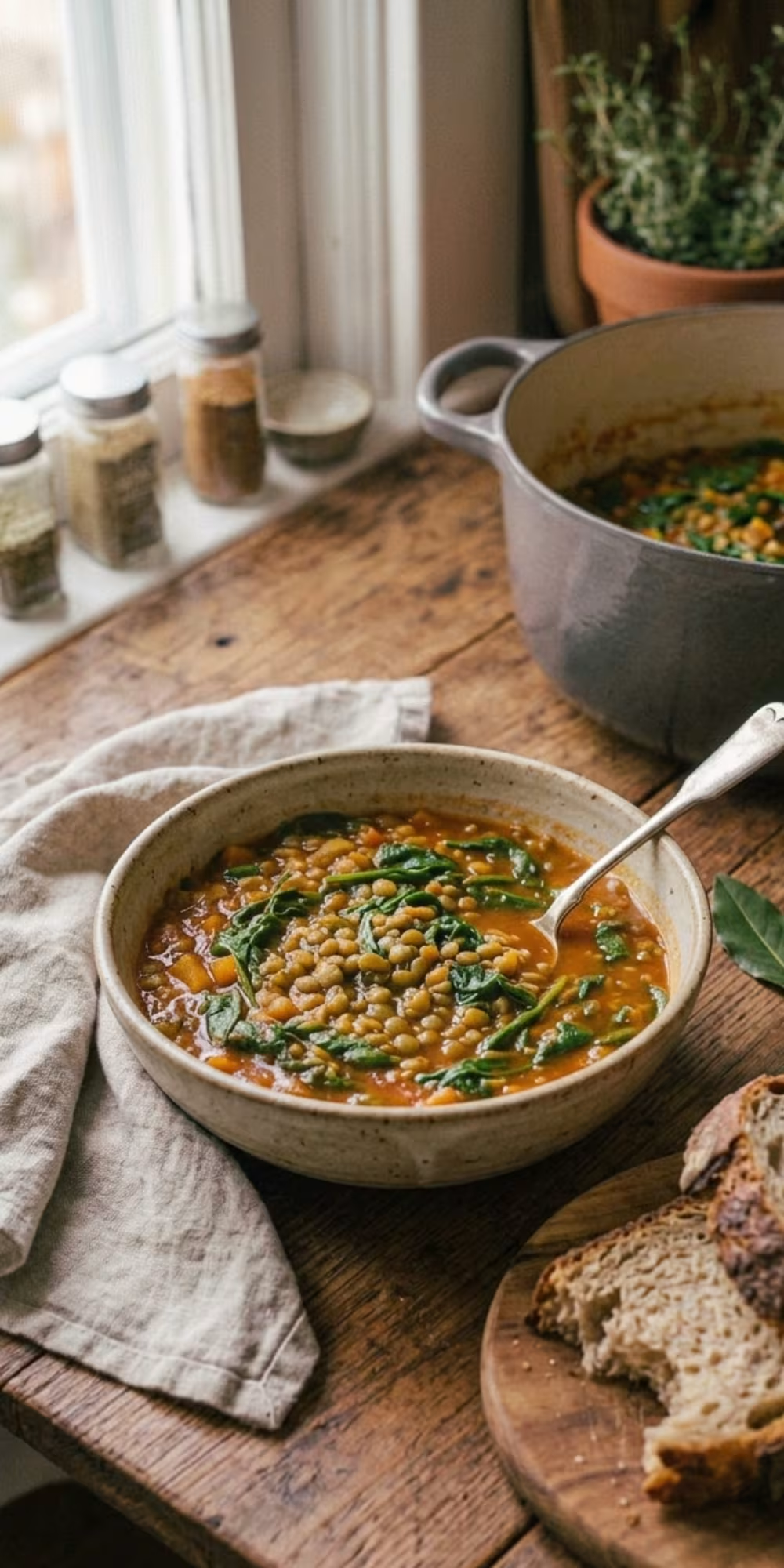
Rest Briefly and Serve Warm
Turn off the heat and let the stew stand for about 5 minutes. During this short rest, the lentils can absorb some of the remaining liquid and the flavors can settle.
Serve your homemade one pot lentil stew warm, with crusty bread, rice, or a fresh green salad. Add extra lemon juice or fresh herbs at the table if desired.
How to Tell When One Pot Lentil Stew Is Ready
The best lentil stew is thick and hearty, with tender lentils, softened vegetables, and enough broth to keep every spoonful moist. Use these final checks before serving:
- The lentils are tender all the way through.
- The carrots and celery are soft but not completely disintegrated.
- The broth has thickened without becoming dry or pasty.
- The salt, herbs, and acidity taste balanced.
- The bay leaf has been removed before serving.
If your stew is too thin, simmer it uncovered for a few minutes or mash a small portion of the cooked lentils into the broth. If it is too thick, gradually stir in warm broth or water.
Related: Vegan Camping Foods
Recipe Testing Notes and Cooking Tips for the Best One Pot Lentil Stew
A delicious one pot lentil stew should have tender lentils, vegetables that hold their shape, a thick and flavorful broth, and a consistency that makes every spoonful satisfying. The secret isn’t in any complicated ingredients. The real secret is choosing the right lentils, building up the flavors before adding the liquid, and letting the stew simmer until everything is cooked through.
6 Essential Tips for Flavorful Lentil Stew
Small technique changes can make a noticeable difference.
Choose the Right Lentils
Brown and green lentils are great choices for a nutritious one-pot lentil stew, as they tend to hold their shape when cooked over low heat. Red lentils cook quickly and break down easily, resulting in a soft, dense texture. Choose dried lentils and rinse them before cooking, and check the package for cooking instructions.
Build Flavor Before Adding Liquid
Sauté the onion, carrot, and celery in olive oil until soft. Add the minced garlic and your chosen spices at the end of this step to prevent burning. This aromatic base helps create a deeper, more balanced flavor than simply adding each ingredient to the pot at once.
Use a Gentle Simmer
After mixing the lentils, tomatoes, and vegetable broth together, bring the mixture to a boil and reduce the heat. Cooking on a low heat cooks the lentils thoroughly and also reduces excess evaporation. Cooking time depends on the age, variety, and temperature of the lentils, so don’t just rely on a clock to check if the lentils are tender.
Adjust the Liquid Gradually
Lentils absorb liquid as they cook, and the amount needed depends on the variety of pulse and other ingredients. If your pulse vegetable stew becomes too thick before the pulses are tender, add a little hot vegetable stock or water. If it becomes too thin at the end, reduce the heat to low for a short time, stirring occasionally, without a lid.
Finish With Fresh, Bright Flavors
Dried thyme, bay leaves, paprika, or cumin can enhance the flavor of lentils and vegetables. Taste the stew toward the end of cooking and add salt and pepper as needed. Adding a pinch of lemon juice and a little fresh parsley can enhance the flavor of a salty broth without overcomplicating the recipe.
Let the Stew Rest Before Serving
After turning off the heat, let the cooked stew sit for a while. The broth may thicken if left to stand, so check the consistency before serving. If it becomes thicker than you like, add a little hot broth or water. Remove the bay leaves, if any, before serving.
For a naturally thicker lentil stew, mash a small portion of the cooked lentils against the side of the pot and stir them back into the broth. This adds body without requiring flour, cream, or a separate thickening mixture.
What to Check When Testing This One Pot Lentil Stew
Use these checkpoints to assess the finished recipe.
A reliable homemade lentil stew recipe should be one that can be easily recreated. When testing the recipe, pay attention to how tender the lentils are, how quickly the broth is thickening, and whether the vegetables are finished cooking at the same time as the lentils. Write down the quantities and cooking methods that give the best results.
-
Lentil texture:
Tender throughout, with the amount of shape retention appropriate for the selected variety. -
Broth consistency:
Thick and spoonable without being dry, watery, or pasty. -
Vegetable texture:
Soft enough to eat comfortably while retaining a pleasant texture. -
Seasoning balance:
Savory, well-seasoned, and brightened with herbs or acidity when needed. -
Repeatability:
The recorded ingredient quantities and method produce a similar result when repeated. -
Leftover texture:
The stew remains enjoyable after chilling and can be loosened with liquid when reheated.
How to Fix Common Lentil Stew Problems
Quick solutions for common stovetop cooking issues.
One More Tip: Make Your Lentil Stew Meal-Prep Friendly
This easy one pot lentil stew can be a great option for preparing several meals in advance. Divide leftovers into shallow containers and refrigerate immediately. Lentils can absorb more liquid as the stew cools, so add a little broth or water when reheating if necessary. Refrigerate cooked leftovers for 3-4 days, or freeze for longer storage. Reheat leftovers at 165°F (74°C).
Related: Curried Red Bean Soup With Kale
One Pot Lentil Stew Variations and Substitutions
The best part about this one pot lentil stew is that you can easily adapt it to your tastes, diet, and what you have in your kitchen. Whether you want a spicy lentil stew, a Mediterranean-style version, a gluten-free vegetarian dinner, or a more nutritious lentil stew with potatoes, a few thoughtful ingredient changes can add a new dimension to this comforting recipe without complicating the cooking process.
Change one or two ingredients at a time so you can control the flavor, consistency, and cooking time. When changing lentil varieties or adding vegetables, check the stew as it simmers and adjust the liquid as needed.
1. Vegan Lentil Stew
This recipe uses vegetable broth and all-plant-based ingredients to make a satisfying vegan lentil stew. Onions, garlic, carrots, celery, tomatoes, lentils, and a variety of herbs create a delicious, multi-dimensional flavor without the need for meat or dairy.
Finally, sprinkle with fresh parsley, pepper, or lemon juice. Check to see if the packaged broth and optional toppings meet your dietary needs.
2. Spicy Lentil Stew
To make a spicy dal stew, add red chili powder, red chillies or your favourite chillies at the aroma stage. Smoked paprika and cumin powder can add warmth and depth to the flavour, while crushed fresh chillies add a pungent spiciness.
Cooking tip: Start with a small amount of chili, simmer, and taste before adding more. Lemon juice at the end can balance the richness and spice.
3. Mediterranean Lentil Stew
Bring a Mediterranean flavor to your vegetable lentil stew with oregano, thyme, chopped tomatoes, garlic, and fresh parsley. A handful of spinach and a little lemon juice give the flavor a bright finish.
You can also add olives if you like the salty taste. Taste before adding extra salt, as the olives and the packet broth may already have enough salt.
4. Lentil Stew with Potatoes
For a thicker potato and lentil stew, add diced Yukon Gold or red potatoes. Cut the potatoes into similar-sized pieces so they cook evenly, then simmer over low heat until both the potatoes and lentils are tender.
The potatoes release starch as they cook, which helps thicken the broth. If the stew becomes too thick before the lentils are cooked, add more hot broth or water.
5. Extra-Vegetable Lentil Stew
To increase the amount of vegetables in a lentil stew, add chopped zucchini, capsicum, mushrooms, sweet potatoes, or shredded kale. Choose vegetables based on the texture you want and how long they will take to cook.
Add tough vegetables first and quick-cooking vegetables last. Avoid adding too many vegetables to the pot, as adding too many vegetables can upset the liquid balance in the pot and increase the cooking time.
6. Gluten-Free Lentil Stew
Lentils, vegetables, herbs, and regular tomatoes are naturally gluten-free ingredients. To make gluten-free lentil stews, check your vegetable broth, spice mixes, and other packaged products for gluten-containing ingredients or cross-contact warnings.
If you are cooking for someone with celiac disease, use ingredients and preparation methods appropriate for their needs.
7. High-Protein Lentil Stew
Lentils are already high in plant-based protein and fiber. For a more nutritious and high-protein vegetarian dinner, consider adding drained chickpeas, white beans, or another suitable legume.
Adding additional beans will change the serving size and nutritional content. Recalculate the nutritional information using the final ingredient amounts, rather than relying on the amounts given in the original recipe.
8. Tomato-Free or Milder Lentil Stew
If you prefer a less tomato-heavy stew, reduce the amount of tomatoes and use vegetable broth in place of the reduced liquid as needed. For a completely tomato-free version, omit the tomatoes and enhance the flavor with additional aromatic spices, herbs, and appropriate vegetables.
This will result in a different flavor and texture, so taste it toward the end and adjust the seasoning gradually.
Which Lentils Can You Substitute?
Choosing the right lentils makes a noticeable difference when it comes to homemade dal stew or homemade lentil stew. Brown and green lentils usually hold their shape well, while broken red and yellow lentils soften quickly and can create a thicker, creamier texture. Cooking time depends on the variety, age, and brand of the dal, so don’t just rely on a clock to determine when your dal is done, but rather base your decision on how soft the lentils are.
| Lentil type | Best use | What to expect |
|---|---|---|
| Brown lentils | Classic one pot lentil stew | Tender, earthy, and generally able to hold their shape. |
| Green lentils | Chunky vegetable stew | Often firmer, with a pleasant bite after cooking. |
| Red lentils | Thick, creamy lentil stew | Break down more readily and usually cook faster. |
| Yellow split lentils | Soft, comforting stew | Texture depends on the variety; split lentils can become creamy. |
| Canned lentils | A quicker weeknight variation | Already cooked; drain and rinse, then add near the end to heat through. |
Easy Ingredient Swaps for Lentil Stew
You do not need to buy every ingredient to prepare an easy lentil stew. These practical substitutions can help you use what you have while preserving the recipe’s overall balance.
| If you’re out of… | Try instead | Helpful adjustment |
|---|---|---|
| Celery | Extra carrots or bell pepper | The aromatic flavor will change slightly. |
| Fresh garlic | Garlic powder | Use a modest amount and adjust to taste. |
| Fresh spinach | Frozen spinach or kale | Add near the end and cook until heated through. |
| Vegetable broth | Water with appropriate seasonings | Adjust salt and herbs to compensate for the milder base. |
| Fresh lemon | A small amount of suitable vinegar | Add gradually, taste, and avoid making the stew too acidic. |
| Dried thyme | Oregano or Italian seasoning | Use a compatible quantity and check whether the blend contains salt. |
Meal Prep, Storage, Freezing & Reheating One Pot Lentil Stew
This easy one pot lentil stew is a functional choice for healthy meal prep, make-ahead vegetarian dinners, and satisfying weekday lunches. Store it properly, freeze individual portions, and reheat with a little broth to bring back its comforting, spoonable softness.
How to Store Lentil Stew in the Refrigerator
Homemade lentil stew stays good for several days if refrigerated and stored properly. When refrigerated, this one pot lentil stew becomes convenient for planned lunches and weeknight quick meals.
- Transfer the stew into clean, shallow, airtight containers.
- Refrigerate promptly; do not wait for a large pot to cool completely on the counter.
- Keep your refrigerator at 40°F (4°C) or below.
- Label each container with the cooking date.
- Use refrigerated leftovers within 3–4 days.
Can You Freeze One Pot Lentil Stew?
Yes! Lentil stew is a convenient and freezer-friendly dish. Refrigerating meals for individual servings helps you prepare affordable vegetarian meals in advance and reduces the need to cook fresh every day.
- Cool and portion the stew into freezer-safe containers or bags.
- Leave a little headspace for liquid expansion.
- Seal, label, and date every portion.
- Freeze promptly at 0°F (-18°C) or below.
- For best quality, aim to use frozen stew within 2–3 months.
The stew may thicken after freezing because lentils absorb liquid. Add a little vegetable broth or water when reheating.
One Pot Lentil Stew Storage Guide
Use this quick reference when planning make-ahead meals. Freezer time here is a quality recommendation; USDA guidance lists 2–3 months for soups and stews, while continuously frozen food remains safe indefinitely when kept at 0°F (-18°C), although quality can decline.
| Storage method | Recommended time | Best practice |
|---|---|---|
| Room temperature | Up to 2 hours | Refrigerate sooner in hot conditions. |
| Refrigerator | 3–4 days | Use shallow, airtight containers at 40°F or below. |
| Freezer | 2–3 months for best quality | Package tightly and label with the date. |
| Reheated leftovers | 165°F (74°C) | Heat thoroughly and check with a food thermometer. |
How to Reheat Lentil Stew Without Drying It Out
Refrigerated lentil stew often becomes thicker as it sits. The lentils continue to absorb some of the cooking liquid, so gently loosen the stew before serving rather than adding a large amount of liquid all at once.
- Reheat on the stovetop Add a portion to a saucepan with a splash of vegetable broth or water. Stir over medium heat until steaming throughout, bring soups and stews to a rolling boil, and verify that the leftovers reach 165°F (74°C).
- Reheat in the microwave Transfer a serving to a microwave-safe dish. Cover with a vented lid, heat in intervals, and stir between intervals to distribute heat evenly. Check several spots with a food thermometer.
- Reheat directly from frozen You can reheat frozen stew in a saucepan or microwave without thawing first. Allow additional time, stir frequently, and check that the entire portion reaches 165°F (74°C).
- Refresh the flavor before serving Once thoroughly reheated, adjust the consistency with a little broth and finish with fresh lemon juice, parsley, or your preferred herbs.
Easy Lentil Stew Meal Prep for the Week
If you like to make healthy vegetarian meals in advance, this nutritious lentil stew can make your weekday lunches and dinners easier to prepare. Portion the cooled stew according to your meal plan, then refrigerate the portion you’ll eat within 3-4 days and quickly freeze the rest.
- Pair a serving with rice, whole-grain bread, or a fresh salad.
- Store fresh garnishes separately to preserve their texture.
- Keep frozen servings dated so you can use older portions first.
- Reheat only the portion you plan to eat and avoid repeatedly warming a large batch.
This method works well for make-ahead lunches, budget-friendly vegetarian dinners, and easy weekday meal planning.
For more details please check USDA Food Safety and Inspection Service — Leftovers and Food Safety . Storage recommendations assume proper handling and consistent refrigeration or freezing; when in doubt, discard leftovers.
What to Serve with One Pot Lentil Stew
Never worry about what to serve with lentil stew again. This nutritious, one pot lentil stew pairs wonderfully with crusty bread, fluffy rice, fresh salad, roasted vegetables, and simple toppings. My favorite way to serve it is to add a refreshing ingredient to a simple side dish. It makes dinner easy and adds a variety of textures, flavors, and colors to the plate at the same time.
Best Side Dishes for Lentil Stew
1. Crusty Bread or Garlic Bread
Crispy bread is one of the best side dishes to accompany healthy lentil stew, as it soaks up the delicious broth and adds a crunchy contrast to the soft lentils and vegetables. Serve each bowl with warm sourdough, French-style baguette, or garlic bread.
2. Steamed Rice or Brown Rice
The tomato and lentil broth pairs well with steamed white rice, while brown rice adds a nice chewy texture. Pour the broth over a small amount of rice for an easy and satisfying vegetarian meal. Adjust the serving size according to your appetite.
3. Fresh Green Salad
A fresh green salad balances the warmth of the thick lentil broth. Toss lettuce, cucumber, cherry tomatoes, and red onion with lemon juice, olive oil, and a pinch of pepper. This refreshing, sweet-and-sour dressing complements the flavorful broth without making the dinner too heavy.
4. Roasted Potatoes or Sweet Potatoes
Oven-roasted potatoes have crispy edges and fluffy insides, which pair well with slow-cooked, tender lentils. For a different flavor, try roasting sweet potatoes with paprika, garlic, and pepper. Keep the seasoning simple, so that the stew is the main focus of the meal.
5. Warm Flatbread or Whole-Wheat Pita
Flatbreads and pitas are convenient alternatives to sliced bread. Tear them into pieces to scoop up thick lentil stews, or warm them briefly before serving. Whole-wheat pitas have a mild nutty flavor and go especially well with stews seasoned with cumin, paprika, garlic, and various spices.
6. Roasted or Steamed Vegetables
Roasted broccoli, cauliflower, carrots, or green beans add extra color and variety to your lentil stew dinner. Roast the vegetables with olive oil and herbs, or steam them as a light side dish. Choose vegetables that complement the ingredients already in your stew.
7. Lemon-Herb Couscous or Quinoa
A handful of couscous or quinoa can make a bowl of lentil stew a more nutritious meal. Serve the grain with chopped parsley, lemon juice, and a drizzle of olive oil. When you want a naturally gluten-free grain, quinoa is a viable option; opt for a gluten-free couscous substitute if necessary.
8. Sautéed Spinach or Garlic Greens
A quick stir-fry of spinach, kale, or other leafy greens adds a refreshing kick to a lentil stew. Use olive oil, garlic, and a little lemon juice to keep the flavor simple. This is especially useful when you want to serve an extra vegetable without making a complicated side dish.
Simple Tips for Serving Lentil Stew
You do not need several side dishes to make this easy one pot lentil stew feel special. A few well-chosen additions can make the meal more enjoyable without adding much work.
- Add lemon juice just before serving to brighten the flavors.
- Garnish with fresh parsley or coriander for freshness.
- Serve bread alongside thinner stews for soaking up the broth.
- Choose a crisp salad to balance a thick, hearty stew.
- Keep grains and stew separate when packing meal-prep portions.
- Offer chili flakes or black pepper at the table for extra heat.
One Pot Lentil Stew: Troubleshooting & FAQs
Common Lentil Stew Cooking Problems
01 Why are my lentils still hard after cooking?
Lentils can stay firm when they are old, have not simmered long enough, or have been cooked in very acidic liquid before softening. Water quality can also affect cooking time.
How to fix hard lentils: Add a little hot water or vegetable broth if necessary, maintain a gentle simmer, and continue cooking until the lentils are tender. Check them every 5–10 minutes rather than relying only on a timer.
02 How do I make lentil stew thicker without adding flour?
The easiest way to thicken homemade lentil stew naturally is to mash a small portion of the cooked lentils and vegetables against the side of the pot. Stir them back into the stew to create a creamier consistency without adding cream or flour.
- Simmer uncovered briefly to evaporate excess liquid.
- Mash a portion of the lentils for a naturally thick texture.
- Add extra vegetables or cooked lentils if the flavor allows.
Remember that lentil stew thickens as it cools. Avoid reducing it too aggressively if you plan to store or freeze leftovers.
03 What should I do if my lentil stew is too watery?
If your one pot lentil stew looks more like soup than stew, remove the lid and simmer gently for a few minutes, stirring occasionally. This allows some of the excess liquid to evaporate.
You can also mash a few cooked lentils into the broth. Avoid adding dry lentils at the last minute because they need time to absorb liquid and cook properly.
04 How can I fix lentil stew that tastes bland?
A bland lentil stew usually needs better seasoning balance rather than a large amount of one spice. Taste it first, then adjust gradually.
- Add salt a little at a time if needed.
- Stir in lemon juice for freshness and brightness.
- Add black pepper, cumin, paprika, thyme, or garlic as appropriate.
- Finish with fresh parsley or another compatible herb.
If the flavor is weak because you used water instead of broth, a small amount of suitable vegetable stock concentrate may help. Check its sodium content before adding more salt.
05 Why does my lentil stew taste too acidic?
Canned tomatoes, tomato paste, and lemon juice can make lentil stews more tangy than you might expect. The intensity of this tangy flavor also depends on the variety of tomatoes and the amount of liquid in the stew.
Add a little more broth or water, simmer briefly, and taste again. If the stew tastes too strong despite the balanced acidity, adding a little olive oil or extra cooked vegetables may improve the flavor.
Avoid adding too much sugar or baking soda to adjust the acidity. Make small adjustments and taste as you cook.
Ingredients, Lentil Types & Substitutions
06 What lentils are best for one pot lentil stew?
Brown and green lentils are excellent choices for a hearty one pot lentil stew because they generally hold their shape better than red or yellow split lentils.
- Brown lentils: Mild, earthy flavor and a versatile texture for everyday lentil stew.
- Green lentils: Often firmer, making them useful when you want distinct lentils in the finished dish.
- Red lentils: Cook more quickly and break down more readily, creating a softer, thicker stew.
- Black beluga lentils: Retain a distinctive shape and create a different texture and appearance.
Choose the lentil variety specified in your recipe for the most predictable cooking time and liquid balance.
07 Do I need to soak lentils before making stew?
No. Most common dried brown and green lentils do not require soaking before cooking. Sort through them to remove any debris, rinse under running water, and add them to your pot.
Soaking may shorten cooking time in some cases, but it also changes how much liquid the lentils need. If you soak them, adjust the recipe and check for doneness earlier.
Split red lentils generally cook quickly without soaking. Always follow the package directions if your chosen lentil variety has specific preparation instructions.
08 Can I use canned lentils instead of dried lentils?
Yes. Canned lentils are already cooked, so they can make a quick lentil stew when you do not have time to simmer dried lentils. Drain and rinse them if appropriate for your recipe.
First cook the onion, carrots, celery, garlic, seasonings, tomatoes, and broth until the vegetables are tender. Stir in the canned lentils near the end and simmer just long enough to heat them through and blend the flavors.
Important: Do not use the dried-lentil cooking time or automatically use the same liquid quantity. Canned lentils need much less cooking, and the stew may require less broth.
09 Can I add potatoes, sweet potatoes, or other vegetables?
Absolutely. Potatoes, sweet potatoes, zucchini, bell peppers, mushrooms, and leafy greens can all work in vegetable lentil stew. Cut firmer vegetables into similarly sized pieces so they cook more evenly.
Add potatoes or sweet potatoes early enough to become tender. Add zucchini, spinach, kale, and other quick-cooking vegetables later to help preserve their texture.
Keep an eye on the broth because extra vegetables can release moisture, absorb liquid, or change how thick the stew becomes.
10 Is one pot lentil stew vegan and gluten-free?
A lentil stew can be both vegan and gluten-free when you use suitable ingredients. Lentils, vegetables, herbs, and plain tomatoes are naturally plant-based, but packaged ingredients should still be checked.
- Use vegetable broth instead of chicken or beef stock.
- Check stock cubes, seasoning blends, and sauces for gluten or animal-derived ingredients.
- Avoid butter, cream, and other animal-derived additions in a vegan version.
- Check product labels and cross-contact warnings when required for a medically necessary gluten-free diet.
Serve with a compatible side dish if you want to keep the whole meal vegan or gluten-free.
Storage, Freezing & Meal Prep
11 How long does lentil stew last in the refrigerator?
Properly refrigerated cooked lentil stew generally keeps for 3–4 days when stored in a refrigerator at 40°F (4°C) or below.
Transfer leftovers into shallow containers and refrigerate promptly. Do not leave the stew at room temperature for more than two hours, or one hour when temperatures are above 90°F (32°C).
Label the container with the preparation date and discard leftovers that have been stored too long or handled unsafely. Smell and appearance alone cannot establish food safety.
For detailed guidance, consult the USDA leftovers and food safety guide .
12 Can you freeze homemade lentil stew?
Yes. Lentil stew is generally suitable for freezing, making it a convenient option for batch cooking and future weeknight dinners. Cool and portion it safely before freezing in airtight, freezer-safe containers.
For best quality, use frozen soup and stew within approximately 2–3 months. Food kept continuously frozen at 0°F (-18°C) remains safe longer, although its quality may decline.
Leave appropriate headspace in containers for expansion, label each portion, and thaw in the refrigerator or use a safe reheating method. Avoid repeatedly thawing and refreezing portions unnecessarily.
13 What is the best way to reheat lentil stew?
Reheat lentil stew on the stovetop over medium-low heat, stirring occasionally until it is steaming throughout. Add a small splash of water or broth if the mixture has thickened in the refrigerator.
For food safety, heat leftovers to an internal temperature of 165°F (74°C). If using a microwave, cover the container appropriately, stir during reheating, and check the temperature in multiple places.
Reheat only the portion you plan to eat, and follow safe storage and handling guidance for the remaining portions.
Cooking Methods, Serving & Nutrition
14 Can I make lentil stew in a slow cooker or Instant Pot?
Yes, but the ratio of liquid and cooking time varies by appliance. Slow cookers cook over low heat for a long time, while Instant Pots cook under pressure and may require a certain minimum amount of liquid.
For pressure cookers, use a tested recipe that is tailored to your appliance. Consider the time it takes for pressure to build up and release, and avoid filling the cooker beyond its specified capacity.
Important: Do not apply the cooking liquid directly to an electric pressure cooker while cooking on the stove. The tomato-based mixture may burn if not prepared according to the appliance manufacturer’s instructions.
15 What can I serve with one pot lentil stew?
This nutritious vegetarian stew goes well with crusty bread, whole-grain toast, brown rice, quinoa, or a fresh green salad. Roasted vegetables can also add color, texture, and variety to the meal.
For extra flavor, top each bowl with fresh parsley, lemon juice, chili powder, or a dollop of a suitable dairy-free yogurt.
Choose a side dish based on the thickness and seasoning of your stew. Thicker lentil stews go especially well with bread, while thinner versions can be served with grains.
16 Is lentil stew a good source of plant-based protein and fiber?
Lentils naturally provide plant-based protein and fiber, along with a variety of vitamins and minerals. Vegetables add variety to the meal, while broths and spices add flavor.
The exact nutritional value per serving depends on the type and amount of pulses, vegetables, oil, broth, and the final number of servings. Do not assume that all pulse stews will have the same nutritional value, but calculate the nutritional value using the actual recipe quantities.
If you want to increase the protein content, you may want to consider adding a suitable bean or other suitable plant protein. Recalculate the nutritional value after making changes to the recipe.
If you like this article about the One Pot Lentil Stew Recipe, please share this with your friends on Facebook and Pinterest. Also, subscribe to my blog to get all the latest content first on your mobile.