Best Onion Chutney (Vengaya Chutney): Easy South Indian Recipe
Another one of the South Indian chutneys or condiments is Vengaya Chutney which we also call Onion Chutney. I love to serve this chutney with all my favorite South Indian breakfasts i.e. Idli, Dosa etc. This amazing Indian onion chutney is traditionally made with onions, dried red chilies, roasted urad dal, chana dal, tamarind, and aromatic sesame oil.
Moreover, this South Indian onion chutney is a very versatile recipe. I will tell you different ways to make it according to your mind later. So without further delay, let’s start this South Indian Onion Tomato Chutney recipe at my house which I think is the best.
Onion Chutney (Vengaya Chutney)
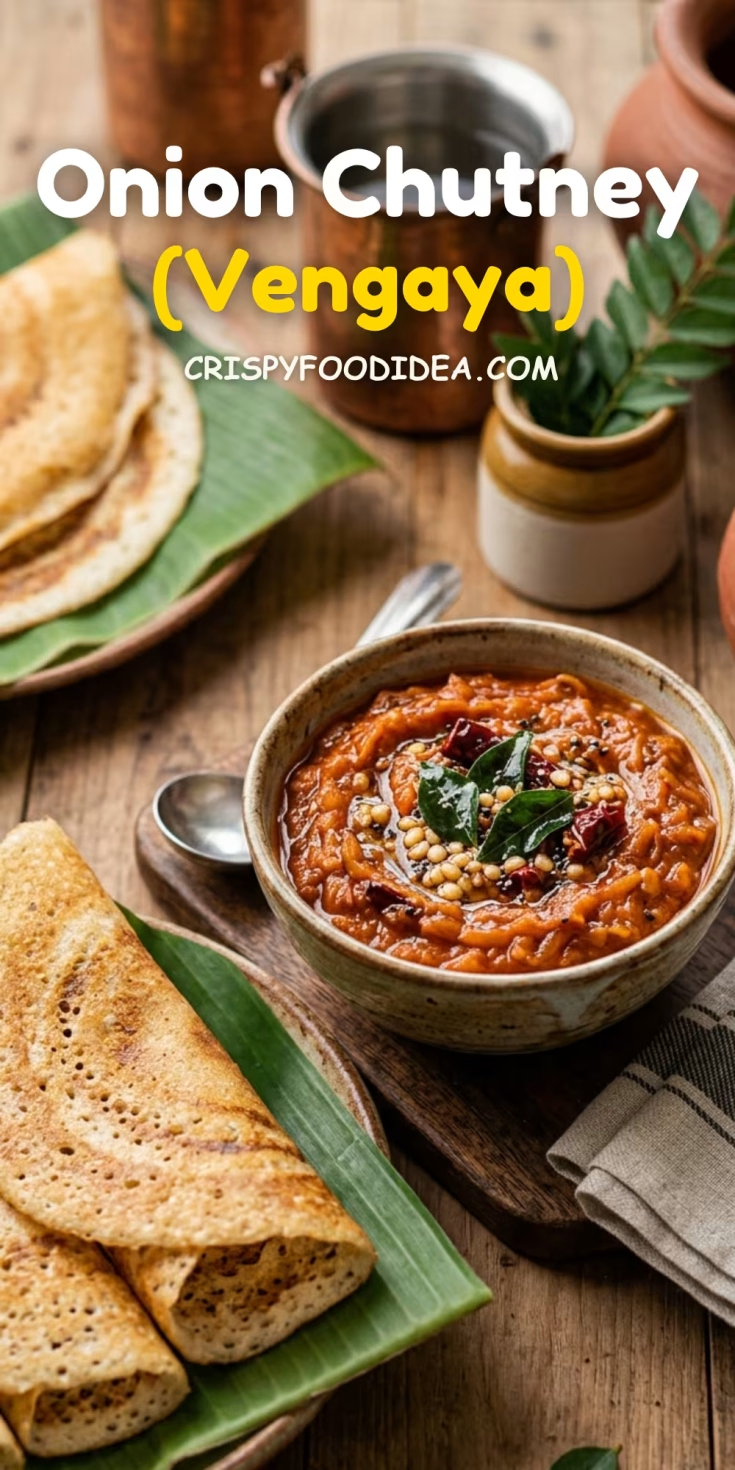
A delicious, sweet and spicy South Indian sauce made with my favorite caramelized onions, dried red chilies, tamarind and roasted lentils. Infused with a fragrant mustard-curry leaf infusion, this sauce is a wonderful accompaniment to hot, crunchy dosa and fluffy idli. Try it today
Ingredients
- For Sautéing & Grinding:
- Sesame (Gingelly) Oil: 1.5 tbsp (traditional, but cooking oil works)
- Urad Dal (Split skinless black gram): 1 tbsp
- Chana Dal (Split Bengal gram): 1 tsp
- Dried Red Chilies: 3-4 (adjust to taste; mix Kashmiri for color)
- Onions: 2 large (approx. 2 cups, sliced)
- Garlic: 2-3 cloves (optional)
- Tamarind: Small marble-sized piece
- Salt: To taste
- Jaggery / Sugar: A pinch (optional, balances heat and tartness)
- For Tempering (Tadka):
- Sesame Oil: 1 tsp
- Mustard Seeds: ½ tsp
- Urad Dal: ½ tsp
- Curry Leaves: 1 sprig
- Asafoetida (Hing): A pinch
Instructions
- Roast Lentils & Chilies: Heat 1.5 tbsp sesame oil in a pan over medium heat. Add urad dal, chana dal, and dried red chilies. Roast until the lentils turn golden brown and fragrant. Remove and transfer them to a blender jar.
- Sauté Onions: In the same pan, add the sliced onions and garlic. Sauté on medium-low heat until the onions turn translucent and soft with slightly light-brown edges.
- Add Tamarind: Toss in the tamarind piece and fry for another minute. Turn off the heat and let the mixture cool completely.
- Grind: Transfer the sautéed onion mixture to the blender containing roasted lentils. Add salt, a pinch of jaggery, and ¼ cup water. Grind into a smooth, thick paste. (Add a splash more water if too thick, but keep it spreadable). Transfer to a serving bowl.
- Temper (Tadka): Heat 1 tsp oil in a small pan. Add mustard seeds and let them pop. Add urad dal, curry leaves, and a pinch of hing. Pour this sizzling tempering directly over the blended chutney.
Notes
- Caramelization: Don't rush frying the onions—softening them thoroughly removes raw sharpness and gives the chutney its rich, subtle sweetness.
- Oil Selection: Gingelly (sesame) oil gives the authentic South Indian diner-style flavor.
- Storage: Keep in an airtight glass container in the refrigerator for up to 4–5 days.
What Is Onion Chutney (Vengaya Chutney)?
Onion chutney, also known as Vengaya chutney, is a delicious South Indian chutney made mainly with onions, dried red chilies, tamarind and roasted lentils. It is a popular accompaniment to dosa, idli, uttapam and other savory South Indian breakfast dishes. With its salty onion flavor, mild sweetness, a sour finish and the convenience of adding your own level of spiciness, this homemade onion chutney is a great alternative to the traditional coconut chutney.
What does Vengaya Chutney mean? In Tamil, vengayam means onion. Vengaya chutney refers to an onion-based chutney commonly prepared in South Indian households. Recipes vary by region and family, with some versions using tomatoes, garlic, shallots, coconut, or different combinations of spices.
What Is South Indian Onion Chutney Made Of?
The beauty of traditional onion chutney lies in its simple ingredients and their combined effectiveness. Onions add the main flavour and density, while roasted lentils add depth. Dried red chillies add spiciness, tamarind brings a sour note, and sesame oil adds a distinct salty aroma. Finally, the chutney can be made even more aromatic by sprinkling it with mustard seeds, betel leaves, and curry leaves.
What Does Onion Chutney Taste Like?
A balanced onion chutney tastes salty, slightly sweet from the cooked onions, pleasantly sour from the tamarind, and spicy to your liking. Properly roasted lentils add depth to the flavor, and the final simmering imparts a tangy aroma. Cooking the onions until they are soft and lightly golden reduces their raw crunch without the need for deep caramelization.
Why Is Onion Chutney Served With Dosa and Idli?
Onion chutney with dosa and onion chutney with idli are quite a popular combination, as the tangy taste of the chutney goes well with the mild taste of the steamed idli and the crunchy edge of the dosa. Its thick and spoonable texture also makes it easy to serve with other tiffin favorites.
- Crispy dosa and masala dosa
- Soft idli and mini idli
- Uttapam and savory pancakes
- Medu vada and South Indian tiffin
Onion Chutney vs. Tomato Chutney vs. Coconut Chutney
Although all three are popular types of chutney, they taste different. Onion chutney is salty and has more onion flavor; tomato chutney is usually brighter and tangy; and coconut chutney is usually lighter, creamier, and fresher. Which one you choose depends on your meal and your taste preferences.
If you love homemade South Indian food, this Vengaya Chutney recipe can be a versatile addition to your breakfast table. Serve it with hot dosa or idli with fresh chutney, adjust the amount of dried chilies to your taste, and serve it with your favorite tiffin dish for a satisfying home-cooked meal.
Ingredients for Onion Chutney (Vengaya Chutney)
This South Indian Onion Chutney recipe combines sauteed onions, roasted lentils, dried red chillies, sour tamarind and aromatic sesame oil to make a delicious homemade chutney. Serve it with crunchy dosa, soft idli, uttapam or your favourite South Indian breakfast.
For the Onion Chutney
These ingredients form the base of a classic-style South Indian vengaya chutney.
- 2 medium onions Peeled and sliced; red onions work especially well for a colorful chutney.
- 1 tablespoon sesame oil Also called gingelly oil; adds a characteristic South Indian flavor.
- 1 tablespoon urad dal Provides a roasted, savory flavor.
- 1 tablespoon chana dal Adds nuttiness and body to the blended chutney.
- 3–5 dried red chilies Adjust the quantity and variety to suit your preferred spice level.
- 1 small piece of tamarind Adds a tangy flavor; adjust according to its strength.
- 2 garlic cloves (optional) For a more savory, aromatic onion and garlic chutney.
- Salt, to taste Season gradually and adjust after blending.
- Water, as needed Add little by little to achieve your preferred consistency.
For the Tempering (Tadka)
A quick tempering enhances the aroma and brings the onion chutney together.
- 1 teaspoon sesame oil Use enough to release the aroma of the tempering ingredients.
- ½ teaspoon mustard seeds Allow them to pop in the hot oil.
- ½ teaspoon urad dal Cook until lightly golden, not burnt.
- 6–8 fresh curry leaves Add carefully because fresh leaves can splutter in hot oil.
- A pinch of asafoetida (optional) Check the ingredients if you need a gluten-free preparation.
Ingredient Tips for the Best Vengaya Chutney
Red onions add bright color and a deliciously sweet flavor. Yellow onions or small onions can also be used, but their flavor and texture will be slightly different.
The dried chilies add a touch of spice, while the tamarind adds a sourness. Start with a small amount and adjust the amount as needed based on your taste.
Add water gradually while kneading. The thick, spoonable chutney goes especially well with dosa and idli.
Yes! This version does not contain any coconut. Roasted betel leaves and chickpeas give the chutney a thick and nutty flavor, while cooked onions form the base of its main flavor. This is a viable option for those looking for a homemade coconut-free onion chutney for dosa and idli.
How to Make Onion Chutney (Vengaya Chutney)
Making homemade onion chutney is simple when you roast the lentils carefully, sauté the onions until soft, and balance the heat of dried red chilies with the tanginess of tamarind. This flavorful South Indian onion chutney recipe pairs beautifully with dosa, idli, uttapam, and other savory breakfast dishes.
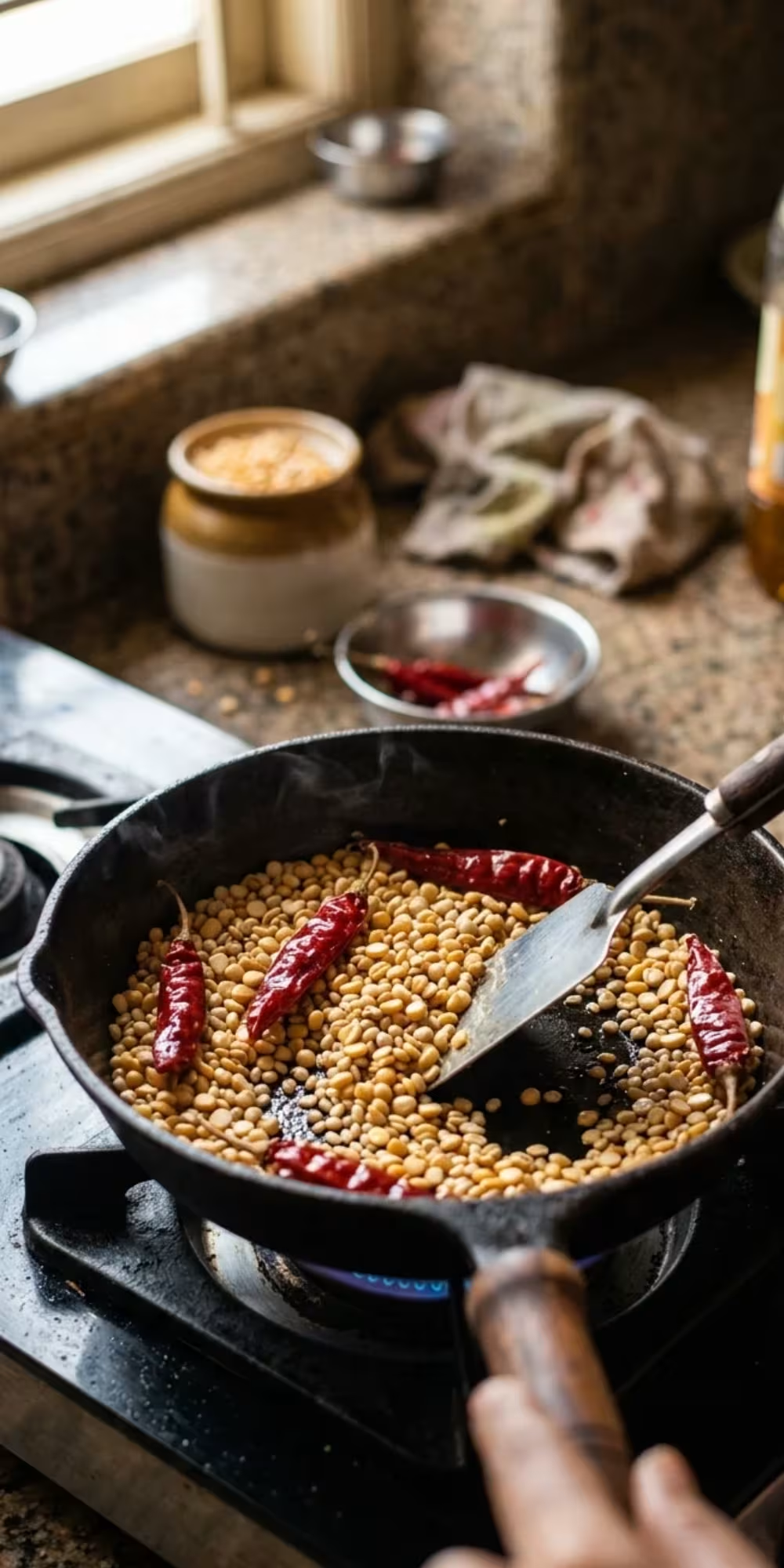
Roast the Lentils and Dried Red Chilies
Heat a little sesame oil in a pan over medium-low heat. Add the urad dal and chana dal and roast, stirring frequently, until they turn lightly golden and release a nutty aroma. Add the dried red chilies and roast briefly until fragrant.
This step builds the savory foundation of your Vengaya Chutney. Keep the ingredients moving so the lentils and chilies roast evenly without burning.
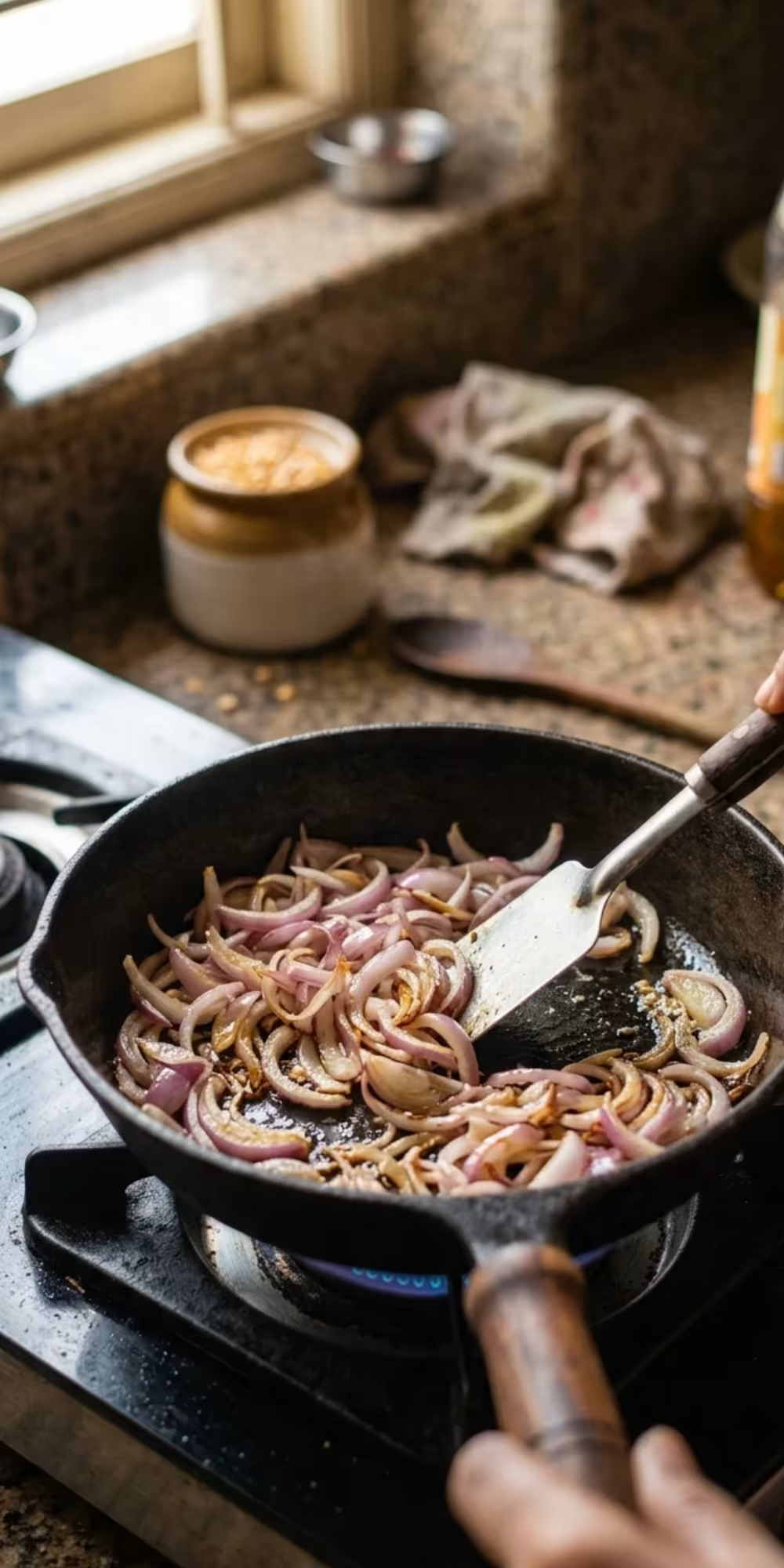
Sauté the Onions Until Soft and Fragrant
In the same pan, add the remaining sesame oil if needed. Add the sliced onions and sauté over medium heat, stirring occasionally, until they soften and develop lightly golden edges. Add the optional garlic and cook until fragrant.
Allow enough time for the raw onion aroma to mellow. Properly cooked onions help create a rich, savory flavor without overpowering the dried chilies and tamarind.
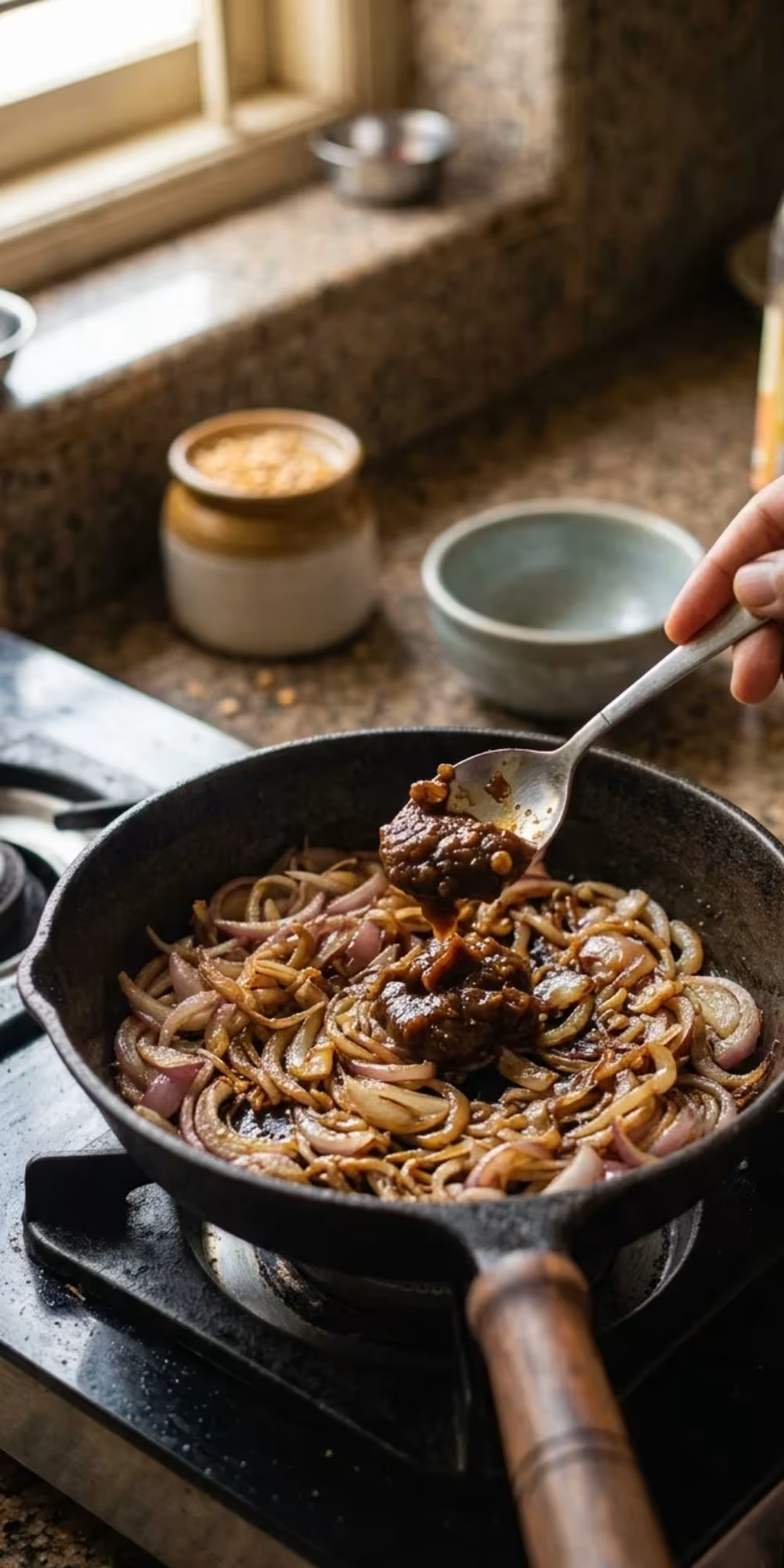
Add the Tamarind and Combine the Ingredients
Add the tamarind according to your recipe’s ingredient quantities. Stir it into the cooked onion mixture so its tangy flavor combines with the savory onions and roasted spices. Turn off the heat once everything is properly cooked.
Let the mixture cool until it is safe to handle before transferring it to a mixer grinder. This also makes blending more manageable.
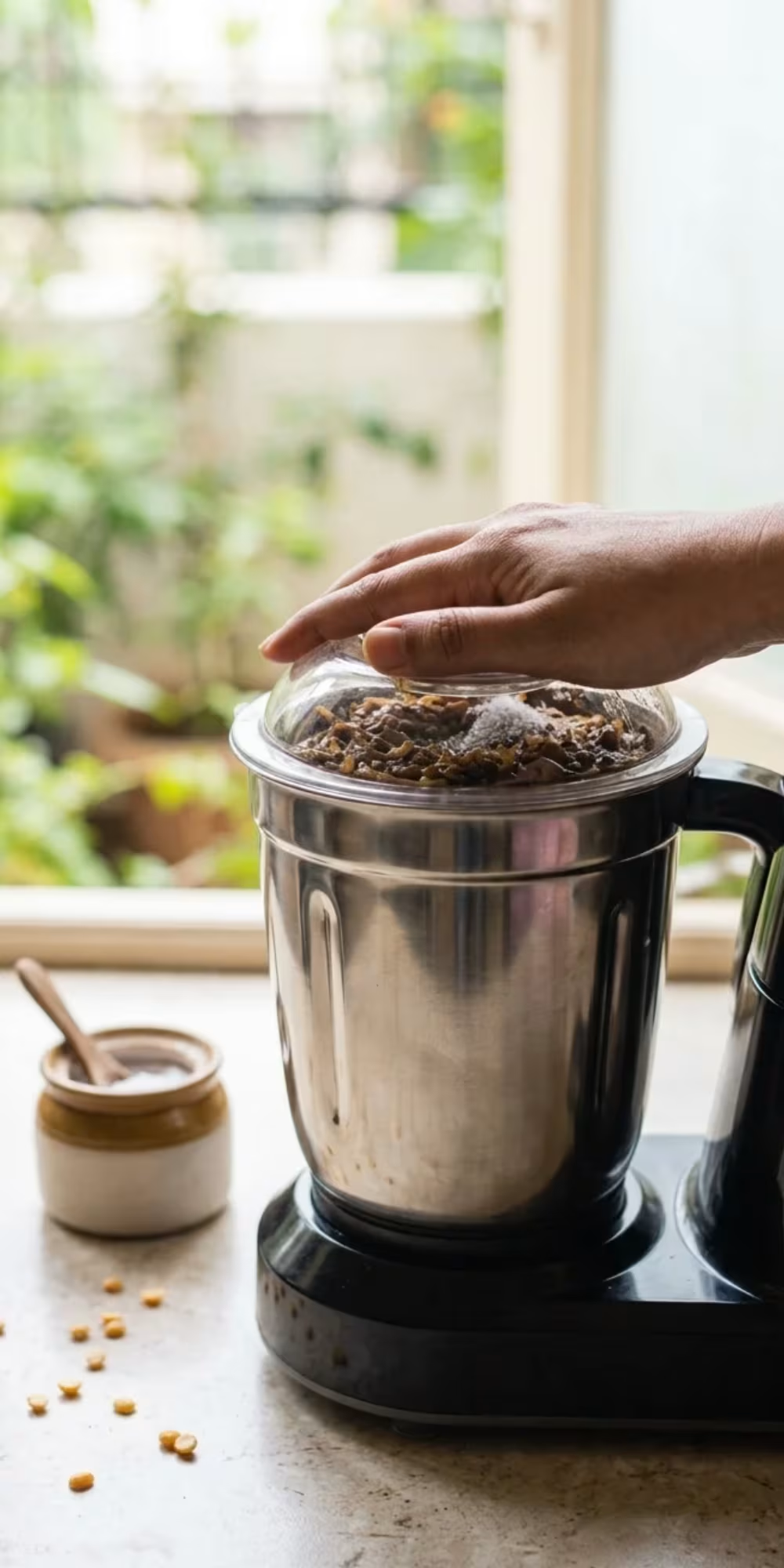
Blend Into a Smooth, Thick Onion Chutney
Transfer the cooled onion mixture and roasted lentils to a clean mixer grinder jar. Add salt and blend until the chutney reaches your preferred consistency. Add water a little at a time only when needed.
For onion chutney for dosa or idli, aim for a thick, spoonable texture that spreads easily without running across the plate.
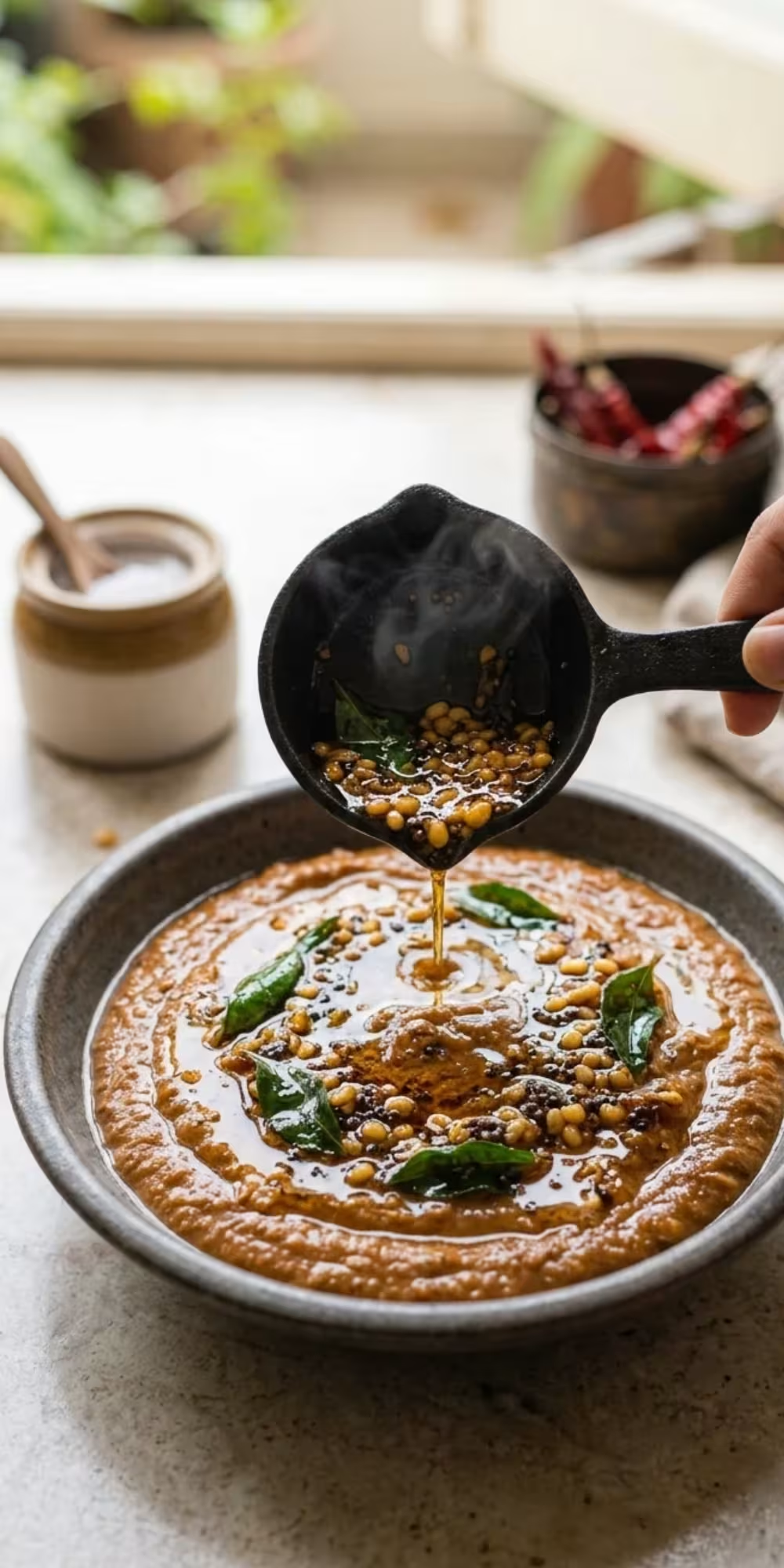
Prepare the Mustard Seed and Curry Leaf Tempering
Heat sesame oil in a small pan. Add mustard seeds and let them begin to pop. Add urad dal and cook until lightly golden, then add curry leaves and optional asafoetida. Stir briefly until fragrant, taking care not to burn the ingredients.
Pour the hot tempering over the blended South Indian onion chutney and stir gently to distribute the aromatic oil and spices.
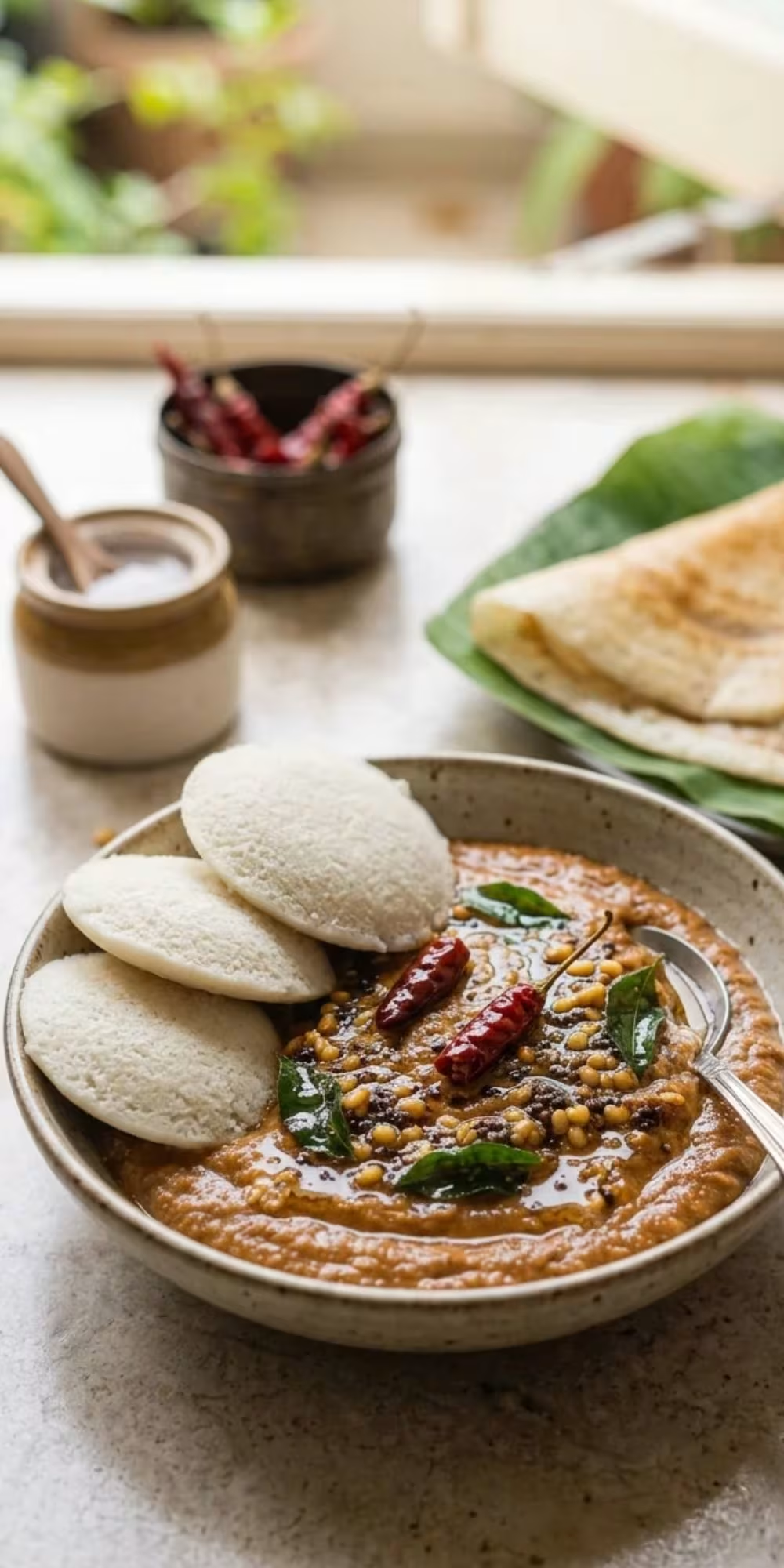
Serve Your Homemade Vengaya Chutney
Give the chutney a final taste and adjust the salt if necessary. Transfer it to a clean serving bowl and serve with freshly prepared dosa, soft idli, uttapam, or another favorite South Indian breakfast.
The finished chutney should have a balanced combination of savory onion flavor, roasted lentils, chili heat, tamarind tang, and fragrant tempering.
Your Onion Chutney Is Ready!
This homemade onion chutney recipe (Vengaya Chutney) is a flavorful accompaniment for dosa, idli, and uttapam. Adjust the chilies, tamarind, and consistency to create a version that suits your taste, and serve it as part of a delicious South Indian breakfast.
My Tips for the Best Onion Chutney (Vengaya Chutney)
The real secret to making delicious South Indian onion chutney is to strike the right balance between the natural sweetness of cooked onions, the spiciness of dried red chillies, the sourness of tamarind and the nutty flavour of roasted lentils. These handy tips will help you make a delicious and thick onion chutney to serve with dosa, idli, uttapam and other popular South Indian breakfast dishes.
Cook the Onions Until Soft and Fragrant
Give the onions enough time to soften in the sesame oil. The raw, pungent smell of the onions will go away, and the edges will turn lightly golden. Don’t rush this step over too high a heat, as burning the onions can make your homemade onion chutney taste bitter. Red onions, yellow onions, and small onions can also be used, although they will vary in sweetness and flavor.
Roast the Lentils Carefully
Urad dal and chana dal add a nutty aroma and thickness to the vengaya chutney. Fry them over medium-low heat, stirring frequently, until fragrant and lightly golden. Also keep a close eye on the dried red chillies. Burnt lentils or chillies can overpower the onion flavour and create an unpleasant bitter taste.
Balance the Tamarind for a Tangy Flavor
Tamarind gives South Indian onion chutney its characteristic sour taste. Start with the amount specified in your recipe, as the intensity of tamarind can vary. If the chutney turns out too sour, balance it out with a little more cooked onion or a pinch of jaggery as needed, without adding a lot of extra water.
Add Water Gradually for a Thick Texture
To make the best onion chutney for dosa and idli, add water little by little while blending. Depending on your preference, the resulting chutney will be smooth or slightly grainy and thick enough to stick to the dosa. Adding too much water at once can make it thin and watery.
Adjust the Spice Level to Your Taste
The spiciness and color of this spicy onion chutney depend a lot on the dried red chilies. If you want to reduce the spiciness, reduce the number of chilies and taste before adding more. If you like a very spicy chutney, gradually increase the amount of chilies, maintaining the balance of the flavors of the onion, tamarind, and dal.
Finish With a Fresh Sesame Oil Tempering
A final tadka of mustard seeds, urad dal, and curry leaves adds fragrance and a little texture. Heat the sesame oil, let the mustard seeds pop, and cook the dal until golden before adding the curry leaves. Pour the tempering over the chutney and mix gently for a more aromatic finish.
How to Balance the Flavor of Vengaya Chutney
What to Serve With Onion Chutney (Vengaya Chutney)
This delicious South Indian vengaya chutney goes well not only with simple breakfast dishes but also with so much more. Its tangy onion flavour, roasted dal, dried red chillies and sour tamarind blend make it a wonderful accompaniment to traditional rice dishes, steamed snacks, savory pancakes and crunchy South Indian pakoras.
My serving tip: Pair this chutney with a mild, lightly seasoned dish when you want its spicy, tangy onion flavor to stand out. For a richer meal, serve it alongside a savory lentil dish or a crisp, freshly cooked snack.
Adai (South Indian Lentil Pancakes)
Adai is a hearty savory pancake made with a mixture of lentils and rice. Its earthy flavor and crisp edges complement the spicy, tangy taste of onion chutney. This is an excellent choice when you want a filling vegetarian breakfast or lunch.
Serving tip: Serve the chutney on the side so each bite of warm adai gets a fresh burst of onion and chili flavor.
Kuzhi Paniyaram
These small, round South Indian bites have a soft interior and a lightly crisp exterior. Kuzhi paniyaram is especially delicious with onion chutney because the thick chutney clings to each bite without overpowering its mild, fermented flavor.
Serving tip: Serve freshly cooked paniyaram with a small bowl of chutney for a satisfying evening snack.
Ven Pongal
Ven pongal is a comforting rice and moong dal dish traditionally seasoned with ingredients such as black pepper, cumin, and ghee. Its soft, mild texture creates a lovely contrast with bold South Indian onion chutney.
Serving tip: Add a spoonful of chutney beside a warm serving of pongal for a balanced mix of creamy and spicy flavors.
Rava Kichadi
Rava kichadi is a savory semolina preparation cooked with vegetables and aromatic seasonings. Its gentle flavor makes it a natural partner for spicy vengaya chutney, particularly when you want something different for breakfast or brunch.
Serving tip: Keep the kichadi moist and fluffy, and serve the onion chutney separately to preserve its texture.
Arisi Upma (Rice Rava Upma)
Arisi upma is a traditional savory dish made with coarsely ground rice. Its simple seasoning allows the chutney’s onion aroma, roasted lentils, and tamarind tang to shine. It is a useful option for a comforting, home-style South Indian meal.
Serving tip: Start with a small spoonful of chutney and add more according to your preferred spice level.
Sweet Kozhukattai’s Savory Cousin: Kara Kozhukattai
Kara kozhukattai is a savory steamed rice dumpling that may include lentils, chilies, and aromatic tempering. Its tender texture works well with a thick onion chutney, making it an interesting alternative to the more familiar South Indian breakfast combinations.
Serving tip: Choose a mildly seasoned version if your chutney is already quite spicy.
Masala Vadai (Crispy Lentil Fritters)
Masala vadai combines coarsely ground lentils with herbs, spices, and a crunchy fried exterior. The contrast between crisp fritters and smooth onion chutney for South Indian snacks makes this pairing particularly satisfying.
Serving tip: Serve immediately while the fritters are crisp, with chutney in a separate dipping bowl.
Vegetable Bonda
Vegetable bonda features a seasoned vegetable filling surrounded by a crisp outer coating. The sweetness of cooked vegetables and the crunch of the coating balance the sharp, savory character of homemade onion chutney.
Serving tip: Pair hot bondas with a small portion of chutney for a colorful and flavorful tea-time snack.
Vegetable Semiya Upma
Vegetable semiya upma is a light, savory dish made with vermicelli, vegetables, and simple seasonings. A spoonful of onion chutney adds a more pronounced spicy and tangy flavor without requiring a complicated side dish.
Serving tip: Add the chutney just before eating rather than mixing it into the entire batch.
More Ways to Enjoy Onion Chutney
Beyond traditional tiffin dishes, onion chutney can bring extra flavor to simple home-cooked meals. Try these additional combinations when you want to use your leftover chutney creatively.
- Steamed rice cakes: Serve with a mild savory rice cake or a regional steamed snack.
- Millet-based savory pancakes: Use onion chutney as a flavorful side for a homemade millet breakfast.
- Vegetable cutlets: Offer it as a spicy dipping accompaniment for freshly cooked cutlets.
- Savory rice bowls: Add a small portion beside a simple rice and vegetable meal for extra flavor.
Which Pairing Should You Try First?
If you enjoy a hearty traditional meal, start with adai or ven pongal. For a crisp evening snack, try masala vadai or vegetable bonda. Kuzhi paniyaram and rava kichadi are also excellent choices when you want a different South Indian breakfast combination.
The best part about homemade vengaya chutney is its versatility: a single batch can add a spicy, savory finish to several dishes throughout the week when stored safely.
Variations of Onion Chutney (Vengaya Chutney)
Spicy Red Onion Chutney
For spice loversIf you like a strong and spicy flavor to accompany your South Indian breakfast dishes, then spicy red onion chutney is perfect for you. Use red onion, dried red chilies, roasted betel leaves, chickpeas, tamarind and sesame oil to create a delicious base.
Gradually increase the amount of spiciness and discard the seeds if you want more control over the spiciness. Sauté the onion until it is soft and lightly golden, then blend everything together to make a thick, spoonable chutney.
Serve with: Plain dosa, masala dosa, idli, or uttapam.
Onion Tomato Chutney
Tangy and savoryOnion-tomato chutney is a wonderful combination of the sweet taste of cooked onions with the refreshing sour taste of tomatoes. It is a useful option when you want a milder, sweet-sour taste and a bright red-orange color.
Add chopped ripe tomatoes to the fried onions and cook until they soften and release their juices. Then blend with fried lentils, green chilies and spices. Add tamarind as required, as tomatoes already have a sour taste.
Serve with: Idli, dosa, pesarattu, or savory pancakes.
Onion Chutney Without Coconut
Simple pantry recipeIf you prefer onion chutney without coconut, the traditional combination of onion and dal is a great choice. Onions, betel leaves, chickpeas, dried red chillies, tamarind and sesame oil add a lot of flavour without the coconut.
Fry the lentils until fragrant, sauté the onion until soft and blend the mixture with a little water. Add mustard seeds and curry leaves for extra flavour.
Serve with: Dosa, idli, uttapam, or vegetable paniyaram.
Shallot Onion Chutney
Sweet and aromaticA delicious alternative to regular onion chutney is shallot chutney. Roasting small shallots gives them a mild, salty-sweet flavor that creates a distinct flavor and pairs well with hot chilies and sour tamarind.
Replace some or all of the regular onions with peeled shallots. Cook them until soft, then blend with roasted lentils, dried red chilies, and spices. Adjust the amount of tamarind and salt to balance their natural sweetness.
Serve with: Crispy dosa, idli, or a traditional South Indian tiffin platter.
Garlic Onion Chutney
Bold savory flavorFor those who prefer a deep and aromatic chutney, garlic-onion chutney is perfect. Garlic complements the sweet taste of fried onions and adds a salty touch to roasted chilies and dal.
Add a few peeled garlic cloves while frying the onions. Fry until both ingredients are soft and fragrant, then blend with the rest of the chutney ingredients. Start with a small amount of garlic and adjust the amount to taste.
Serve with: Plain dosa, onion uttapam, or savory South Indian breakfast dishes.
Mild Onion Chutney
Gentler chili heatA mild onion chutney maintains the comforting flavor of cooked onions and tones down the pungency of dried red chilies. If you prefer a less spicy chutney to accompany a spicy dosa filling or a savory sambar, this is a good option.
Start with a small amount of dried chilies and cook until the onions are soft. Blend with the roasted dal, tamarind and salt. Taste before adding more chilies and adjust the amount of water to achieve your desired consistency.
Serve with: Plain idli, soft dosa, or a mixed breakfast platter.
My Troubleshooting Guide for Your Onion Chutney
Is your onion chutney too spicy, sour, bitter, or watery? Don’t worry! With a few simple changes, you can make a delicious South Indian vengaya chutney that is balanced and flavorful, and just the right consistency for dosa and idli. Here are some of my practical tips to solve common onion chutney problems.
My best troubleshooting tip: Make one small adjustment at a time, mix thoroughly, and taste again before adding more ingredients.
1. Why Is My Onion Chutney Too Spicy?
Too many dried red chilies can overpower the natural sweetness of the onions and the tanginess of tamarind.
2. How to Fix Onion Chutney That Is Too Sour
Excess tamarind can make homemade onion chutney sharply tangy and mask the sweetness of the cooked onions.
3. Why Is My Onion Chutney Too Watery?
Adding too much water during blending can leave your South Indian onion chutney thin instead of thick and easy to scoop with idli or dosa.
4. What If My Onion Chutney Is Too Thick?
A thick chutney can be difficult to spread over dosa or mix with soft idli, particularly when the lentils absorb moisture.
5. Why Does My Onion Chutney Taste Bitter?
Burnt urad dal, chana dal, dried chilies, or garlic can create a bitter taste. Overly dark roasted ingredients are a common cause.
6. Does Your Onion Chutney Taste Raw?
An intense raw onion flavor may mean the onions need more cooking before they are blended with the chilies, lentils, and tamarind.
7. Why Does My Onion Chutney Taste Bland?
Under-seasoning, insufficient roasting, or an unbalanced ratio of onions to chilies and tamarind can make the chutney taste flat.
8. Why Is My Onion Chutney Grainy?
Coarse lentils, insufficient blending, or too little moisture can leave the texture grainier than expected.
Transfer leftover onion chutney to a clean, covered container and refrigerate it promptly. Use clean utensils and follow safe food-storage guidance. Discard chutney that may have been held unsafely; tasting it is not a reliable safety test.
How to Store and Reheat Onion Chutney
Refrigerate promptly
Keep freshly prepared onion chutney in the refrigerator at 4°C (40°F) or below. Do not leave it at room temperature for extended periods.
Choose an airtight container
Use a clean, food-safe container with a secure lid to reduce contamination and help prevent the chutney from absorbing other refrigerator odors.
Reheat gently
Warm the portion you need in a small pan over low to medium heat, stirring as needed. Add a little water if the chutney has thickened during refrigeration.
Freeze suitable portions
For longer storage, freeze small portions in a freezer-safe container. Leave room for expansion and thaw in the refrigerator before reheating.
Step-by-Step: How to Store Onion Chutney in the Fridge
Follow these steps after making your South Indian onion chutney recipe.
-
Cool it briefly and safely.
Divide a large batch into shallow containers to help it cool quickly. Refrigerate within two hours of cooking, or within one hour when the surrounding temperature is above 32°C (90°F). Do not wait for a large pot to reach room temperature. -
Transfer it to a clean container.
Use a clean, food-safe, airtight container. Avoid storing the chutney in a pan that has been sitting out or in a container contaminated by used serving spoons. -
Label and refrigerate.
Write the preparation date on the container and store it at 4°C (40°F) or below. Keep it refrigerated until serving. -
Serve only what you need.
Use a clean spoon to remove a portion. Return the remaining chutney to the refrigerator promptly rather than repeatedly leaving the full batch on the dining table.
How Long Does Onion Chutney Last?
The shelf life of homemade onion chutney depends on its ingredients, cooking method, cooling time, storage temperature, and care. Since this recipe contains cooked onions and may also contain garlic, lentils, and other ingredients, don’t assume that tamarind, salt, or oil will make it last longer.
| Storage method | What to know |
|---|---|
| Refrigerator | Refrigerate promptly at 4°C (40°F) or below. Follow a verified storage period appropriate to the recipe and handling conditions. |
| Freezer | Freeze promptly in labeled, airtight, freezer-safe portions. Quality and texture may change after thawing. |
| Room temperature | Do not store cooked onion chutney at room temperature for extended periods. Follow the cooling limits above. |
How to Reheat Onion Chutney Without Losing Its Flavor
Refrigerated vengaya chutney can become thicker as it sits. Gentle reheating and a small amount of water, when needed, can help restore a spoonable consistency.
-
Transfer a single serving to a small pan.
Avoid reheating the entire batch if you only need enough onion chutney for one meal. -
Add a little water if necessary.
Stir in water gradually if the chutney has become too thick. Avoid adding large amounts at once, as this can dilute its flavor. -
Heat gently while stirring.
Warm the chutney evenly, stirring to prevent sticking. When reheating leftovers, bring the food to 74°C (165°F) throughout, checking with a food thermometer. -
Serve immediately.
Enjoy the warm chutney with dosa, idli, uttapam, or another favorite South Indian breakfast. Discard reheated leftovers rather than repeatedly cooling and reheating them.
Can You Freeze Onion Chutney?
Yes, onion chutney can generally be frozen, although its texture may change slightly after thawing. Divide it into meal-sized portions, use freezer-safe containers, label each portion, and leave a little space for expansion. Thaw the portion in the refrigerator and reheat it thoroughly before serving.
If you plan to serve the chutney with fresh crispy dosa or South Indian coconut chutney, prepare only the quantity you need whenever possible for the best freshly made texture.
Frequently Asked Questions About Onion Chutney
1. What is onion chutney (vengaya chutney) made of?
Onion chutney, also known as vengaya chutney, is a flavorful South Indian condiment made with onions, dried red chilies, urad dal, chana dal, tamarind, and oil. Some recipes also include garlic for extra flavor. A simple tempering of mustard seeds, curry leaves, and urad dal adds aroma and texture.
The result is a savory, mildly tangy, and spicy chutney that pairs beautifully with dosa, idli, uttapam, and other South Indian breakfast dishes.
2. Is onion chutney the same as vengaya chutney?
Yes. Vengaya chutney is the Tamil name for onion chutney, with “vengayam” referring to onion in Tamil. The recipe can vary between households, but it commonly combines cooked onions, chilies, tamarind, and roasted lentils. Some versions include tomatoes or coconut, while others keep the flavor focused on onions.
3. Which onions are best for South Indian onion chutney?
Red onions are a great choice for South Indian onion chutney because they provide a strong onion flavor and attractive color. Yellow onions also work well and may produce a slightly sweeter result when cooked. Small shallots or Indian sambar onions are another option when you want a more traditional variation.
Whichever onions you choose, sauté them until soft and fragrant before blending to develop a more balanced flavor.
4. Can I make onion chutney without coconut?
Absolutely! Onion chutney without coconut can be thick, flavorful, and satisfying. Roasted urad dal and chana dal help provide body, while tamarind contributes tanginess and dried red chilies add heat. You can blend the cooked ingredients with a little water to achieve your preferred consistency.
This coconut-free onion chutney is a useful alternative when you want a different accompaniment for dosa or idli.
5. How do I make onion chutney less spicy?
To make mild onion chutney, start with fewer dried red chilies and choose a variety with less heat. Remove the stems and, if appropriate for your recipe, some of the seeds before cooking. You can also blend in a little additional cooked onion to soften the heat.
Add tamarind and salt gradually, tasting as you go. The goal is a balanced chutney with onion flavor, gentle tanginess, and a comfortable level of spice.
6. Why does my onion chutney taste bitter?
Onion chutney can taste bitter if the lentils, dried chilies, garlic, or onions become burnt during cooking. Roast the lentils over moderate heat, stir frequently, and remove them as soon as they turn lightly golden and smell fragrant.
Avoid overheating dried chilies and sesame oil. If the chutney is strongly burnt or unpleasantly bitter, making a fresh batch is usually the best solution.
7. How can I make onion chutney thick and smooth?
For thick onion chutney, allow excess moisture to cook off while sautéing the onions and add water gradually during blending. Roasted lentils help give the chutney body. Blend in short bursts and scrape down the sides of the mixer grinder as needed.
If the chutney becomes too thin, avoid adding more water. For your next batch, start with a smaller quantity and adjust only until the texture is suitable for serving with dosa and idli.
8. What is the best oil for making vengaya chutney?
Sesame oil, also called gingelly oil, is a popular choice for South Indian vengaya chutney because it contributes a distinctive aroma and traditional flavor. You can use another suitable cooking oil if needed, although the finished taste may differ.
Use a moderate amount of oil for sautéing the onions and roasting the ingredients, then prepare the mustard seed and curry leaf tempering separately for a fragrant finish.
9. What can I serve with onion chutney?
Onion chutney is a delicious accompaniment for crispy dosa, soft idli, uttapam, and other South Indian tiffin dishes. You can also serve it with savory pancakes or other breakfast foods that benefit from a spicy, tangy condiment.
10. Can I make onion chutney ahead of time?
Yes. You can prepare onion chutney ahead of time for breakfast or meal preparation. Transfer it to a clean, airtight container and refrigerate it promptly. You can prepare the tempering along with the chutney or add it during preparation, depending on your recipe.
Always use clean utensils when serving and avoid leaving homemade chutney at room temperature for extended periods. For the best flavor and texture, stir it before serving and add a fresh tempering if desired.
11. How long does homemade onion chutney last in the refrigerator?
The safe storage period for homemade onion chutney depends on its ingredients, preparation, handling, and refrigerator temperature. Refrigerate it promptly in a clean, airtight container and follow appropriate food-safety guidance for cooked leftovers.
Do not assume that chutney is safe simply because it looks or smells normal. Discard it if it has been stored improperly or shows signs of spoilage.
12. Can I freeze onion chutney?
Onion chutney may be frozen in small, airtight, freezer-safe portions. Leave suitable headspace in each container and label it with the preparation date. Thaw it safely in the refrigerator and stir thoroughly before serving.
Freezing can change the texture or separate some of the moisture, so blend or stir the thawed chutney as needed. For the best results, freeze a small test portion first.
13. Can I make onion tomato chutney using this recipe?
Yes, you can make an onion tomato chutney variation by cooking tomatoes with the onions before blending. Tomatoes add moisture, acidity, and a slightly different flavor, so you may need to reduce the tamarind and adjust the seasoning.
14. Is onion chutney vegan?
This onion chutney recipe is naturally vegan when prepared with plant-based ingredients. Onions, lentils, dried chilies, tamarind, sesame oil, mustard seeds, and curry leaves are plant-based. Check packaged ingredients, particularly asafoetida blends, if you need to avoid non-vegan additives.