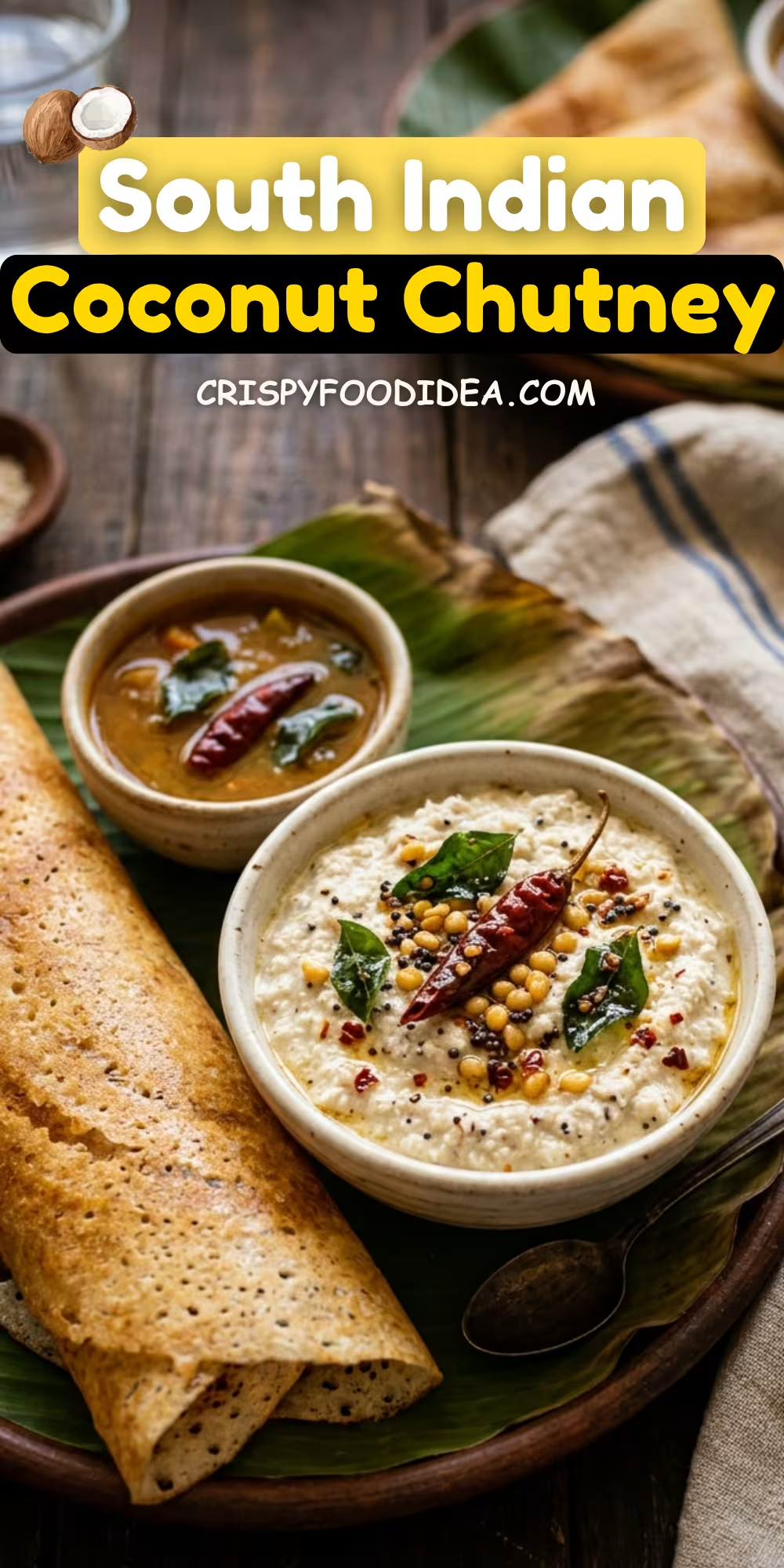
South Indian Coconut Chutney (Authentic Dosa Companion)
When I was a kid, whenever I would go to a South Indian restaurant with my dad to eat, especially dosa, I would notice that the sambar dal was served with a white chutney, which was amazing to eat, but I never understood what it was. Now that I’m older, I know it was the signature South Indian coconut chutney that is served as a side dish with dishes like idli or dosa.
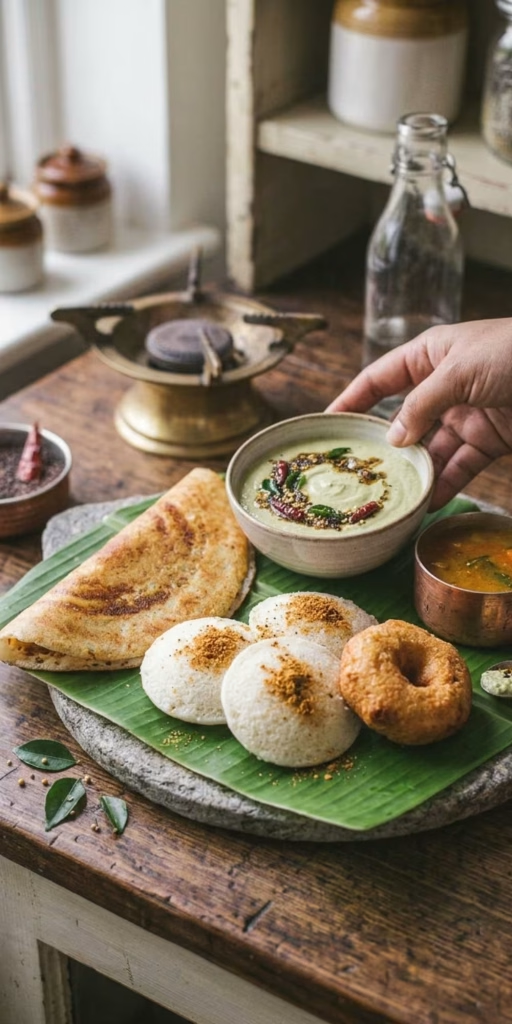
Trust me, this South Indian coconut chutney recipe is as delicious as it is easy to make. It has the natural sweetness of coconut, gentle heat of green chilies and the flavor of roasted chana dal and curry leaves along with the sauce. That is why in South India this chutney is served not only with breakfast but also with any homemade tiffin.
For coconut chutney for dosa and idli, you can definitely try this white coconut chutney recipe that I have tried myself. Besides, you can easily adjust the taste and flavor of this chutney because it is a very versatile recipe. As I finish almost a bowl of this chutney with homemade dosa, idli, medu vada, or uttapam, etc., as a South Indian dish, after that, you too can definitely tell me in the comments what else you like to serve this coconut chutney with.
Related: Low Calorie Indian Meals
South Indian Coconut Chutney (Authentic Dosa Companion)
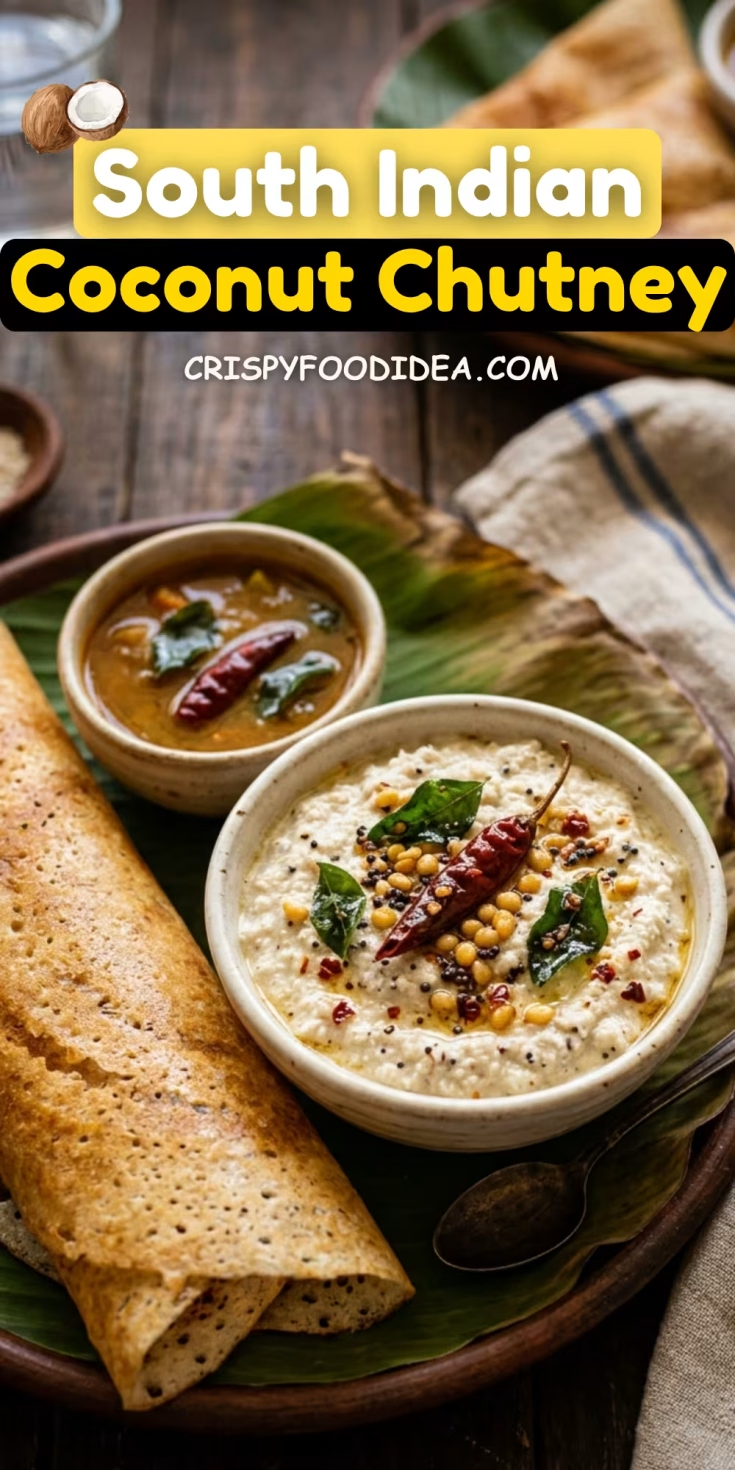
A classic, creamy South Indian coconut chutney, infused with mustard seeds, curry leaves and dried red chillies. Perfectly balanced, aromatic and specially formulated to enhance the flavour of dosa, idli and vada.
Ingredients
Base Chutney:
- Freshly grated coconut: 1 cup
- Roasted chana dal (Daria/Pottukadalai): 2 tbsp
- Green chilies: 1 to 2 (adjusted to taste)
- Fresh ginger: ½ inch piece
- Salt: To taste
- Water: ⅓ to ½ cup (adjust for desired consistency)
Tadka / Tempering:
- Oil (Coconut or neutral oil): 2 tsp
- Mustard seeds: ½ tsp
- Cumin seeds: ¼ tsp
- Split black gram (Urad dal): ½ tsp
- Dry red chili: 1 (broken)
- Fresh curry leaves: 8–10
- Asafoetida (Hing): A pinch
Instructions
- Grind: Combine grated coconut, roasted chana dal, green chilies, ginger, salt, and ⅓ cup of water in a blender. Grind to a smooth or slightly coarse paste. Add a little more water if necessary to achieve your preferred thickness.
- Transfer: Pour the blended chutney into a serving bowl.
- Temper (Tadka): Heat oil in a small pan over medium heat. Add mustard seeds and allow them to crackle.
- Sizzle: Add cumin seeds, urad dal, dry red chili, curry leaves, and hing. Fry for 15–20 seconds until the urad dal turns golden brown and curry leaves crisp up.
- Combine: Pour the hot tempered oil over the chutney immediately and mix gently before serving.
Notes
- Use fresh or freshly frozen grated coconut for the richest flavor and sweet creaminess.
- Keep the chutney slightly thick for dipping with crisp dosas so it clings well to the surface.
- Serve chilled or at room temperature along with hot crispy dosas.
Reasons To Love This Coconut Chutney Recipe
For those of us who love classic South Indian breakfasts like me, this South Indian coconut chutney deserves a special place on our table. Made with coconut, green chillies, ginger and roasted gram dal, and finally garnished with a dash of aromatic mustard seeds and curry leaves, this coconut chutney recipe adds a creamy texture and refreshing taste to your favourite dosa and idli. Here’s why it’s worth making at home.
1. Fresh, Creamy Coconut Flavor
The heart of this chutney is coconut, which gives it a naturally rich flavor and smooth texture. When blended well with the right amount of water, it makes a delicious homemade coconut chutney that complements the savory flavors of South Indian dishes without overpowering them.
2. Quick and Easy to Prepare
It doesn’t require any complicated techniques or a long list of ingredients. Just blend the chutney ingredients, bring to a quick boil, and mix everything together. This is a functional and easy coconut chutney recipe for busy mornings, quick snacks, and everyday meals.
3. Easy to Customize
Do you prefer a mildly spicy chutney or a little more spicy? Adjust the amount of raw chilies according to your taste. You can also adjust the consistency by gradually adding water. These simple changes make it easy to serve coconut chutney to suit different spiciness preferences.
4. A Fragrant South Indian Tempering
The final tempering adds another dimension to the flavor. The hot oil releases the aroma of mustard seeds, curry leaves, dried red chilies, and other selected spices. Pouring this mixture over the freshly made chutney gives it a distinct South Indian flavor.
5. Perfect for Dosa, Idli, and Vada
This versatile chutney goes well with crunchy dosas, soft idlis, medu vadas and uttapam. Serve it with homemade sambar for a satisfying South Indian tiffin. Its creaminess also makes it a great alternative to tomato or onion chutneys.
6. Simple Ingredients, Delicious Results
Fresh coconut, roasted chickpeas, raw chillies, ginger and a few simple ingredients for boiling are all you need. Each ingredient contributes to its flavour or texture, making this authentic coconut chutney easy for both new and experienced housewives to make.
What Is South Indian Coconut Chutney?
The question is so simple, so the answer should be so simple. In fact, South Indian coconut chutney is a refreshing, creamy and mildly spicy condiment, traditionally served with popular South Indian breakfast dishes like dosa, idli, uttapam and medu vada. Made by blending together grated coconut, raw chillies, roasted gram dal, ginger, salt and water, this classic coconut chutney recipe gets its distinctive aroma from the aromatic infusion of mustard seeds, curry leaves and dried red chillies.
What Makes Coconut Chutney Special?
What makes this traditional South Indian coconut chutney so delicious is the balance of fresh coconut, mild spiciness, savory spices, and seasonings. The coconut provides a naturally thick texture, while the roasted chickpeas give the chutney density. The raw chilies add spiciness, and the ginger brings a refreshing and vibrant flavor.
The final tempering, also known as tadka, brings everything together. As the mustard seeds sizzle in the hot oil and the curry leaves spread their aroma, this simple coconut mixture takes on the familiar flavor associated with South Indian tiffin dishes.
Fresh Coconut Flavor
Grated coconut gives the chutney its characteristic fresh taste and creaminess. Fresh or properly thawed frozen coconut can be used according to the recipe.
Balanced Spice
Raw chilies and ginger add a light spiciness and freshness. Adjust the amount of chilies as needed to make your coconut chutney milder or spicier.
Fragrant Tempering
Mustard seeds, curry leaves, dried red chilies, and other optional spices add aroma and a delicious flavor to traditional South Indian chutneys.
Quick and Versatile
This easy coconut chutney is a great accompaniment to breakfast, brunch, and savory snacks, and its consistency can be adjusted to your liking.
Is It Also Called Thengai Chutney?
Yes. Coconut chutney is known by different names across India. In Tamil, thengai chutney refers to coconut chutney, while nariyal chutney is a commonly used Hindi name. You may also see it called white coconut chutney, dosa chutney or idli chutney. Recipes differ between regions and households, so the ingredients and consistency are not always identical.
- Thengai Chutney
- Nariyal Chutney
- White Coconut Chutney
- Dosa Chutney
- Idli Chutney
What Is Coconut Chutney Served With?
Coconut chutney is especially popular with South Indian tiffin dishes. Its creamy texture and fresh, savory flavor complement crisp, soft and steamed foods alike.
- Crispy dosa
- Soft idli
- Medu vada
- Uttapam
- Pongal
- South Indian snacks
My serving tip: I love pairing freshly made coconut chutney with a hot, crispy dosa and a bowl of South Indian tiffin sambar . For another flavor, try this South Indian tomato chutney alongside it. This combination makes a simple homemade breakfast feel like a complete South Indian tiffin meal.
Ingredients for South Indian Coconut Chutney
The secret to delicious South Indian coconut chutney is a simple balance of fresh coconut, roasted chana dal, green chilies, and ginger, finished with an aromatic mustard seed and curry leaf tempering. These ingredients create a creamy, flavorful coconut chutney for dosa, idli, medu vada, and uttapam.
1. Ingredients for the Coconut Chutney Base
The Creamy Coconut Mixture
Blend these ingredients into a smooth or slightly coarse chutney.
Freshly Grated Coconut
1 cupThe main ingredient that gives traditional South Indian coconut chutney its fresh coconut flavor and creamy texture. Fresh or properly thawed frozen coconut works well.
Roasted Chana Dal
2 tbspAlso called daria or pottukadalai, roasted gram helps thicken the chutney and gives it a balanced, nutty flavor.
Green Chilies
1–2Add fresh green chilies for a lively, savory heat. Adjust the amount to suit your preferred spice level.
Fresh Ginger
½ inchA small piece of ginger adds a fresh, aromatic note that complements the mild sweetness of coconut.
Salt
To tasteSalt brings out the coconut flavor and balances the heat from the green chilies.
Water
⅓–½ cupStart with ⅓ cup while blending, then add a little more as needed to reach your preferred chutney consistency.
My ingredient tip: For a fresh-tasting coconut chutney for dosa and idli, start with good-quality coconut and add the water gradually. This makes it easier to control the thickness without diluting the flavor.
2. Ingredients for the South Indian Tempering (Tadka)
The Aromatic Finishing Touch
This traditional tempering adds fragrance, texture, and the familiar flavor of South Indian coconut chutney.
Coconut Oil or Neutral Oil
2 tspProvides the base for the tempering. Coconut oil gives a more pronounced coconut aroma, while neutral oil has a milder flavor.
Mustard Seeds
½ tspLet the mustard seeds crackle in the hot oil to release their characteristic savory aroma.
Cumin Seeds
¼ tspAdd a warm, earthy aromatic note that complements the coconut and mustard seeds.
Split Urad Dal
½ tspSplit black gram adds a pleasant texture and a classic South Indian tempering flavor.
Dried Red Chili
1 chiliA broken dried red chili contributes a deeper chili aroma to the finishing tadka.
Fresh Curry Leaves
8–10 leavesCurry leaves provide a fresh, distinctive fragrance that makes this coconut chutney especially aromatic.
Asafoetida (Hing)
A pinchA small pinch adds a savory, distinctive aroma. Check the label if you need a gluten-free version, as some compounded hing contains wheat flour.
Tempering tip: Allow the mustard seeds to crackle before adding the cumin, urad dal, dried red chili, curry leaves, and hing. Keep the heat controlled so the spices release their aroma without burning.
Once you have measured these ingredients, you are ready to blend your homemade South Indian coconut chutney and finish it with a fragrant tempering. Serve it with hot dosa, soft idli, medu vada, or uttapam for a classic South Indian meal.
Fresh vs. Frozen vs. Desiccated Coconut: Which Is Best for South Indian Coconut Chutney?
Choosing the right coconut makes a significant difference when it comes to making South Indian coconut chutneys. Freshly grated coconut has a mild, natural sweetness, frozen grated coconut is a convenient alternative, and if fresh coconut is not available, desiccated coconut can also be used without sugar. However, each type of coconut behaves differently when mixed with raw chilies, ginger, roasted chickpeas, and water.
If you want a creamy coconut chutney for dosas and idlis, understanding the differences in moisture, flavor, and texture will help you choose the best ingredient for your kitchen.
My answer: Fresh coconut is an excellent first choice for its fresh flavor and natural moisture. Unsweetened frozen grated coconut is a convenient close alternative. Desiccated coconut can work as a pantry substitute, but it should be rehydrated before blending.
1. Freshly Grated Coconut
Fresh coconut is a traditional choice for homemade South Indian white coconut chutney. Its natural moisture and mild flavor help create a thick and creamy chutney when blended properly.
- Fresh, mildly sweet coconut flavor.
- Moist texture that blends well with the other ingredients.
- Excellent for traditional coconut chutney served with dosa, idli, uttapam, and medu vada.
- Requires cracking, removing the flesh, and grating if purchased whole.
2. Frozen Grated Coconut
A viable alternative to fresh coconut is plain frozen desiccated coconut. It is ready-made, saves on desiccating time, and can make a great chutney if thawed and stored properly.
- Convenient for quick everyday cooking.
- Retains useful coconut flavor and texture when stored well.
- May release extra moisture during thawing.
- Works well in a mixer grinder or food processor.
3. Desiccated Coconut
Desiccated coconut is finely or coarsely grated coconut that has been dried to remove most of its moisture. It is convenient to store in the pantry, but it requires special preparation to make a good chutney.
- Longer pantry life when stored according to package instructions.
- Concentrated flavor, but often less fresh-tasting.
- Can produce a grainier texture if blended without soaking.
- Choose plain, unsweetened desiccated coconut rather than sweetened baking coconut.
Fresh vs. Frozen vs. Desiccated Coconut: At a Glance
Use this coconut comparison guide to decide which type best suits your South Indian coconut chutney recipe.
| Feature | Fresh Coconut | Frozen Coconut | Desiccated Coconut |
|---|---|---|---|
| Flavor | Fresh and mildly sweet | Close to fresh when well stored | Less fresh-tasting and more concentrated |
| Moisture | Naturally moist | Varies; may release water when thawed | Low; needs rehydration |
| Texture | Soft and creamy when blended well | Can be creamy after proper thawing | May be grainier without soaking |
| Preparation | Crack and grate if whole | Thaw and check excess moisture | Soak in warm water before blending |
| Convenience | Moderate | High | High for pantry storage |
| Best use | Traditional fresh chutney | Quick everyday chutney | Emergency substitute |
Results vary with coconut quality, processing, storage, water quantity, and blender performance. This table describes typical cooking behavior, not a guarantee of identical results.
How to Use Each Type of Coconut in Coconut Chutney
The main difference is how much moisture you need to add before and during blending. Keep the amount of roasted chana dal and other ingredients consistent with your chosen recipe, then adjust the water gradually.
-
For fresh coconut
Grate the white coconut flesh and place it in your mixer jar with the green chilies, ginger, roasted chana dal, and salt. Start with a small amount of water and add more only if needed. -
For frozen grated coconut
Thaw it in the refrigerator or according to the package directions. If excess liquid collects, account for it before adding more water. Blend until the chutney reaches your preferred consistency. -
For desiccated coconut
Place unsweetened desiccated coconut in a bowl and add warm water gradually. Let it soften for about 10–15 minutes, then check the texture. Drain any excess liquid before blending, adding more water only as necessary.
Can You Make Coconut Chutney with Desiccated Coconut?
Yes, you can make a version of South Indian coconut chutney with desiccated coconut. The key is to soften the dried coconut before grinding it. Without adequate hydration, the chutney may feel dry, stringy, or grainy instead of creamy.
Start with a small amount of warm water, let the coconut absorb it, and check the texture before blending. The exact amount depends on the brand, cut, and dryness of the coconut, so avoid treating a specific water ratio as universal. Once softened, blend it with your usual chutney ingredients and adjust the seasoning to taste.
Keep in mind that rehydrated desiccated coconut will not always taste or feel the same as fresh coconut. It is a useful substitute, not a guaranteed identical replacement.
How to Make South Indian Coconut Chutney Step by Step
Making delicious South Indian coconut chutney at home is much easier than it might seem. The secret lies in blending fresh coconut with roasted split chickpeas (chana dal), green chilies, and ginger—adding just enough water to achieve a smooth, thick consistency. Finally, tempering the chutney with mustard seeds, curry leaves, and other spices enhances both its flavor and aroma.
Follow the simple steps below to prepare a delectable coconut chutney, perfect for serving with dosa, idli, medu vada, or uttapam. Whether you prefer a milder taste or a spicier, authentic South Indian-style chutney, you can easily adjust the consistency and the level of heat to suit your personal preference.
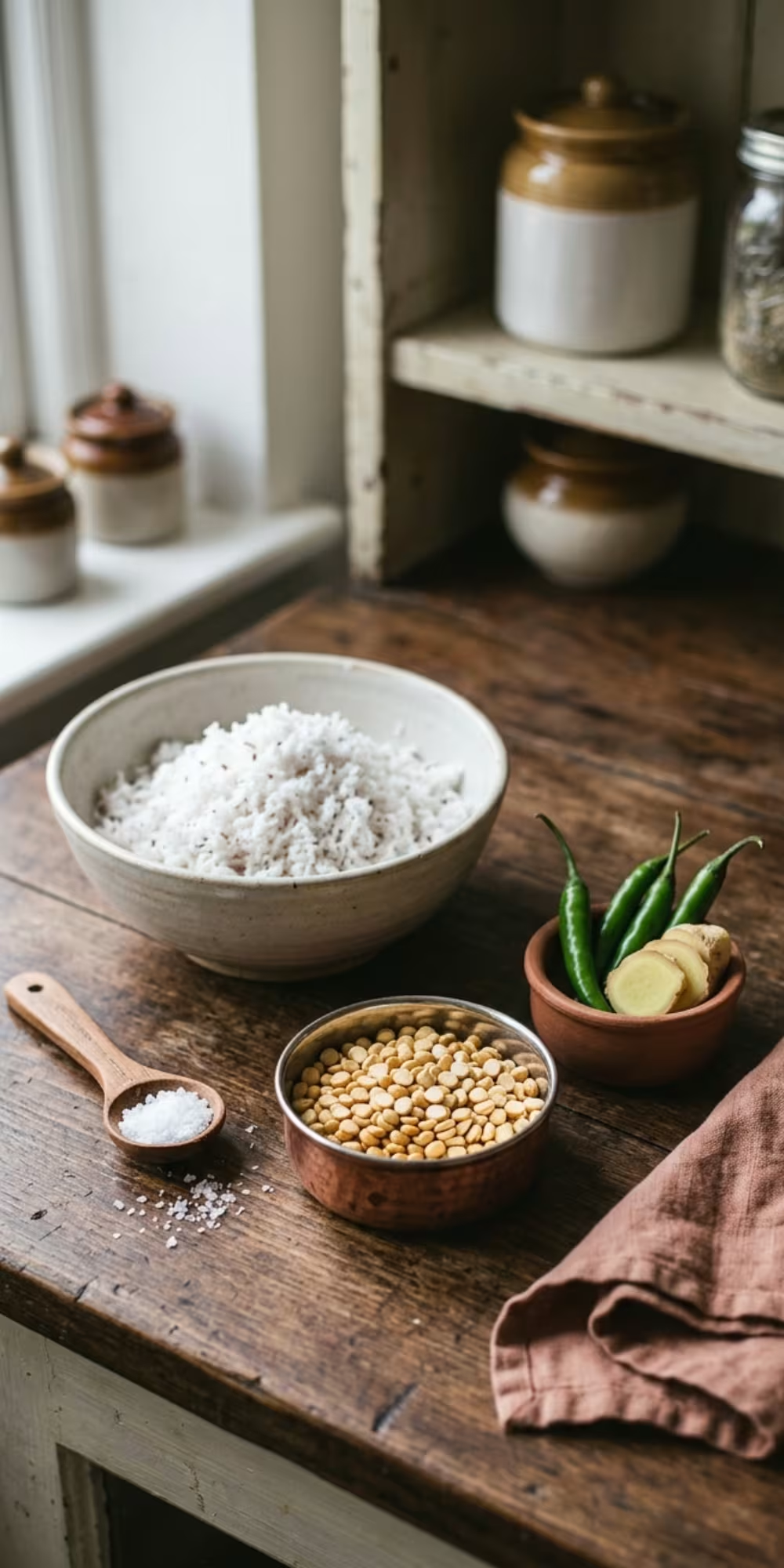
Prepare the Coconut and Chutney Ingredients
Measure out the freshly grated coconut, roasted split Bengal gram (chana dal), green chilies, ginger, and salt according to your recipe card. Peel the ginger before blending, and ensure that any hard pieces of coconut or bits of coconut shell are removed.
If you are using frozen grated coconut, allow it to thaw (defrost) to room temperature first, so that it blends properly. Measure the water separately; adding too much water at the beginning can make the coconut chutney too thin.
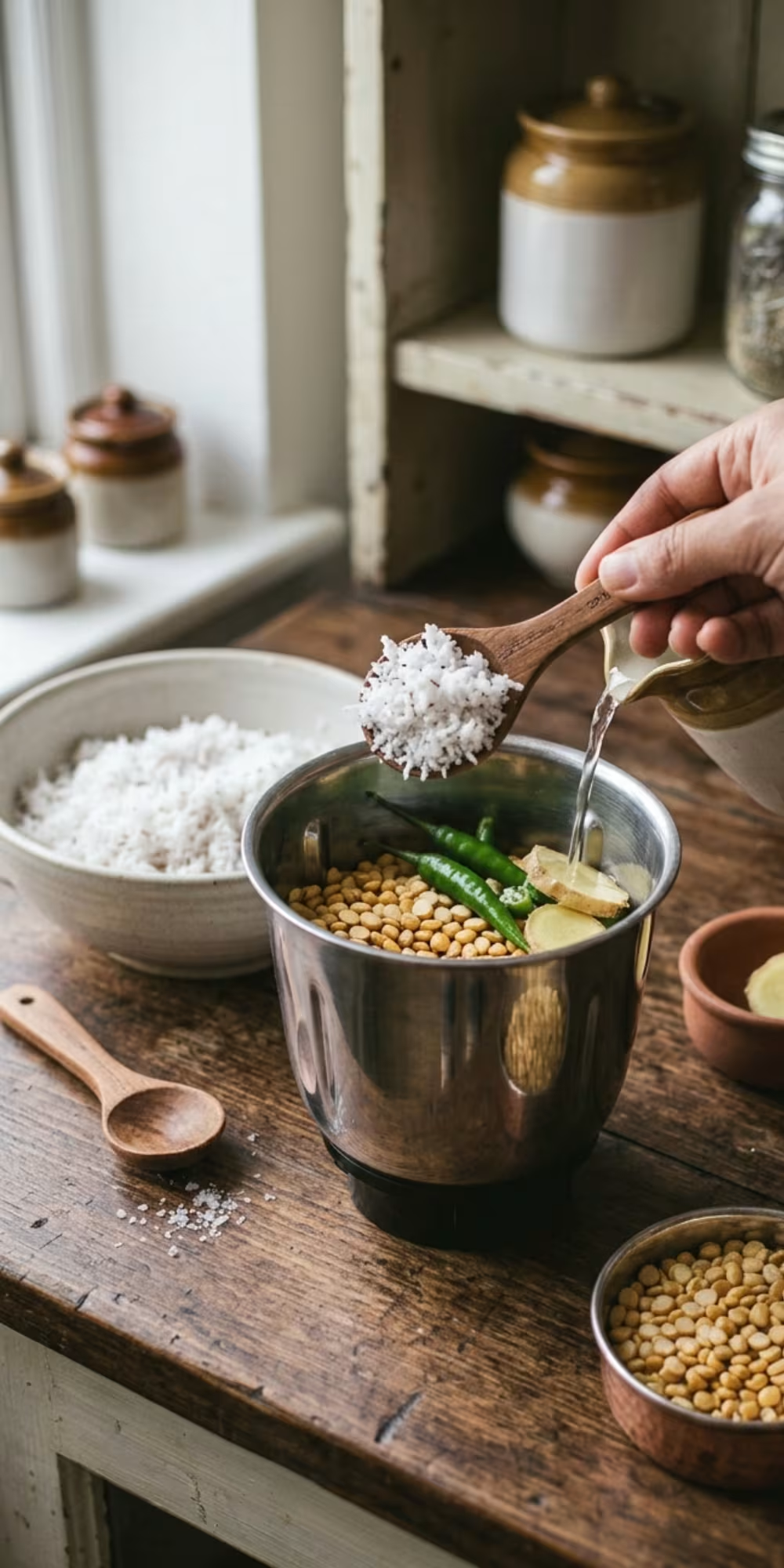
Add the Ingredients to a Mixer Grinder
Place the grated coconut, roasted split chickpeas (bhuna chana dal), green chilies, ginger, and salt into a clean mixer-grinder jar. Add a little water to ensure the blades can rotate easily.
The roasted split chickpeas help give the chutney a thick, well-bound consistency; the green chilies provide heat, while the ginger adds a fresh, aromatic flavor. Since coconut is the primary ingredient, be careful not to overpower its taste by adding too many chilies or too much ginger.
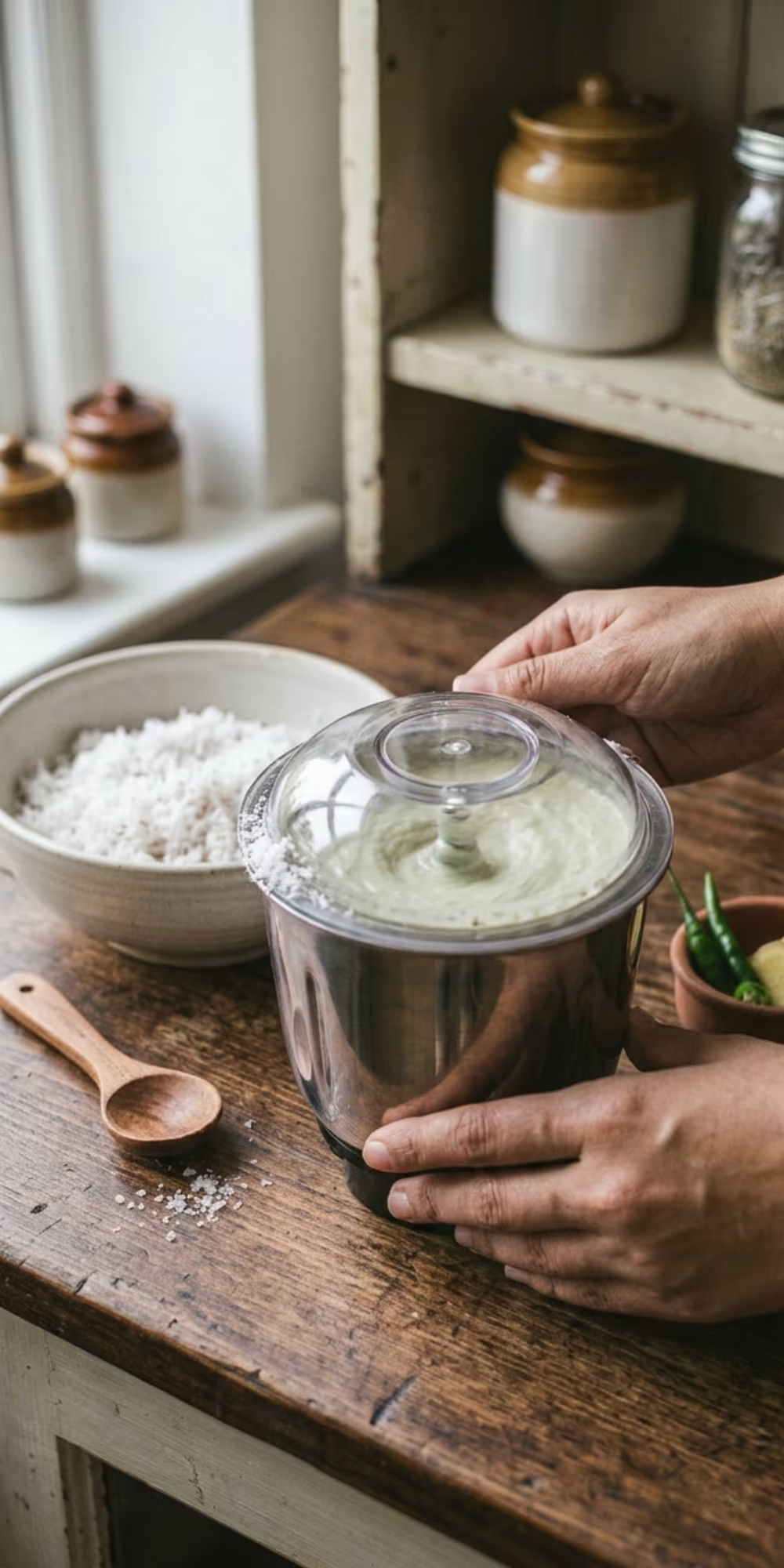
Blend Until Smooth and Creamy
Pulse the mixture, scrape down the sides if necessary, and blend again until the coconut is finely ground. Add a little more water at a time if the blades struggle or the chutney looks too thick.
For a classic white coconut chutney for dosa and idli, aim for a smooth, spoonable consistency rather than a watery liquid. The ideal texture depends on how you prefer to serve it.
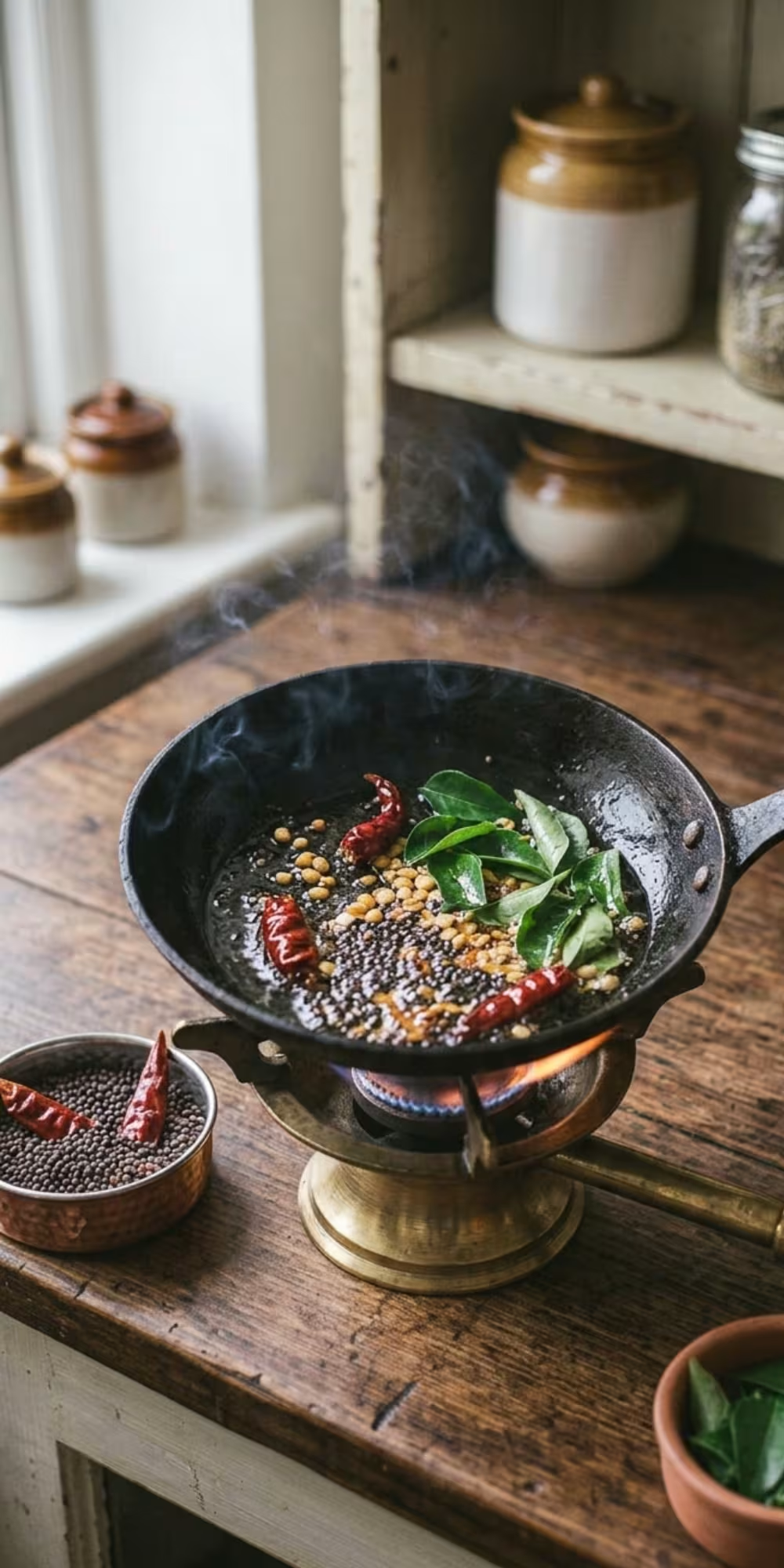
Prepare the Mustard Seed and Curry Leaf Tempering
Heat the oil specified in your recipe in a small tempering pan. Add the mustard seeds and let them crackle. Add the urad dal, if included in your recipe, and cook until lightly golden.
Add dried red chili, curry leaves, and a pinch of hing as directed by your recipe. Let the curry leaves release their aroma and take care not to burn the spices.
This traditional tempering, often called tadka or thaalippu, adds a fragrant, savory finish to homemade South Indian coconut chutney.
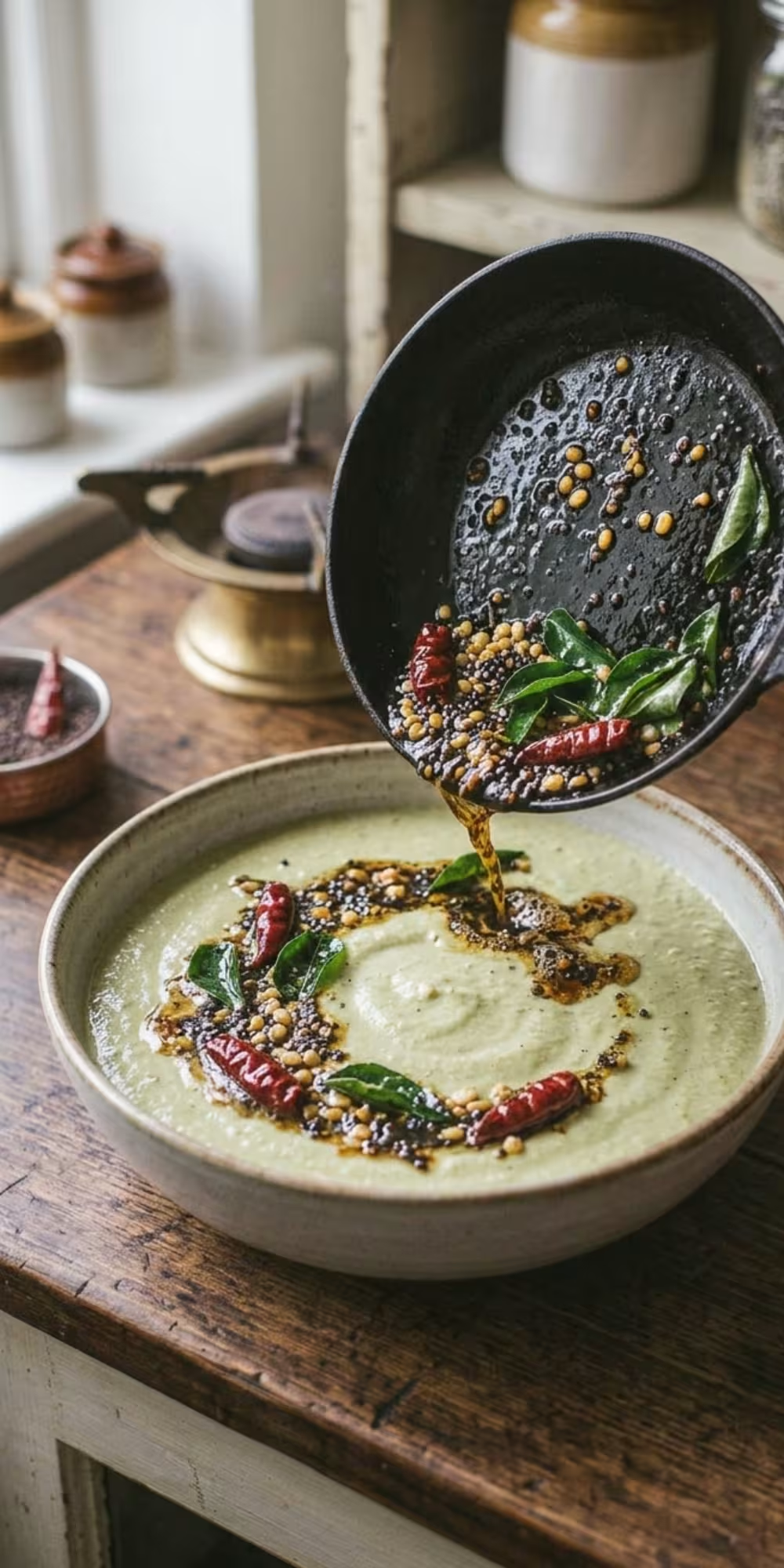
Pour the Tempering Over the Coconut Chutney
Transfer the blended coconut chutney into a clean serving bowl. Carefully pour the hot tempering over the surface, distributing the mustard seeds, curry leaves, and other spices evenly.
Stir gently if you prefer the seasoning throughout the chutney, or leave some tempering on top for a traditional presentation. Taste a small spoonful and adjust the salt if needed.
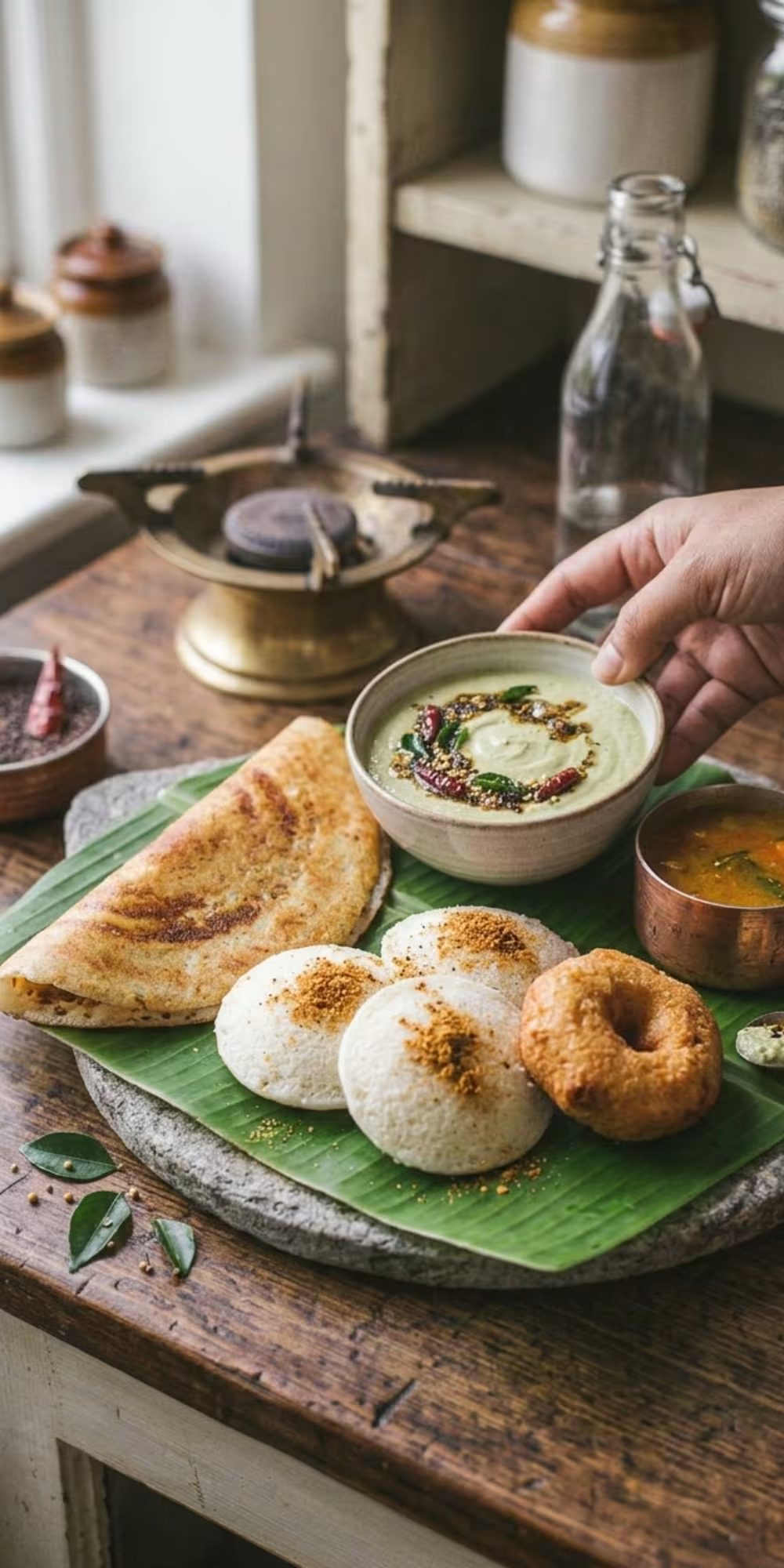
Serve Fresh With Dosa, Idli, or Vada
Your homemade South Indian coconut chutney is ready to serve. Spoon it into a small bowl and pair it with hot, crispy dosa, soft idli, medu vada, uttapam, or your favorite savory breakfast.
Quick Tips for the Best South Indian Coconut Chutney
A few small adjustments can make a noticeable difference when you prepare coconut chutney at home.
- For creamy texture: Add water gradually while blending.
- For balanced flavor: Keep coconut as the main ingredient.
- For better aroma: Temper the mustard seeds and curry leaves carefully.
- For the right heat: Adjust green chilies to your preference.
Follow the exact ingredient measurements in the recipe card to reproduce the intended flavor and consistency. If this is your first time making authentic South Indian coconut chutney, start with the listed quantities and adjust the water only as needed.
Common Coconut Chutney Problems and How to Fix Them
Before you prepare this exceptional coconut chutney, there is an important point you should know: small adjustments to the coconut, water, blending process, or tempering can make a noticeable difference. Drawing from my own experience, I am sharing several practical troubleshooting tips to help you achieve a creamy, flavorful coconut chutney—perfect for pairing with dosa, idli, medu vada, and uttapam. Do take a close look at them.
Why Is My Coconut Chutney Too Watery?
Coconut chutney often becomes thin if too much water is added during the blending process. Additionally, if excess water is released from the coconut itself, this can also affect the final consistency of the chutney.
How to fix watery coconut chutney:
For next time: Start with less water and add it in small amounts while blending.
How Do I Fix Bland Coconut Chutney?
If your coconut chutney tastes bland, it might need more salt, green chilies, or ginger; alternatively, it may require proper tempering. Additionally, adding too much water to the chutney can dilute it, which may cause the coconut flavor to fade.
How to improve the flavor:
Tip: Make one small adjustment at a time to maintain a balanced South Indian chutney flavor.
What If My Coconut Chutney Is Too Spicy?
Too many green chilies, or chilies with stronger heat than expected, can overpower the mild sweetness of coconut.
How to make coconut chutney less spicy:
For next time: Remove chili seeds if desired, and begin with fewer chilies. Their heat varies, so adjust to your preference.
Why Is My Coconut Chutney Gritty?
A gritty texture can occur when coconut pieces or roasted chana dal have not been blended sufficiently. A blender with a large jar may also struggle with a very small batch.
How to make coconut chutney smoother:
Tip: Use a suitable small blender jar for small quantities and avoid overfilling the jar.
Why Does Coconut Chutney Taste Bitter?
Bitterness may come from burnt mustard seeds, over-toasted spices, old or rancid coconut, or an excessive amount of certain ingredients. Do not assume every bitter batch can be corrected.
How to prevent bitter coconut chutney:
For next time: Use fresh coconut and moderate heat when preparing the tempering.
Why Does My Chutney Tempering Taste Burnt?
Mustard seeds and curry leaves can burn when the oil becomes too hot or the spices are left cooking for too long. Urad dal and dried red chilies also need careful attention.
How to prepare better chutney tempering:
Tip: Curry leaves may splutter when added to hot oil, so add them carefully.
Can I Make Coconut Chutney With Frozen Coconut?
Yes. Frozen grated coconut can be a convenient alternative when fresh coconut is unavailable. Differences in moisture and texture may affect how much water the recipe needs.
How to use frozen coconut:
Tip: Avoid sweetened desiccated coconut when you want the traditional savory flavor.
What If My Coconut Chutney Is Too Thick?
A thick chutney may contain a higher proportion of coconut or roasted chana dal relative to the water. This can be perfectly fine for a dip, but less convenient for serving alongside dosa or idli.
How to adjust thick coconut chutney:
Tip: Check the salt and spice balance again after changing the consistency.
How to Keep Coconut Chutney Fresh
Fresh coconut chutney can spoil quickly. Store leftover chutney immediately in a clean, airtight container in the refrigerator at 40°F (4°C) or below. For home use, if the chutney has been stored hygienically, it is best to consume any leftover chutney in the refrigerator within 3–4 days. Throw away any chutney that has been out at room temperature for more than two hours (or more than one hour at temperatures above 90°F/32°C); if there is any doubt about its safety, it should be thrown away even sooner. Do not taste the food to determine if it is safe to eat.
8 Delicious Coconut Chutney Variations to Try
Like me, you can easily change the flavor, color, spice level, and texture of this South Indian chutney. Apart from white coconut chutney for dosa and idli, it can also be easily transformed into vibrant green chutney and spicy red coconut chutney. Here are some of my favorite variations, I hope you like it.
Classic White Coconut Chutney
Classic white coconut chutney is a perennial South Indian favourite, served with fluffy dosa, soft idli, medu vada and uttapam. Blend together fresh coconut, roasted gram dal, green chillies, ginger, salt and enough water to make a smooth and creamy mixture. Finally, serve with mustard seeds, curry leaves, betel leaves and a little oil.
Best forDosa, idli, vada, and everyday South Indian breakfast.
Green Coconut Chutney
Green coconut chutney gets its refreshing color and herbal flavor from coriander leaves. Blend together fresh coconut, coriander leaves, green chilies, ginger, roasted gram dal and lemon juice to taste. Add a little water as needed and add a dash of plain mustard seeds at the end if desired.
Best forMasala dosa, sandwiches, savory snacks, and tiffin meals.
Spicy Red Coconut Chutney
If you like a little extra spiciness, red coconut chutney is a great option. Blend together the coconut with dried red chilies, roasted chickpeas, ginger, salt, and water. If the dried chilies are too tough, soak them in hot water first. Adjust the amount of spiciness according to your preference.
Best forPlain dosa, idli, uttapam, and savory South Indian snacks.
Hotel-Style Coconut Chutney
To make hotel-style coconut chutney, you need to ensure that it has a smooth, spoonable texture and a well-balanced simmer. Blend fresh coconut with roasted chickpeas, green chillies, ginger and enough water. Fry mustard seeds, betel leaves, dried red chillies and curry leaves in hot oil, then pour the mixture over the chutney.
Best forRestaurant-style dosa and idli breakfasts at home.
Coconut Chutney Without Roasted Chana Dal
You can make coconut chutney without roasted chana dal when you want a simpler ingredient list. Blend fresh coconut with green chili, ginger, salt, and a small amount of water. The chutney may be thinner and less thick than the traditional version, so adjust the liquid carefully.
Best forAnyone who wants a coconut-forward chutney with fewer ingredients.
Peanut Coconut Chutney
Peanut coconut chutney combines the mild sweetness of coconut with the rich, nutty flavor of peanuts. Blend coconut, roasted peanuts, green chili, ginger, salt, and water until smooth. Add a mustard seed and curry leaf tempering for a savory finish. This version has a richer flavor than the classic recipe.
Best forDosa, idli, pesarattu, and other savory breakfast dishes.
Mint and Coriander Coconut Chutney
Mint and coriander coconut chutney combines fresh herbs with creamy coconut for a bright, aromatic variation. Blend coconut, mint leaves, coriander leaves, green chilies, ginger, and salt. A small squeeze of lemon juice can add freshness without overpowering the coconut.
Best forUttapam, dosa, idli, and Indian savory snacks.
Ginger Coconut Chutney
Ginger coconut chutney offers a warm, aromatic twist on the traditional South Indian coconut chutney recipe. Blend fresh coconut with ginger, green chili, roasted chana dal, salt, and water. Add a fragrant tempering to bring the flavors together without overpowering the coconut.
Best forPlain dosa, idli, and savory breakfast plates.
What to Serve With Coconut Chutney
This creamy, mildly savoury South Indian coconut chutney is a classic accompaniment to dosa, idli, medu vada, uttapam and many other delicious breakfast dishes. Its fresh coconut flavour, spiciness of green chillies and aromatic mustard seeds bring a nice balance to homemade South Indian tiffin dishes.
My favorite way to serve it
Serve freshly blended coconut chutney with hot, crispy dosa or soft idli, then add a bowl of sambar for a satisfying South Indian breakfast. I especially like serving the chutney fresh so its coconut aroma and tempering remain noticeable.
Best Foods to Eat With Coconut Chutney
From crispy snacks to a complete vegetarian breakfast, these pairings make it easy to enjoy homemade coconut chutney in different ways.
Crispy Dosa
Golden, thin dosa is one of the best dishes to serve with coconut chutney. Its crunchy edges create a nice contrast with the smooth chutney, and the mild taste of coconut balances the salty taste of this fermented rice and dal crepe.
Serving idea: Serve with coconut chutney and hot sambar for a classic South Indian breakfast.
Steamed Idli
The soft, fluffy idli absorbs the coconut chutney wonderfully, making it a natural pairing for breakfast or a light meal. A slightly thick chutney clings to each bite without overpowering the delicate flavor of the steamed idli.
Serving idea: Spoon the chutney over freshly steamed idli and serve sambar on the side.
Medu Vada
Crisp, savory medu vada with a soft center is delicious with fresh coconut chutney. The creamy dip adds moisture and a gentle coconut flavor to every crunchy bite.
Serving idea: Serve warm vada with coconut chutney and a small bowl of sambar.
Uttapam
Uttapam is a thicker South Indian pancake often topped with onion, tomato, chilies, or other vegetables. Coconut chutney complements these toppings with a fresh, creamy contrast.
Serving idea: Pair vegetable uttapam with coconut chutney and your favorite breakfast drink.
South Indian Sambar
Sambar and coconut chutney make a classic tiffin combination. The tangy lentil-and-vegetable stew complements the creamy chutney and gives a dosa or idli meal more variety.
Serving idea: Serve both in separate bowls so you can enjoy the different flavors and textures.
Tomato Chutney
Serve coconut chutney alongside tomato chutney when you want two contrasting dips. The fresh, creamy coconut flavor works particularly well with the tangy, savory taste of tomato-based chutney.
Serving idea: Offer both chutneys with dosa, idli, or uttapam for a restaurant-style spread.
Onion Chutney
Onion chutney is another flavorful dip to serve with coconut chutney. Its savory, often spicy character creates variety on a breakfast plate, especially when paired with dosa or other savory tiffin dishes.
Serving idea: Serve small portions of both chutneys so everyone can choose their favorite.
South Indian Paniyaram
Savory paniyaram, made from a fermented batter, has crisp edges and a soft center. Coconut chutney adds creaminess and makes an excellent dip for these bite-sized breakfast snacks.
Serving idea: Serve warm paniyaram with coconut chutney as a breakfast or evening snack.
South Indian Breakfast Platter
Coconut chutney also belongs on a varied breakfast platter with dosa, idli, vada, sambar, and another chutney. This combination gives guests several textures and flavors in one meal.
Serving idea: Add only the portions you plan to eat, and keep perishable chutney refrigerated until serving.
Easy South Indian Meal Combinations
I try these combinations and love making them.
- Classic breakfast: Crispy dosa, coconut chutney, and sambar.
- Light breakfast: Steamed idli with coconut chutney.
- Evening snack: Medu vada or paniyaram with coconut chutney.
- Weekend brunch: Uttapam, coconut chutney, and tomato chutney.
My Serving Tip for the Best Flavor
Coconut chutney tastes best when made fresh and served. If it thickens after being refrigerated, adjust the consistency by stirring in a little clean water just before serving. Refrigerate any leftover chutney immediately and follow safe food storage practices.
How to Store Coconut Chutney
Although I never store this coconut chutney, because I prefer to eat it fresh and it tastes better that way. But if you make a large quantity or run a South Indian food truck or restaurant, then you must learn how to store this white coconut chutney properly. Remember, proper handling helps in maintaining both the quality of the product and food safety.
Refrigerate coconut chutney within 2 hours of preparation, or within 1 hour when the surrounding temperature is above 90°F (32°C). Keep your refrigerator at or below 40°F (4°C). In hot weather, do not leave chutney sitting on the kitchen counter while serving.
How Long Does Coconut Chutney Last in the Fridge?
Fresh coconut chutney contains moisture and perishable ingredients. To be economical in storing at home, make only what you need and use leftovers in the refrigerator within 3 to 4 days. Follow general guidelines for storing leftovers properly. To get the best fresh taste and texture of coconut, try to enjoy it as soon as possible. This is a general guideline for leftovers, not a specific shelf life test for coconut chutney.
Refrigerator Storage
Transfer leftover coconut chutney to a clean, airtight container and refrigerate promptly at 40°F (4°C) or below. Keep it covered and use a clean spoon each time.
Best Fresh Flavor
Coconut chutney usually tastes brightest soon after preparation. Over time, its fresh aroma may fade and the texture may thicken or separate slightly.
Freezer Storage
Freezing may be possible, but coconut chutney can separate or become grainy after thawing. Test a small portion first if you want to preserve leftovers for later use.
Room Temperature
Do not store coconut chutney on the counter. Refrigerate perishable leftovers within 2 hours, or within 1 hour above 90°F (32°C).
How to Refrigerate Homemade Coconut Chutney
Follow these simple steps to store homemade coconut chutney for your next dosa, idli, or South Indian breakfast.
- Use a clean container. Choose a clean, food-safe container with a tight-fitting lid. A smaller container helps you store the amount you will realistically use.
- Transfer the chutney promptly. Do not leave the chutney at room temperature for an extended period. Divide a large batch into smaller, shallow containers if that helps it cool quickly.
- Seal and refrigerate. Cover the chutney and place it in a refrigerator maintained at or below 40°F (4°C). Do not wait for it to reach room temperature before refrigerating.
- Prevent cross-contamination. Always use a clean spoon. Avoid returning chutney from a serving bowl to the storage container.
- Check before serving. Discard chutney if you suspect improper storage or notice signs of spoilage. Do not taste questionable food to check whether it is safe.
Practical tip: If you are making coconut chutney for a family breakfast, refrigerate the unused portion separately before serving. This limits repeated handling and keeps the main batch protected.
Can You Freeze Coconut Chutney?
You can test the coconut chutney by freezing a small amount, although the texture may change after thawing. Fresh coconut, water, and other blended ingredients can separate during freezing and thawing, making the chutney less smooth than when made fresh.
- Freeze a small test portion in a freezer-safe container.
- Leave a little headspace for expansion.
- Thaw in the refrigerator rather than on the counter.
- Stir after thawing and assess the texture before serving.
- Discard leftovers if safe storage or thawing conditions are uncertain.
Freezing is a quality-based recommendation to test, not a guarantee that every coconut chutney recipe will freeze well. For the most reliable creamy texture, making a fresh batch is usually the better choice.
How to Keep Coconut Chutney Fresh and Flavorful
- Make smaller batches: Prepare enough chutney for the meal whenever possible.
- Keep it covered: An airtight lid helps prevent contamination and unwanted refrigerator odors.
- Store it separately: Keep the main batch away from used serving spoons and partially eaten portions.
- Adjust the consistency when serving: Chutney may thicken in the fridge. If it has been stored safely, stir it first; add a little fresh drinking water only when needed, and serve promptly.
- Do not rely on smell alone: Harmful bacteria may not cause an obvious change in smell, taste, or appearance.
Food safety reminder: Discard coconut chutney that has been left unrefrigerated beyond the recommended time. Do not try to make it safe by reheating, adding lemon juice, or adding more tempering.
For more details about safe refrigeration and handling, read the FDA’s food storage guidance and the USDA’s leftovers and food safety guidance .
Frequently Asked Questions About South Indian Coconut Chutney
01 What is South Indian coconut chutney made of?
Traditional South Indian coconut chutney is commonly made with grated coconut, roasted chana dal, green chilies, ginger, salt, and water. A flavorful tempering of mustard seeds, curry leaves, dried red chili, urad dal, and oil adds a distinctive South Indian touch. Ingredient proportions vary by household and region, so adjust the chilies and water to suit your taste and preferred consistency.
02 How do you make authentic South Indian coconut chutney?
To make South Indian coconut chutney, blend grated coconut, roasted chana dal, green chilies, ginger, salt, and a little water until smooth or slightly textured, depending on your preference. Transfer the chutney to a serving bowl. Heat oil separately, add mustard seeds, and allow them to crackle before adding the remaining tempering ingredients in the appropriate order. Pour the hot tempering over the chutney and serve fresh with dosa, idli, or medu vada.
03 How do I make coconut chutney creamy and smooth?
Use finely grated fresh coconut or properly thawed frozen coconut, and blend it thoroughly with the other ingredients. Add water gradually rather than all at once, scraping down the blender jar if necessary. Roasted chana dal contributes body and helps create a thicker texture. A powerful blender can make the process easier, but the amount of water and the condition of the coconut also affect the final result.
04 Can I make coconut chutney with frozen coconut?
Yes! Frozen grated coconut is a convenient alternative to fresh coconut for homemade South Indian coconut chutney. Thaw it according to the package directions and drain away excess liquid if needed. Blend it with the remaining ingredients, adding water gradually until the chutney reaches your desired consistency. The flavor and texture can differ slightly from chutney made with freshly grated coconut.
05 Can I make coconut chutney without roasted chana dal?
Yes, you can prepare coconut chutney without roasted chana dal. The chutney may be thinner and have a slightly different flavor because roasted gram adds thickness and a mild nutty taste. Start with less water and blend until the texture is right. If you choose another thickening ingredient, such as peanuts, remember that it will change the flavor and allergen profile of the recipe.
06 Why is my coconut chutney watery?
Coconut chutney often becomes watery when too much water is added during blending or when thawed coconut releases extra moisture. To fix it, blend in a little more grated coconut or roasted chana dal, provided those ingredients suit your recipe. Next time, add water a tablespoon at a time and stop when the chutney is pourable but still thick enough to coat a spoon.
07 How can I make coconut chutney less spicy?
Use fewer green chilies and remove their seeds if you prefer milder heat. You can also blend in additional coconut to balance the spice without making the chutney overly watery. Taste the mixture before adding the tempering, and remember that the intensity of green chilies varies. For a family-friendly coconut chutney recipe, start with a small amount of chili and increase it gradually.
08 What makes restaurant-style coconut chutney different?
Restaurant-style coconut chutney can vary from one establishment to another. Differences may include the coconut-to-roasted-gram ratio, the amount of water, the use of green chilies or ginger, and the seasoning. Some versions are thicker, while others are lighter and more pourable. For a homemade version, focus on balanced seasoning, a smooth blend, and freshly prepared tempering rather than assuming every restaurant follows the same recipe.
09 What is the difference between coconut chutney and green chutney?
Traditional coconut chutney gets its main flavor and body from coconut, often combined with roasted chana dal and green chilies. Green chutney commonly features coriander leaves, mint, green chilies, and an acidic ingredient such as lemon juice. Both are versatile Indian condiments, but their dominant ingredients, flavor profiles, and common serving combinations differ. Coriander can also be added to coconut chutney to make a green coconut chutney variation.
10 What can I serve with South Indian coconut chutney?
South Indian coconut chutney pairs beautifully with crispy dosa, soft idli, medu vada, uttapam, and other savory tiffin dishes. Serve it alongside a bowl of sambar for a classic breakfast combination. You can also offer coconut chutney with vegetable uttapam or other savory snacks whenever you want a fresh, creamy accompaniment.
11 How long does homemade coconut chutney last in the refrigerator?
Homemade coconut chutney is perishable and is best enjoyed fresh. Refrigerate leftovers promptly in a clean, airtight container at 40°F (4°C) or below. For a conservative approach, use refrigerated leftovers within 3 to 4 days, provided they have been handled safely throughout. Discard chutney that has been left at room temperature for more than 2 hours, or more than 1 hour when temperatures exceed 90°F (32°C). Do not taste food to determine whether it is safe.
12 Can I prepare South Indian coconut chutney ahead of time?
You can prepare coconut chutney ahead of time, but its flavor and texture are usually best when freshly made. If preparing in advance, transfer it promptly to a clean, covered container and refrigerate it. You can also prepare the dry ingredients and measure the tempering ingredients beforehand to save time. Stir refrigerated chutney before serving, and discard leftovers if safe storage conditions have not been maintained.
13 Can I freeze homemade coconut chutney?
Coconut chutney can be frozen, although thawing may change its texture and make it slightly watery or grainy. Freeze it promptly in small, airtight, freezer-safe portions. Thaw it in the refrigerator, stir well, and adjust the consistency if necessary. For the best flavor and texture, make smaller batches and enjoy them fresh whenever possible. Freezing does not make chutney safe if it was mishandled before freezing.
14 Is South Indian coconut chutney vegan and gluten-free?
A basic coconut chutney made with coconut, chilies, ginger, roasted chana dal, salt, water, and plant-based oil is generally vegan and gluten-free. Check ingredient labels and cross-contact information when cooking for someone with an allergy or intolerance. If using hing (asafoetida), verify that the particular product is gluten-free, because some commercial preparations contain wheat flour.
If you like this article about the South Indian Coconut Chutney Recipe, please share this with your friends on Facebook and Pinterest. Also, subscribe to my blog to get all the latest content first on your mobile.