My Favorite Kuzhi Paniyaram (Paddu): Easy South Indian Recipe
I love South Indian snacks. Once I went to Tirupati (a wonderful and holy pilgrimage place of Lord Vishnu) with my family and there I first ate this Kuzhi Paniyaram, which the locals call Paddu or appe. There I see that not only as snacks but they also eat these crispy, golden South Indian snacks with great pleasure in the morning breakfast. And from there I have learned the completely traditional method of this Kuzhi Paniyaram recipe.
Another advantage of making this Kuzhi Paniyaram at home is that you can easily use leftover fermented idli or dosa batter for it, so you don’t have to do much work in the morning and this amazing breakfast or evening snack will be made very easily. To make it more flavorful, tempering of mustard seeds, curry leaves, green chilies, ginger and onions is added. I will tell you the rest of the details later.
This Paddu, appe or paniyaram, whatever you call it, is traditionally served with coconut chutney, tomato chutney or spicy onion chutney. So without further ado, let me teach you the recipe and share my real experience with it because I had to experiment with it several times to master it properly. Let’s tell it all like a story.
Kuzhi Paniyaram (Paddu / Appam)
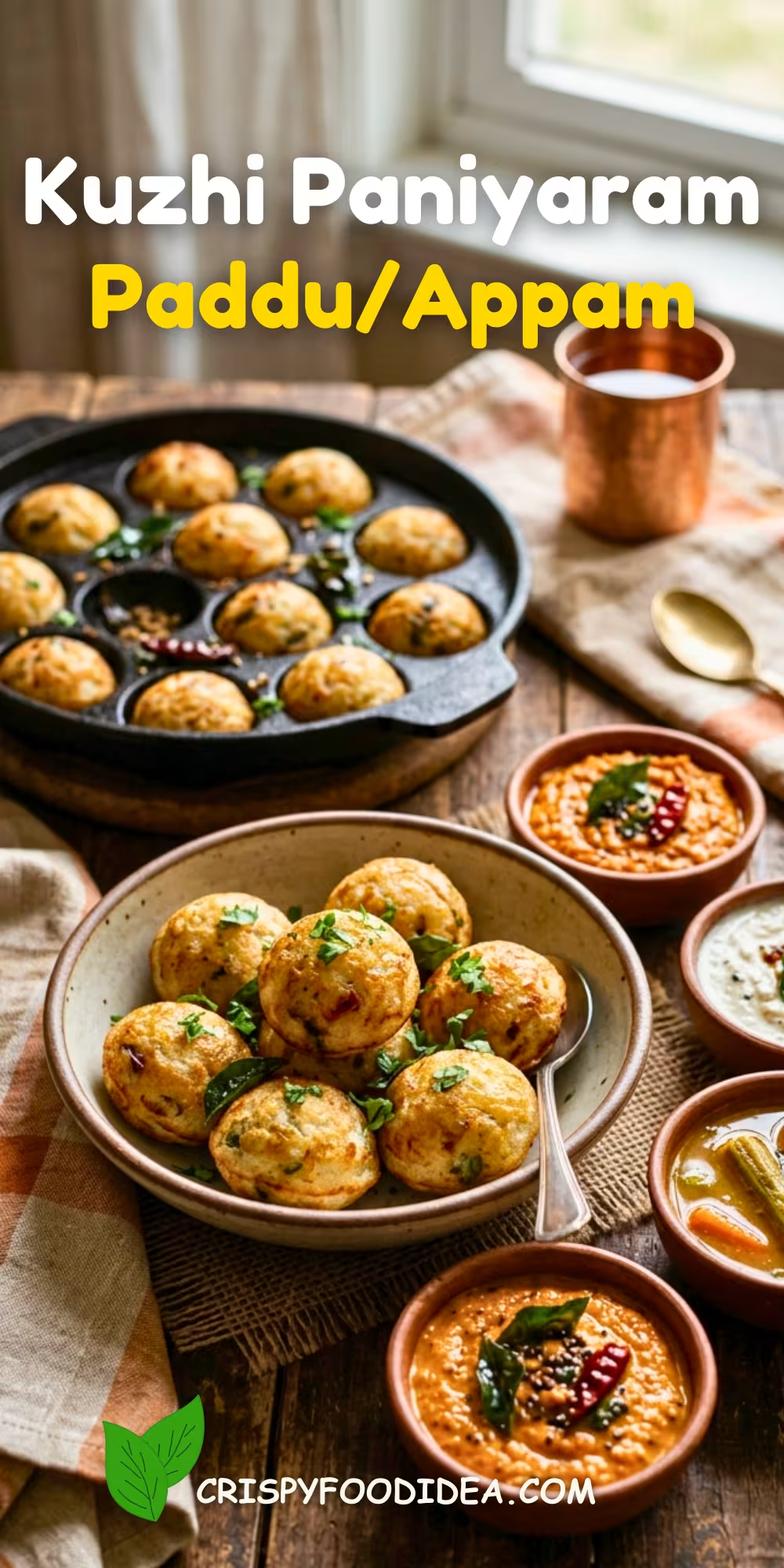
One of my favorite recipes is this: crispy on the outside, fluffy and soft on the inside, Kuzhi Paniyaram is a traditional South Indian breakfast or snack made from fermented rice and lentil batter. It is very easy to make and is made at least once a week in our house. It's also called Paddu or Apam.
Ingredients
For the Tempering & Batter Base:
- 3 cups fermented idli or dosa batter
- 1 tablespoon oil or ghee
- ½ teaspoon mustard seeds
- 1 teaspoon chana dal (Bengal gram)
- 1 teaspoon urad dal (split, skinless black gram)
- 1 pinch asafoetida (hing)
- 1 medium onion, finely chopped
- 1–2 green chilies, finely chopped
- 1 teaspoon freshly grated ginger
- 1 sprig curry leaves, finely chopped
- 2 tablespoons grated fresh coconut (optional)
- 2 tablespoons fresh coriander leaves, finely chopped
- Salt, to taste, if needed
For Cooking:
- 2–3 tbsp Oil or Ghee (for frying in the paniyaram pan)
Instructions
- Prepare the tempering: Heat 1 tablespoon oil or ghee in a small pan over medium heat. Add mustard seeds and let them splutter. Add chana dal and urad dal, stirring until lightly golden.
- Add the aromatics: Stir in the asafoetida, green chilies, grated ginger and curry leaves. Cook for about 30 seconds until fragrant.
- Cook the onion: Add the chopped onion and sauté for 2–3 minutes, until softened and translucent. If using grated coconut, stir it in and cook for another minute. Remove from the heat.
- Mix the batter: Allow the tempering to cool slightly, then mix it into the fermented idli or dosa batter. Add the coriander leaves and adjust the salt if necessary.
- Preheat the paniyaram pan: Heat a paniyaram or appe pan over medium heat. Lightly grease each cavity with oil or ghee.
- Cook the first side: Fill each cavity approximately three-quarters full. Cover and cook over low-to-medium heat for about 3–4 minutes, until the bottoms are golden and the edges begin to release.
- Flip and finish: Carefully turn each paniyaram using a suitable utensil. Add a little more oil if needed and cook uncovered for another 2–3 minutes, until golden on the second side and cooked through in the center.
- Serve: Remove the paniyarams from the pan and serve hot with coconut chutney, tomato-onion chutney or South Indian sambar.
Notes
- Best batter: Use fermented idli or dosa batter with a thick but spoonable consistency.
- Crispy exterior: Preheat the paniyaram pan and let the first side develop a crust before flipping.
- Batter consistency: If the batter is too thick, add a small amount of water. If it is too thin, adjust it with thicker batter rather than adding excessive dry ingredients.
- Salt: Taste the batter before adding extra salt, since the prepared batter may already be seasoned.
- Optional coconut: Fresh grated coconut adds texture and flavor but can be omitted.
- Serving suggestions: Serve immediately with coconut chutney, tomato chutney, onion chutney or sambar.
- Sweet variation: Inippu Paniyaram is a separate sweet variation. Prepare it using a suitable sweet batter rather than applying the savory tempering instructions unchanged.
- Timing: The 25-minute total applies to cooking with ready-fermented batter; it does not include making or fermenting batter from scratch.
Nutrition Information:
Yield:
4Serving Size:
1Amount Per Serving: Calories: 393Total Fat: 13gSaturated Fat: 5gUnsaturated Fat: 8gCholesterol: 9mgSodium: 193mgCarbohydrates: 61gFiber: 3gSugar: 2gProtein: 8g
What Is Kuzhi Paniyaram?
Kuzhi Paniyaram is a popular savoury dish from South India, made by cooking a mixture of spiced rice and lentils in a special pot with small round holes. Also known as paddu and appe in various regional food cultures, this golden dish is appreciated for its light crunchy exterior and soft, fluffy interior. It is an excellent choice for breakfast, brunch or evening snack, especially when served hot with coconut chutney or spicy tomato chutney.
Traditionally, the batter for Paniyaram is made with rice and urad dal (chickpeas), which are soaked, pounded and fermented before cooking. However, in the home kitchen, you can also make a convenient kuzhi paniyaram recipe with leftover idli or dosa batter. A simple boil of mustard seeds, curry leaves, green chillies, ginger and onion adds aroma and delicious taste without having to make a batter from scratch.
Crispy Outside
A well-heated paniyaram pan helps develop a lightly golden, deliciously crisp outer layer.
Soft in the Center
Proper batter consistency and moderate heat help the inside cook through while staying tender.
Easy to Customize
Add onion, carrot, green chili, coriander, or grated coconut to create your preferred savory variation.
Is Kuzhi Paniyaram the Same as Paddu, Appe, or Appam?
These names are often used when searching for similar South Indian breakfast recipes, but the preparation may vary from region to region. Kuzhi Paniyaram is usually associated with Tamil Nadu, while Paddu is a familiar name in Karnataka, and Appe is used in other Indian regional food traditions. Telugu-speaking families may recognize a related dish as Ponganalu.
On the other hand, Appam from Kerala is usually a different dish: it is a pancake made of fermented rice, with a soft center and characteristically webbed edges. Although the names may be similar in informal searches, Appam and Kuzhi Paniyaram are not the same recipe.
If you are using leftover idli or dosa batter, check its thickness before adding the tempering. A batter that is too thin can make the paniyaram difficult to turn and less likely to hold its round shape. Adjust gradually rather than adding too much flour or water.
What Makes Kuzhi Paniyaram a Favorite South Indian Snack?
One of the reasons this traditional South Indian recipe is so versatile is that its batter can be adapted to suit a variety of tastes. Keep the spices mild for breakfast, add extra raw chilies for a spicier flavor, or mix in finely chopped vegetables for extra texture. Its round shape makes it convenient to serve paniyaram at family gatherings, in lunchboxes, or as part of a homemade tiffin.
For a classic combination, serve freshly cooked kuzhi paniyaram with coconut chutney, onion chutney, or sweet-and-sour tomato chutney. The contrast of hot, savory pieces and a fresh chutney makes this simple dish especially satisfying.
Ingredients I Use for This Kuzhi Paniyaram Recipe
To make delicious Kuzhi Paniyaram (Paddu), I use fermented idli or dosa batter, aromatic South Indian tempering, fresh vegetables, and a little oil for cooking. These ingredients help create paniyaram with lightly crispy golden edges and a soft, fluffy center. This easy paniyaram recipe is also a convenient way to transform leftover idli batter into a satisfying breakfast or snack.
For the Paniyaram Batter
- 2 cups fermented idli or dosa batter
- 1 small onion, finely chopped
- 1–2 green chilies, finely chopped
- 1 tsp freshly grated ginger
- 2 tbsp chopped fresh coriander leaves
- 1–2 tbsp grated carrot, optional
- Salt, only as needed after tasting the batter
For the South Indian Tempering
- 1 tbsp cooking oil
- ½ tsp mustard seeds
- 1 tsp chana dal (split Bengal gram)
- 1 tsp urad dal (split black gram)
- 8–10 fresh curry leaves, chopped
- 1 pinch asafoetida (hing), optional
- 1 tbsp grated coconut, optional
For Cooking
- 1–2 tbsp oil, as needed for greasing the paniyaram pan
Use a well-seasoned cast-iron paniyaram pan or a suitable nonstick appe pan. The exact amount of oil needed will depend on the pan and the number of batches.
My Ingredient Tip for Better Paniyaram
Use a fermented batter that is thick enough to hold its shape, but easy to spoon into the mold. If you are using leftover idli or dosa batter, test its consistency and salt content first. Avoid adding too much water, as a thin batter makes it difficult to flip the paniyaram and is less likely to crisp up the edges.
Add finely chopped vegetables for extra texture, adjust the green chilies to suit your preferred spice level, or use oil instead of ghee for a vegan version. If using grated vegetables, avoid adding excessive moisture to the batter.
How to Make Kuzhi Paniyaram Step by Step
Making Kuzhi Paniyaram (Paddu) at home is a delicious way to turn fermented idli or dosa batter into little golden bites with a lightly crisp exterior and a soft, fluffy center. The secret is to prepare a flavorful onion tempering, use batter with the right consistency, and cook the paniyaram over moderate heat in a properly preheated paniyaram or appe pan.
Follow these step-by-step instructions for an easy South Indian paniyaram recipe, including practical tips for turning each piece, preventing sticking, and getting the texture just right.
Step-by-Step Kuzhi Paniyaram Recipe
The following method starts with fermented idli or dosa batter. Cook each batch until the outside is golden and the center is completely cooked. Cooking time can vary depending on the pan, mould size and stove.
Check and Prepare the Paniyaram Batter
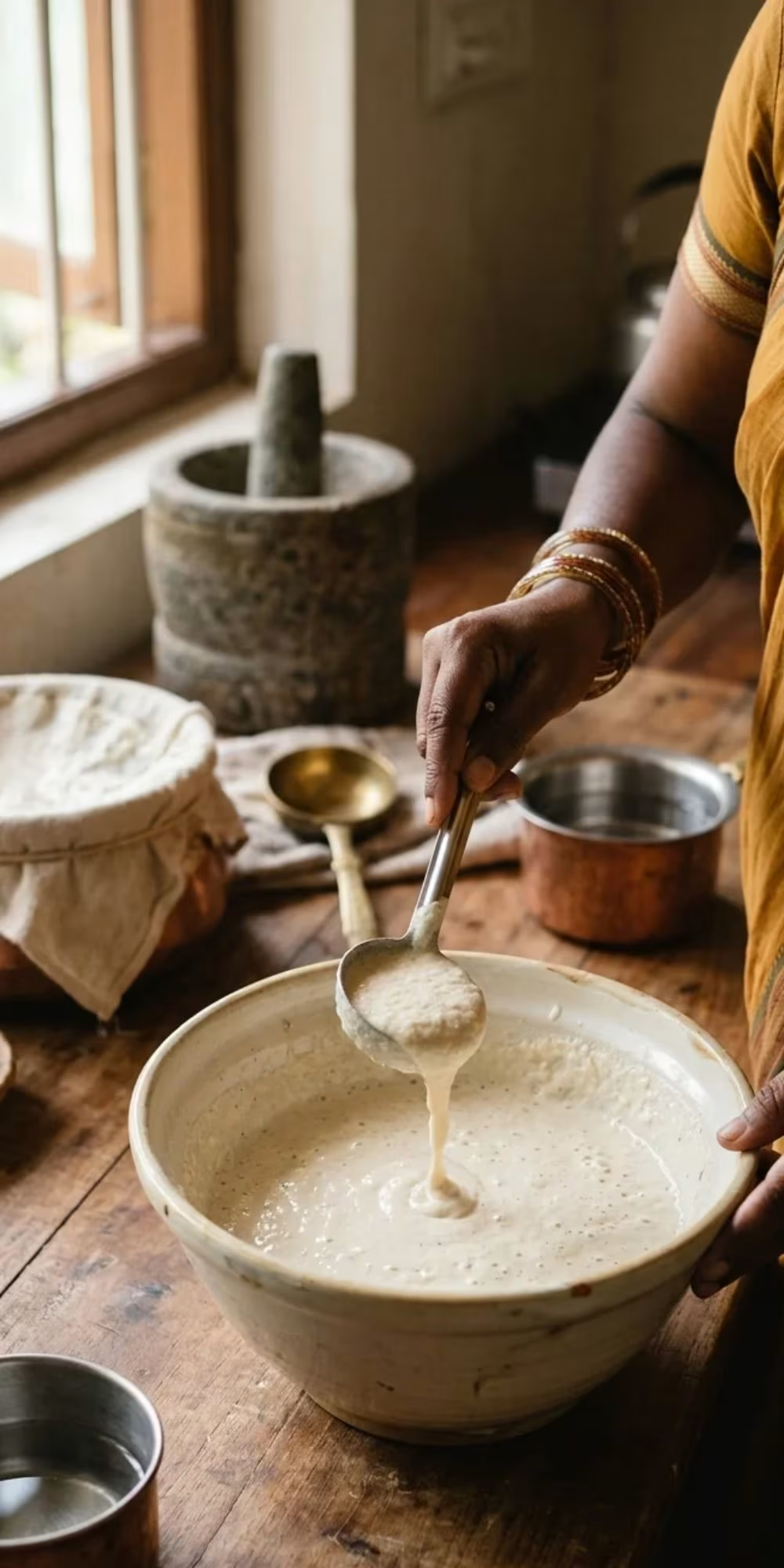
Add the fermented idli or dosa batter to a large mixing bowl. Stir it gently to make the texture even, then check its thickness. For soft-centered kuzhi paniyaram, the batter should hold its shape briefly when spooned but still fall easily from the spoon.
If you are using leftover batter from the refrigerator, check that it has been stored safely and has no signs of spoilage. Let it lose some of its chill if convenient, without leaving it unrefrigerated for an extended period.
Avoid thinning the batter too much. Excess water can make paniyaram difficult to turn and less likely to develop a golden exterior.
Prepare the Onion and Spice Tempering
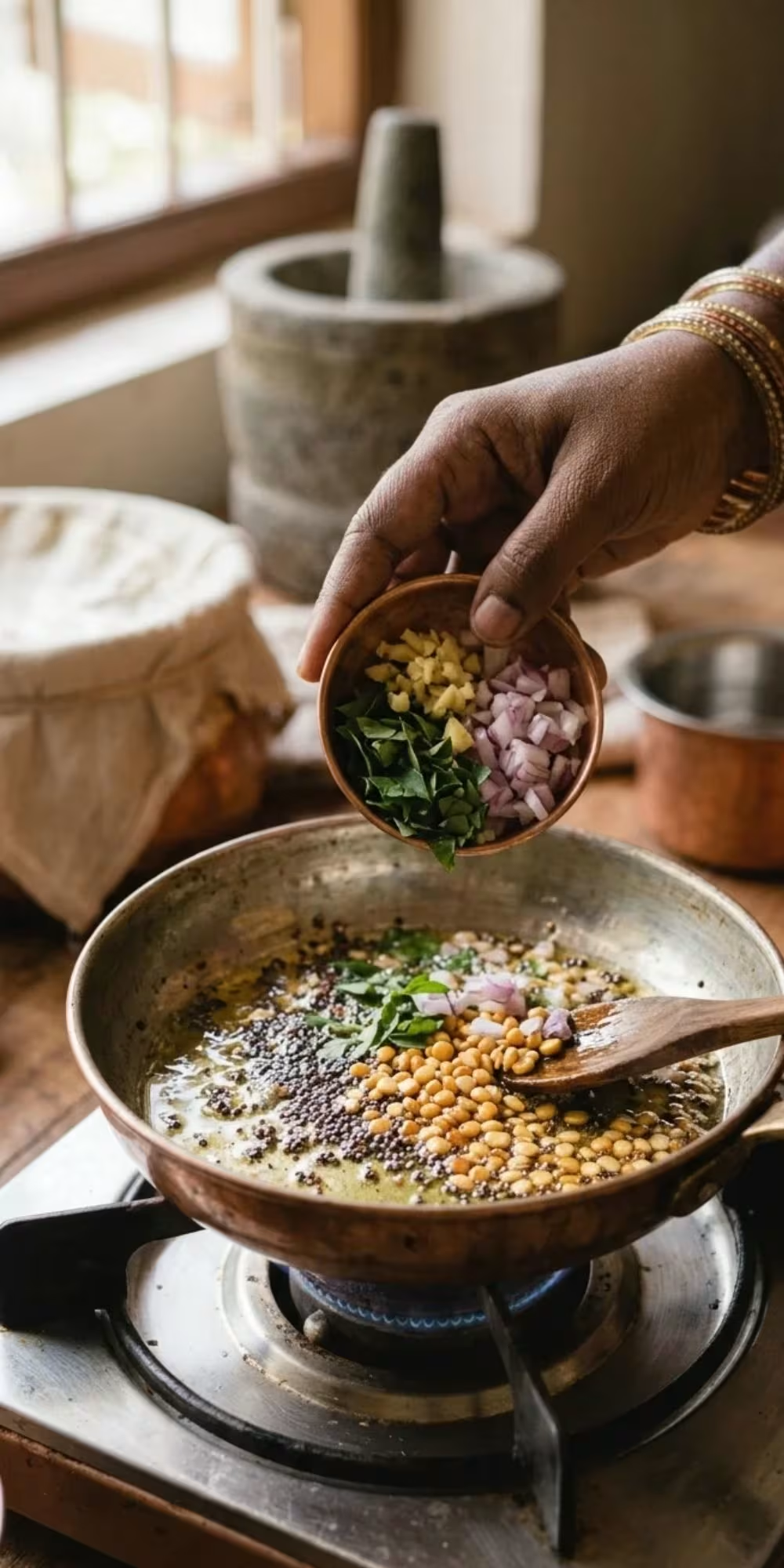
Heat 1–2 teaspoons of oil in a small pan over medium heat. Add the mustard seeds and allow them to splutter. Stir in the chana dal and urad dal, cooking until they turn lightly golden.
Add the curry leaves, chopped ginger, green chili and onion. Sauté until the onion softens and loses its raw smell. Switch off the heat and let the mixture cool slightly before adding it to the batter.
For a milder paniyaram recipe, reduce the green chili. You can also add finely grated carrot or a little fresh coconut, but avoid adding too much moisture.
Lightly golden lentils provide a pleasant crunch. Avoid burning them, as this can give the tempering a bitter taste.
Mix the Tempering into the Batter
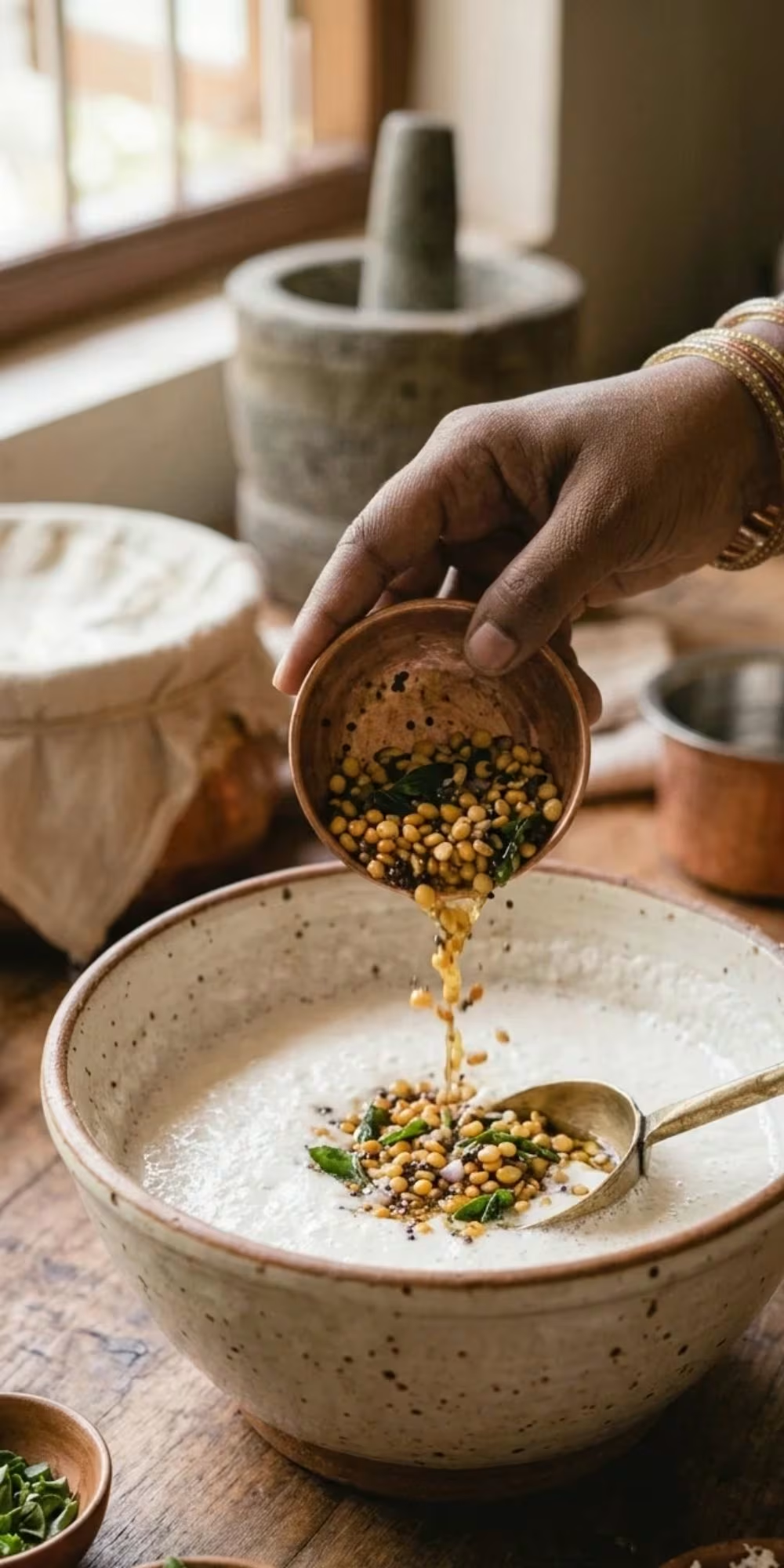
Add the cooled onion tempering to the batter. Stir gently until the onion, herbs, spices and lentils are distributed throughout. Add chopped coriander leaves and grated coconut if using.
Taste a tiny amount of the uncooked mixture only if appropriate for the ingredients involved; otherwise, adjust the seasoning using your knowledge of the original batter. Add salt only when necessary, since prepared idli or dosa batter may already contain salt.
The finished batter should be spoonable, not watery. If vegetables release liquid, give the mixture a gentle stir and avoid adding any extra water.
Preheat and Grease the Paniyaram or Appe Pan
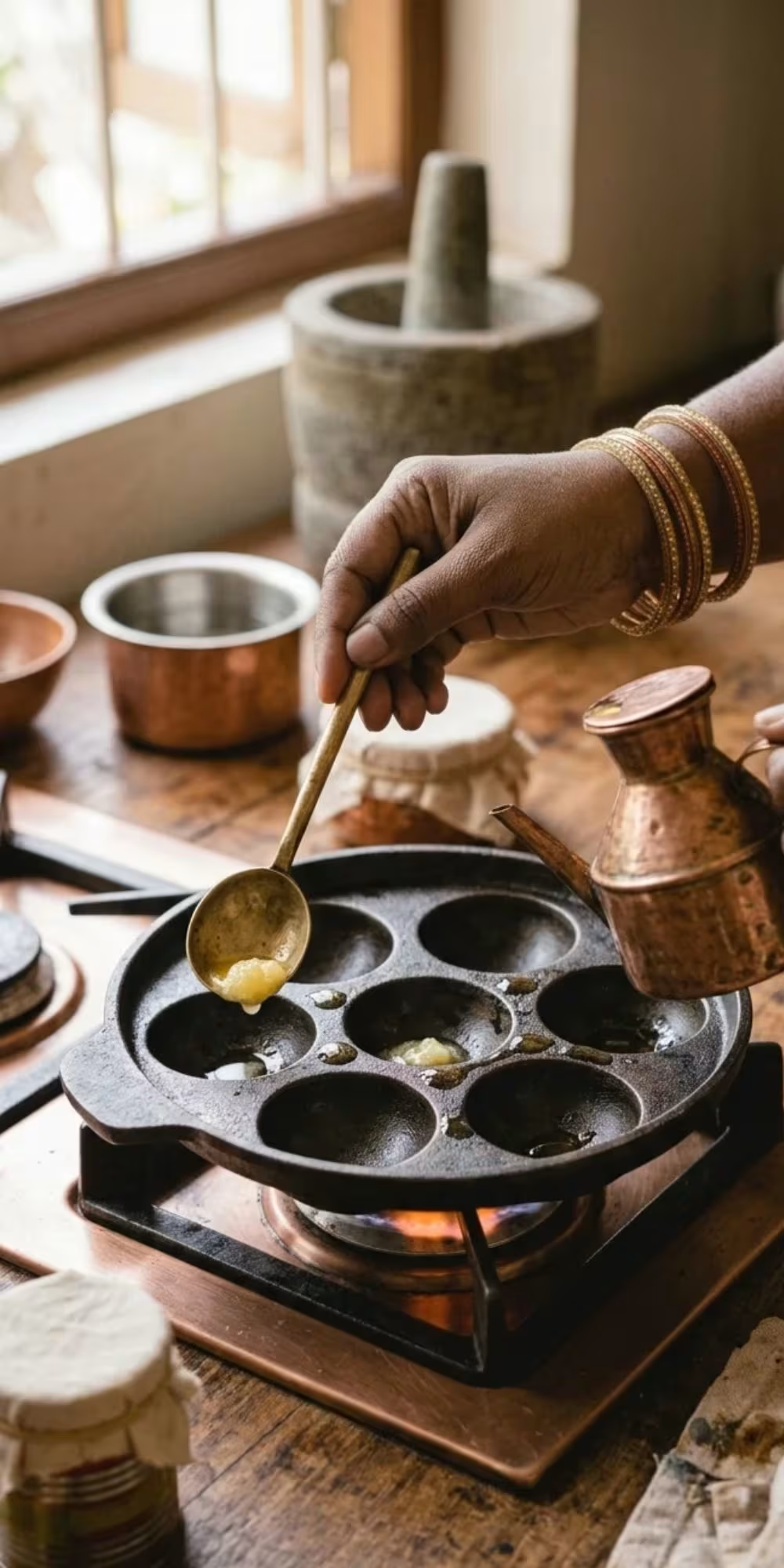
Place a paniyaram pan over medium heat. Once it is warm, add a few drops of oil or ghee to each cavity. Spread the oil around the moulds without allowing it to smoke.
A properly preheated pan helps the batter begin setting on contact, making the pieces easier to turn. If the pan is too hot, the outside may brown before the center cooks. If it is too cool, the paniyaram may absorb more oil or stick.
For a cast iron pan, use a well-seasoned surface. For a nonstick appe pan, use moderate heat and follow the manufacturer’s care instructions.
Fill Each Mould with Paniyaram Batter
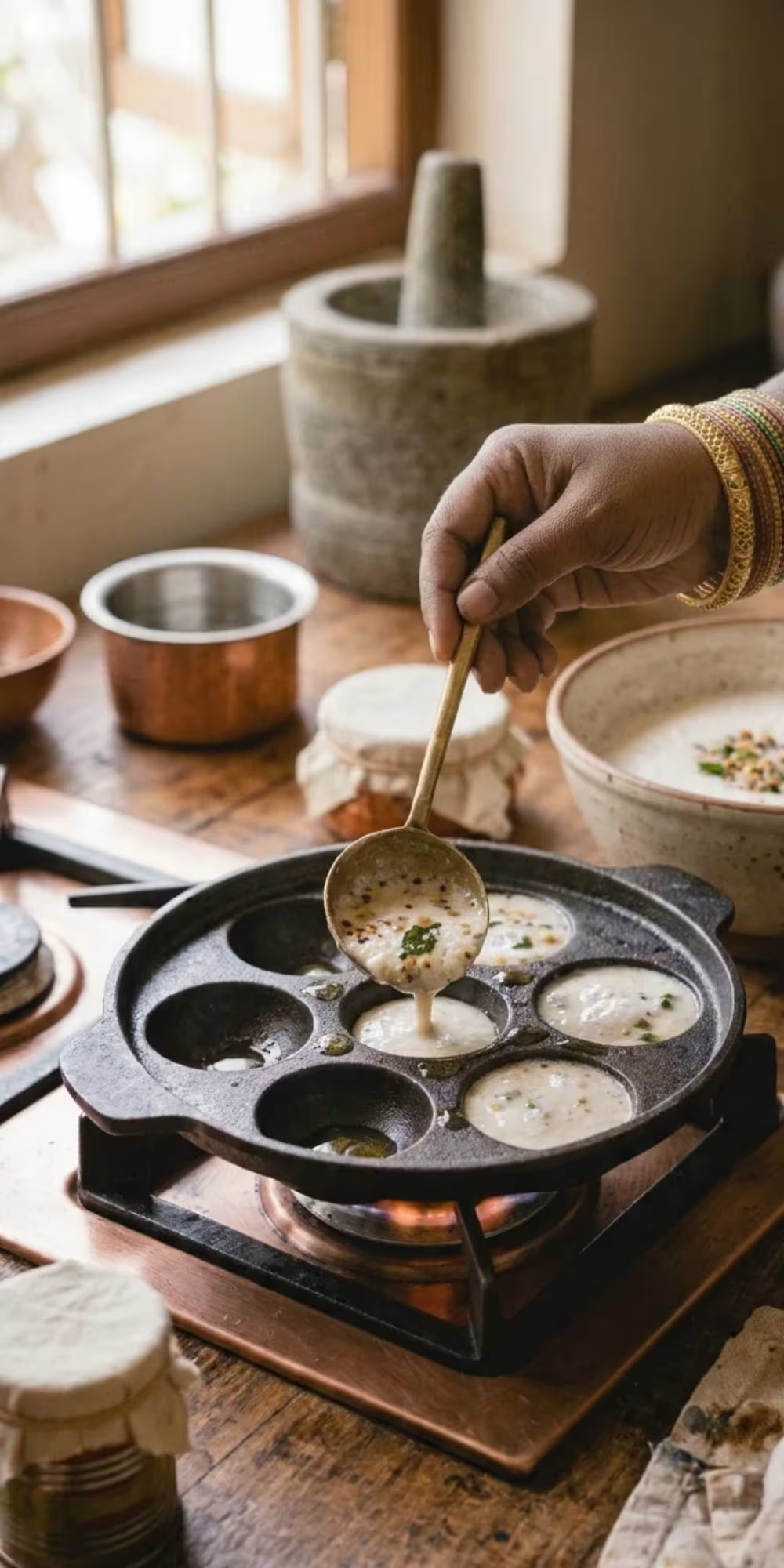
Spoon the prepared batter into each greased cavity, filling each one approximately three-quarters full. The exact amount depends on the depth and size of your paniyaram pan.
Avoid overfilling the moulds. A little space allows the batter to expand and helps the finished Paddu recipe develop a neat, rounded shape.
Fill the moulds evenly so all the paniyaram cook at a similar rate. If your pan has hot spots, rotate the pan carefully as needed.
Cover and Cook Until the Bottom Turns Golden
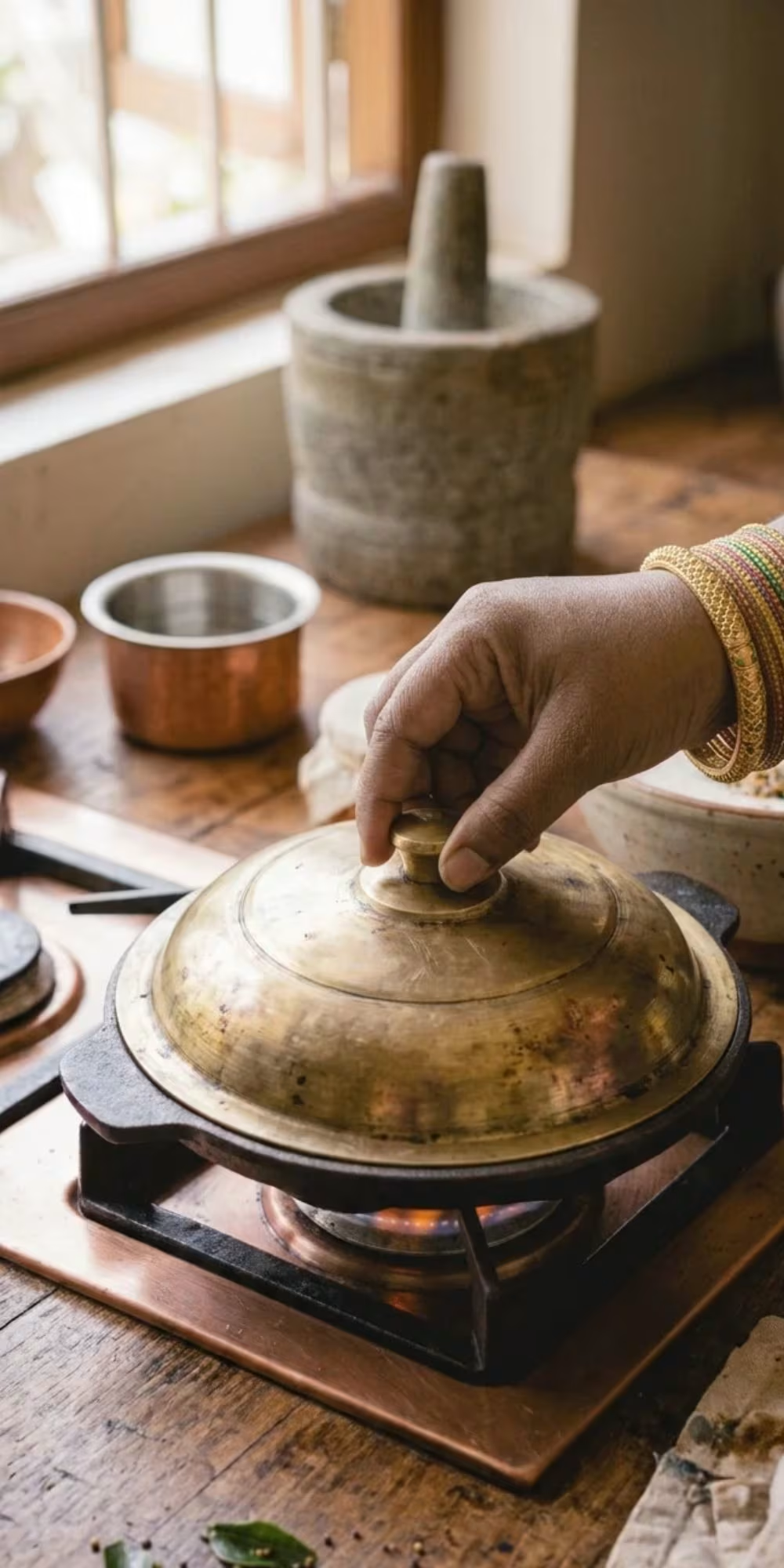
Cover the pan and cook over medium-low to medium heat for approximately 3–5 minutes, checking earlier if your pan heats quickly. The timing will depend on the batter and mould size.
When the bottom has set and the edges look firm, check one paniyaram gently with a skewer or small spoon. It should release without tearing when the crust is ready.
Look for firm edges and a golden underside. Do not flip solely because a timer has ended; the surface should be set enough to hold its shape.
Flip the Paniyaram and Cook the Other Side
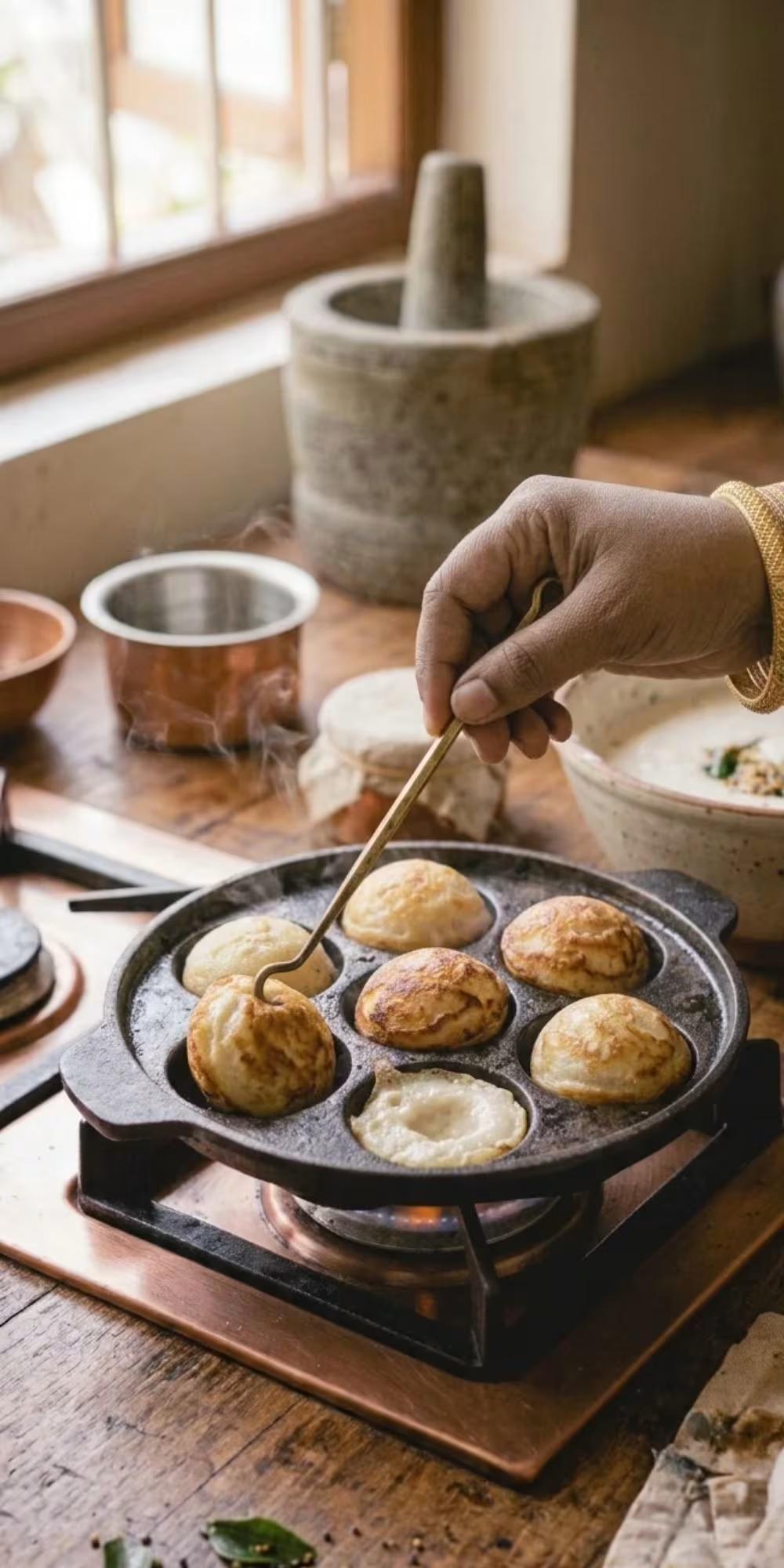
Use a small spoon or suitable turning tool to rotate each paniyaram. Cook the opposite side for another 2–4 minutes, adjusting the heat as needed.
If the outside is browning too quickly, lower the heat. If the pieces are pale and soft, allow a little more cooking time before removing them.
A small amount of oil around the edges of each mould can help the surface brown. Avoid excessive oil, which can make the finished paniyaram greasy.
Check the Center and Serve Hot
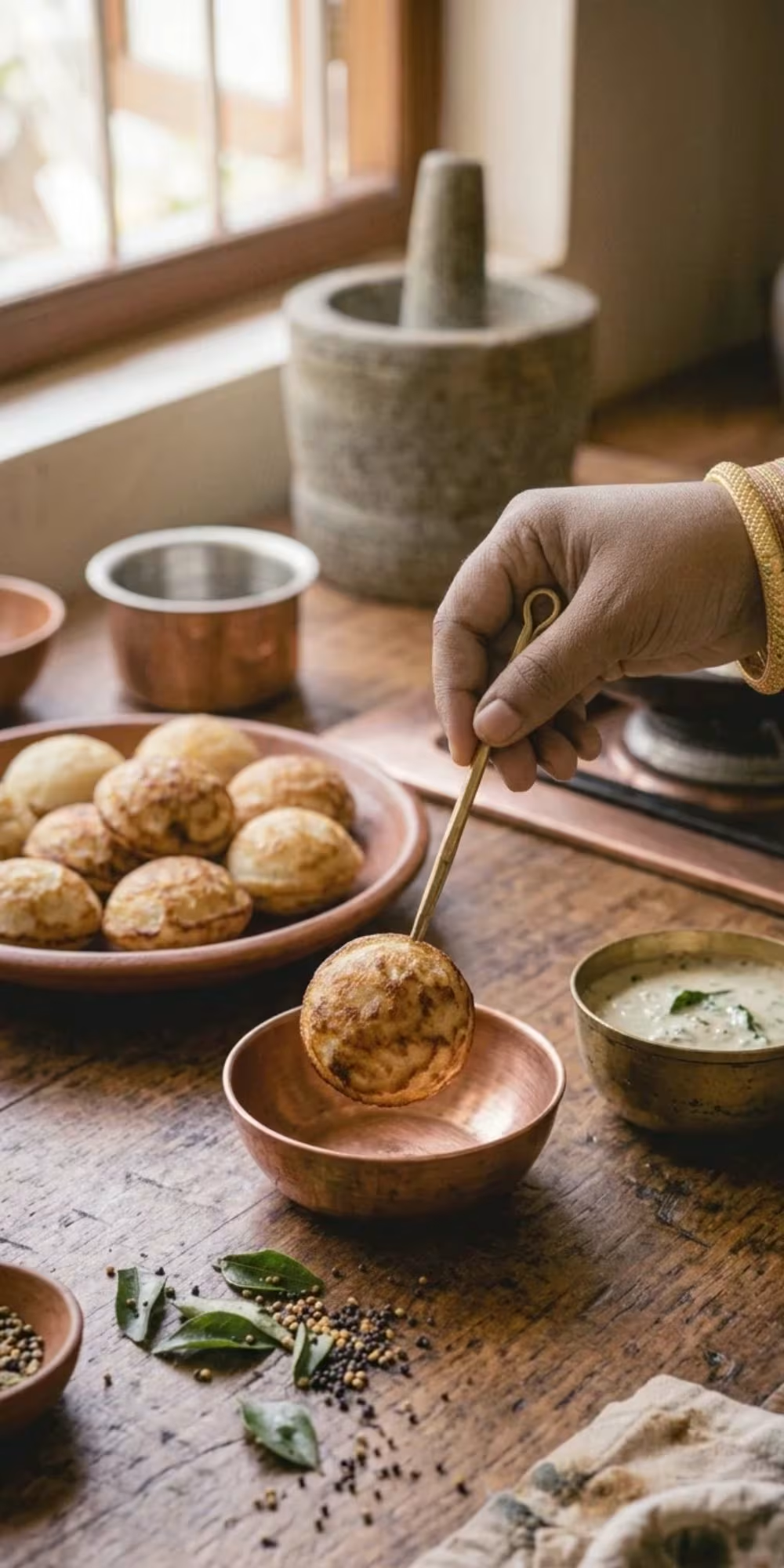
Remove the paniyaram once both sides are golden and the center is fully cooked. If you are unsure, cut one open to check that the middle is set rather than wet or batter-like.
Transfer the cooked pieces to a plate in a single layer. Avoid stacking them tightly or covering them for too long, as trapped steam can soften the crisp exterior.
Serve your homemade Kuzhi Paniyaram hot with South Indian chutney recipes or sambar. If you enjoy other fermented-batter breakfasts, you can also try this crispy dosa recipe .
Serve each batch as soon as possible for the best contrast between the lightly crisp outside and soft center.
Tips for Perfect Crispy Outside, Soft Inside Paniyaram
If your paniyaram does not turn out as expected on the first try, use these practical checks to identify what needs adjusting.
Preheat the pan, grease each cavity lightly and wait until the bottom sets before turning. A poorly seasoned cast iron surface may need attention.
Lower the heat and cook for longer. Overfilled moulds and excessive heat can leave the middle undercooked.
Check the batter consistency and fermentation. Avoid adding too much water or stirring the mixture excessively.
Check that the pan is sufficiently preheated, the batter is not watery and the finished pieces are not trapped under a lid.
Allow the first side to cook until the edges are firm. Use a small turning tool and avoid forcing the pieces out.
Check fermentation and refrigeration history. Strongly unpleasant odors or other spoilage signs are reasons to discard the batter rather than trying to mask its flavor.
How I Make Paniyaram Batter From Scratch (Sometimes!)
Most days, using leftover idli or dosa batter, making kuzhi paniyaram is the easiest way to make it. But sometimes, when I have a little extra time, I prefer to make homemade paniyaram batter from scratch. Soaking rice and lentils, beating them to make a smooth batter, and leaving the mixture to ferment creates a wonderful base for the soft center and crunchy edges of paniyaram, also known as paddu or appe in different regions.
You know what’s the best part? Once the batter is ready, I can add fresh curry leaves, green chilies, ginger, onion, and a fragrant sprig of thyme before cooking everything in the paniyaram pan (Appam pan). Here’s the basic recipe for making it with rice and lentils, along with the little details that help make the batter perfect.
Times are estimates. Actual soaking and fermentation depend on the ingredients, grinder, and kitchen temperature.
Ingredients for Homemade Kuzhi Paniyaram Batter
This is a practical starting ratio for fermented rice and urad dal batter. Rice varieties and regional recipes differ, so the texture of the finished batter matters as much as the exact ratio.
For the batter
- 3 cups idli rice or parboiled rice
- 1 cup whole or split skinned urad dal
- ½ teaspoon fenugreek seeds (optional)
- Water, as needed for soaking and grinding
- Salt, to taste, added before cooking
For the savory tempering
- 1 medium onion, finely chopped
- 1–2 green chilies, finely chopped
- 1 teaspoon finely chopped ginger
- 1 teaspoon mustard seeds
- 1 teaspoon urad dal
- 1 teaspoon chana dal
- 8–10 curry leaves, chopped
- Fresh coriander and oil, as needed
Step-by-Step: How to Make Paniyaram Batter From Scratch
Rinse and soak the rice and urad dal
Rinse the rice several times until the water becomes less cloudy. Rinse the urad dal separately. Soak the rice and dal in separate bowls for approximately 4–6 hours, or according to the requirements of your ingredients. If using fenugreek seeds, soak them with the dal.
Why separate them? Rice and urad dal grind differently, and soaking them separately makes it easier to achieve a consistent batter.
Grind the urad dal until fluffy
Drain the soaked dal and grind it with small amounts of fresh water until smooth, light, and aerated. Avoid adding too much water at once. Transfer the ground dal to a large, clean fermentation container.
Grind the rice to the right texture
Drain the rice and grind it with enough water to form a smooth batter with a slight texture. It should not be excessively watery. A little texture from the rice helps distinguish this style of batter from an entirely smooth batter.
Mix the rice and urad dal batters
Combine both batters in the fermentation container and mix thoroughly with a clean spoon or hand. The mixture should be thick yet pourable. Leave sufficient headroom because fermented batter may expand.
Ferment until the batter is ready
Cover the container loosely and leave it in a suitably warm place. Fermentation may take around 8–14 hours in a warm kitchen, but cooler conditions can require longer. Look for a noticeable increase in volume, small bubbles, and a pleasantly fermented aroma.
Avoid relying on the clock alone. Once fermentation is complete, refrigerate the batter if you are not going to cook with it immediately.
Add salt and prepare the savory tempering
Heat a little oil in a pan. Add mustard seeds and allow them to splutter, then add urad dal and chana dal. Stir in the onion, green chilies, ginger, and curry leaves. Sauté until the onion softens, then allow the mixture to cool slightly.
Mix and check the paniyaram batter consistency
Stir the tempering into the fermented batter with fresh coriander. Add salt to taste, remembering that any salt already present in the batter counts toward the total. The finished mixture should fall easily from a spoon but should not run like thin liquid.
Cook the kuzhi paniyaram
Heat a greased paniyaram or appe pan over medium heat. Fill each cavity without overfilling, cover if appropriate, and cook until the bottoms are set. Turn each piece gently and cook the other side until golden and the center is fully cooked. Serve hot with coconut chutney or tomato chutney.
Tips for Perfectly Fermented Paniyaram Batter
- Choose a suitable rice: Idli rice or parboiled rice is a useful starting point for a soft interior.
- Use water gradually: Adding too much water while grinding can make the final batter difficult to manage.
- Leave room to rise: Fermenting batter needs space in its container.
- Check the temperature: Fermentation generally progresses faster in warmer conditions and slower in cooler kitchens.
- Do not over-ferment: Excessive fermentation can make the batter too sour and affect its performance.
- Adjust gently: If the batter is too thick, add water a teaspoon or tablespoon at a time, as appropriate.
Common Homemade Paniyaram Batter Problems
| Problem | Possible cause | What to do |
|---|---|---|
| Batter does not rise much | Cool conditions or weak fermentation | Allow more time in a suitably warm location and check for fermentation cues. |
| Batter is too thin | Excess water during grinding | Avoid adding more water and reassess the texture before cooking. |
| Batter is very sour | Fermentation may have continued too long | Adjust future fermentation time and refrigerate once ready. |
| Paniyaram turns dense | Heavy batter, poor fermentation, or excess moisture | Check the batter consistency, fermentation, and cooking heat. |
| Paniyaram sticks to the pan | Insufficient greasing or turning too early | Grease the cavities and allow the exterior to set before turning. |
Homemade Paniyaram Batter vs. Leftover Idli Batter
| Feature | Homemade batter | Leftover idli/dosa batter |
|---|---|---|
| Preparation | Requires soaking, grinding, and fermentation | Ready to use if properly stored |
| Planning | Needs advance preparation | Convenient for a quick meal |
| Texture control | You can choose the rice-to-dal ratio | Depends on the original batter recipe |
| Best use | When you have time to prepare from scratch | When you want to use existing batter |
Both methods can make delicious kuzhi paniyaram. If you are short on time, use your prepared batter and add the savory tempering just before cooking. If you enjoy traditional preparation, the homemade rice and urad dal method gives you more control over the starting mixture.
Ready to Make Homemade Kuzhi Paniyaram?
Making paniyaram batter from scratch takes a little planning, but the process is straightforward once you understand soaking, grinding, and fermentation. Prepare the batter ahead, add your favorite savory ingredients, and cook the paniyarams in a lightly greased pan until they are crisp outside and fully cooked inside.
My Favorite Recipe Variations
You will be very happy now, because first you learned how to make Kuzhi Paniyaram (Paddu), then now when I tell you that it can be customized in many ways according to your preference because it is a very versatile recipe.
1. Vegetable Kuzhi Paniyaram
For a colorful vegetable paniyaram recipe, mix finely chopped carrots, chopped onions, green chilies and fresh coriander leaves into your idli batter. You can also add a small amount of finely chopped capsicum or other quick-cooking vegetables.
This version is great as a satisfying breakfast, lunchbox snack or light evening meal. The vegetables add a different dimension and flavor to the dish without changing the basic cooking method.
2. Spicy Masala Paniyaram
If you like the spiciness of South Indian food, make a spicy paniyaram with extra raw chilies, grated ginger, curry leaves, mustard seeds and a little freshly ground black pepper, as I like it a lot. A well-made borana brings a fragrant and delicious taste to every bite.
This particular dish goes well with coconut chutney, tomato chutney or spicy onion chutney.
3. Coconut Paniyaram
For a gentle coconut flavor, fold a little freshly grated coconut into the fermented rice-and-urad-dal batter. Add curry leaves, green chili and ginger if you want to keep the preparation savory and traditional in style.
The coconut adds a pleasant texture and complements the mild tanginess of fermented batter. Serve these golden paniyarams warm with your favorite chutney.
4. Sweet Inippu Paniyaram
For a sweeter taste, make Inippu Paniyaram with a suitable sweet batter using jaggery or any other sweetener of your choice. As per regional recipes, you can add cardamom, grated coconut or mashed ripe banana for extra aroma and sweetness.
When you want something different for breakfast or snack, sweet Paniyaram is a great alternative to salty Paddu. Since the sweetness can cause the color to turn brown, cook on low flame and keep an eye on the color.
5. Vegan Kuzhi Paniyaram
Traditional savory paniyaram can easily fit a vegan meal when the ingredients are plant-based. Prepare the batter with rice and urad dal, use vegetable oil for the tempering, and grease the mould with oil instead of ghee.
Onion, ginger, chilies, curry leaves and coriander provide plenty of flavor without needing dairy products. Check your chosen ingredients if you are following a strict vegan diet.
6. Lightly Oiled Paniyaram
If you prefer to use less added oil, lightly brush each cavity of your paniyaram pan instead of pouring in excess oil. A suitable nonstick pan or a properly seasoned cast iron pan can make this approach easier.
Cook over moderate heat and allow each side to develop a golden crust before turning. The final texture depends on the batter, pan, temperature and cooking technique as well as the amount of oil used.
What I Love to Serve With Kuzhi Paniyaram
For me, a plate of Kuzhi Paniyaram (Paddu) feels complete when it comes with a flavorful chutney or a comforting bowl of sambar. These golden South Indian rice and lentil dumplings have crisp edges and a soft, tender center, making them perfect for breakfast, brunch or an evening snack. The right accompaniment adds freshness, spice and a delicious contrast to every bite.
1. Coconut Chutney
Coconut chutney is one of my favorite accompaniments for traditional kuzhi paniyaram. Its creamy texture and mild, fresh flavor balance the savory tempering of mustard seeds, curry leaves, ginger and green chilies.
A simple coconut chutney made with fresh coconut, green chili and a little lemon juice or tamarind creates a delicious breakfast pairing.
Try this coconut chutney recipe
2. South Indian Tomato Chutney
Tomato chutney is ideal when I want a tangy, slightly spicy dip with my crispy paniyaram. Cooked tomatoes, onion, chilies and a simple tempering give the chutney a rich savory flavor without overpowering the rice and urad dal batter.
Serve it warm or at room temperature alongside a fresh batch of paddu for a tasty breakfast or snack.
3. Spicy Onion Chutney
Onion chutney brings a deeper savory flavor to kuzhi paniyaram. Sautéed onions, red chilies and tamarind create a bold accompaniment that works especially well with mildly seasoned batter.
I would choose this pairing when serving paniyaram as an evening tiffin or when a little extra spice sounds appealing.
Explore this onion chutney recipe
4. Homemade Tiffin Sambar
If you want a more substantial meal, serve paddu with warm sambar. This lentil-based South Indian stew, typically prepared with vegetables, tamarind and spices, adds moisture and a comforting savory flavor.
Keep the paniyaram separate until serving so the crisp exterior stays intact. You can also offer a small bowl of sambar for dipping.
Discover a homemade sambar recipe
5. Kara Chutney
Kara chutney is a wonderful option for people who like a fiery accompaniment. Depending on the regional recipe, it can be prepared with onion, tomato, red chilies and a flavorful tempering.
Its bold taste pairs well with the gentle tang of fermented batter and the crisp, golden crust of freshly cooked paniyaram.
6. Fresh Vegetable Sides
For a lighter and more colorful plate, add sliced cucumber, fresh tomato or a simple vegetable salad. The freshness provides a pleasant contrast to warm, savory rice-and-lentil dumplings.
This is an easy option when serving paniyaram for brunch or as part of a larger vegetarian meal.
Storage, Reheating and Make-Ahead Tips for Kuzhi Paniyaram
Freshly cooked kuzhi paniyaram (padu) tastes best when its outside is golden and lightly crispy and the inside is soft and fluffy. If you have leftover paniyaram or want to make this South Indian snack in advance, proper storage and reheating methods can help preserve its flavor and texture. These handy tips also explain how to store leftover idli or dosa batter, refrigerate cooked paniyaram, and reheat the pieces without making them too soft.
How to Store Cooked Kuzhi Paniyaram
If you have made extra kuzhi paniyaram with leftover idli or dosa batter, cool and store the cooked pieces properly. Keeping them in an airtight container helps prevent them from drying out and absorbing unwanted refrigerator odors.
Refrigerator Storage
Use within 3–4 daysRefrigerate cooked paniyaram at 40°F (4°C) or below, preferably in a shallow, airtight container. Refrigerate within 2 hours of cooking, or within 1 hour when the surrounding temperature exceeds 90°F (32°C).
- Allow excess surface steam to escape briefly.
- Do not leave cooked paniyaram at room temperature for hours.
- Keep chutney in a separate container.
Freezing Cooked Paniyaram
For longer storageFreeze cooked paniyaram if you want to keep it beyond the refrigerator storage period. Cool and refrigerate promptly first if needed, then freeze in a freezer-safe container or sealed freezer bag.
- Freeze in a single layer initially to reduce sticking.
- Separate portions for easier reheating.
- Label the container with the preparation date.
For food safety, cooked leftovers are generally best used within 3–4 days in the refrigerator. Frozen leftovers kept continuously at 0°F (-18°C) remain safe for longer, although texture and flavor may gradually deteriorate. Use suitable food-safe containers and follow established food-safety guidance.
How to Reheat Kuzhi Paniyaram Without Making It Soggy
The best way to reheat paniyaram depends on whether you prefer a lightly crisp exterior or a softer texture. Avoid overheating the pieces, as excessive heat can dry out the inside before the center warms through.
1. Reheat in a Paniyaram Pan
This is a convenient method for restoring the original texture of small, round paniyaram.
- Preheat the pan over low to medium-low heat.
- Lightly grease the cavities if needed.
- Add the refrigerated paniyaram and cover loosely.
- Turn occasionally until heated through.
Best for: A lightly crisp exterior.
2. Reheat in an Air Fryer
An air fryer can help restore the outer crispness of refrigerated or thawed paniyaram.
- Preheat according to your appliance instructions.
- Arrange the pieces in a single layer.
- Heat at approximately 160–180°C (320–356°F).
- Check after 3–5 minutes and continue as needed.
Best for: A crisp finish with little added oil.
3. Reheat on the Stovetop
If you do not have a paniyaram pan, use a regular skillet with a lid.
- Place the pieces in a lightly greased skillet.
- Warm over low heat, turning them occasionally.
- Cover briefly if needed to warm the center.
- Remove the lid for the final moments to reduce surface moisture.
Best for: Small portions and everyday reheating.
4. Reheat in a Microwave
A microwave is quick, but it tends to soften the exterior rather than restore crispness.
- Place the paniyaram on a microwave-safe plate.
- Cover loosely to reduce splattering.
- Heat in short intervals until steaming hot throughout.
- Finish in a skillet or air fryer if you want a crisp exterior.
Best for: Quick reheating when convenience matters.
Can You Prepare Kuzhi Paniyaram Ahead of Time?
Yes. Preparing the ingredients or batter ahead of time makes it easier to serve a fresh South Indian breakfast on busy mornings. The most suitable method depends on whether you are using already fermented idli/dosa batter or making the batter from scratch.
Option 1: Prepare the Ingredients
- Chop onion, green chili, ginger and coriander.
- Refrigerate prepared ingredients in covered containers.
- Keep ingredients containing excess moisture separate.
- Make the tempering shortly before mixing if possible.
This approach saves preparation time while allowing you to cook fresh, crispy paniyaram when needed.
Option 2: Prepare the Batter
- Use properly fermented rice-and-urad-dal batter.
- Refrigerate prepared batter in a clean, covered container.
- Add chopped vegetables and tempering close to cooking time.
- Stir gently and check the consistency before using.
Refrigeration slows fermentation but does not stop every change in the batter. Follow a suitable food-safety plan and assess the batter before cooking.
How Long Can You Store Kuzhi Paniyaram Batter?
Properly handled fermented idli or dosa batter can often be refrigerated for a few days, but its usable life depends on the ingredients, fermentation stage, temperature and handling. Do not assume that every batter will remain suitable for the same number of days.
| What you are storing | Storage guidance | Before using |
|---|---|---|
| Cooked paniyaram | Refrigerate promptly; use within 3–4 days. | Reheat thoroughly. |
| Fermented idli/dosa batter | Keep refrigerated at 40°F (4°C) or below; use according to its condition and safe handling. | Check storage history, appearance, odor and consistency. |
| Chopped vegetables and aromatics | Refrigerate in clean, covered containers. | Use promptly and discard spoiled ingredients. |
| Frozen cooked paniyaram | Keep frozen at 0°F (-18°C) or below for best quality. | Reheat thoroughly; avoid repeated warming and cooling. |
Frequently Asked Questions About Kuzhi Paniyaram
01 What is Kuzhi Paniyaram, and what does it taste like?
Kuzhi Paniyaram is a popular South Indian savory snack and breakfast dish made by cooking seasoned rice-and-lentil batter in a special pan with small round cavities. It typically has a golden, lightly crispy exterior and a soft, tender center. Onion, green chilies, ginger, curry leaves, and mustard seed tempering add flavor and aroma.
Serve these bite-sized paniyarams hot with coconut chutney, tomato chutney, onion chutney, or sambar for a satisfying South Indian breakfast or evening snack.
02 Are Kuzhi Paniyaram, Paddu, Appe, and Ponganalu the same?
Kuzhi Paniyaram, Paddu, and Appe are closely related names for small, round preparations commonly cooked in a cavity pan. Ponganalu is another related preparation popular in Telugu cuisine. Ingredients, seasoning, batter composition, and cooking methods vary by region and household.
Kerala-style Appam is different. It is generally a bowl-shaped, fermented rice pancake with a soft center and delicate edges, rather than the small round snack made in a paniyaram pan. Although these dishes may share some ingredients, they are not interchangeable names for every preparation.
03 Can I make Kuzhi Paniyaram with leftover idli or dosa batter?
Yes! Leftover idli batter or dosa batter is one of the easiest ways to make Kuzhi Paniyaram at home. Stir the batter gently, then mix in a tempering of mustard seeds, urad dal, chana dal, onion, green chili, ginger, and curry leaves.
Check the consistency before cooking. If the batter is too thick, add a little water; if it is too thin, avoid adding more liquid and adjust it with a suitable amount of thicker batter. Cook in a lightly greased, preheated paniyaram pan until both sides are golden and the center is fully cooked.
04 How do I make crispy Kuzhi Paniyaram with a soft center?
For crispy outside, soft inside paniyaram, begin with batter that is thick enough to hold its shape but still easy to spoon into the pan. Preheat the paniyaram pan over medium heat and grease the cavities lightly.
Fill each cavity without overfilling it. Let the first side develop a golden crust before turning the paniyaram. Continue cooking over moderate heat so the center cooks without burning the outside. Avoid adding too much watery vegetable mixture, and serve the finished paniyarams soon after cooking for the best texture.
05 Why is my Paniyaram sticking to the pan?
Paniyaram may stick if the pan is not properly preheated, the cavities are insufficiently greased, or the first side has not cooked long enough to form a crust. A poorly seasoned cast-iron pan can also cause sticking.
Preheat the pan, apply a thin coating of oil to each cavity, and allow the batter to set before turning it. Use a suitable heat-resistant utensil and avoid forcing the paniyaram out while the surface is still soft.
06 Why is my Paniyaram raw inside or dense instead of fluffy?
Paniyaram can remain raw inside when the heat is too high, the cavities are overfilled, or the cooking time is too short. Dense paniyaram may result from unsuitable batter consistency, insufficient fermentation in a recipe that requires it, or excessive stirring and additions that change the batter.
Use moderate heat, fill each cavity only partway, and cook until the center is set. If the outside browns too quickly, reduce the heat and allow the paniyaram to cook more gently. Check the batter’s fermentation and consistency before making another batch.
07 Do I need to ferment the batter before making Paniyaram?
Traditional rice-and-urad-dal Kuzhi Paniyaram batter is generally fermented before cooking. Fermentation helps develop the batter’s characteristic flavor and texture. When using leftover idli or dosa batter, you can usually skip a separate fermentation step because the batter has already fermented.
Fermentation time depends on room temperature, the batter ingredients, and the activity of the natural fermentation culture. Follow the method for your particular recipe rather than relying on one fixed time for every kitchen.
08 Can I make Kuzhi Paniyaram without a special paniyaram pan?
A paniyaram pan, also called an appe pan or Paddu pan, gives the dish its characteristic round shape. If you do not have one, you can experiment with a suitable small-mould cooking pan that is designed for stovetop use, following its manufacturer’s instructions.
A regular flat skillet will not create the same round shape, but small spoonfuls of batter can be cooked as savory mini pancakes. Adjust the heat and cooking time to the equipment you use.
09 Can I make vegetable Paniyaram, and which vegetables work best?
Yes. Finely grated carrot, chopped onion, green chili, coriander, and small amounts of other suitable vegetables can add flavor and texture to savory vegetable paniyaram. You can also add fresh grated coconut if it suits your recipe.
Chop or grate vegetables finely so they cook evenly inside the small batter rounds. Remove excess moisture from watery vegetables and avoid adding so much filling that the batter becomes difficult to cook through.
10 Is Kuzhi Paniyaram vegan and gluten-free?
Kuzhi Paniyaram made with rice-and-urad-dal batter and plant-based oil can be vegan, provided the remaining ingredients are also plant-based. Replace ghee with oil if necessary.
A traditional rice-and-lentil version can also be gluten-free when all ingredients are gluten-free and cross-contact is avoided. Check packaged batter, spice blends, and any additional ingredients if you need to meet a strict gluten-free requirement.
11 What chutney goes best with South Indian Paniyaram?
Coconut chutney is a classic accompaniment for Kuzhi Paniyaram. Tomato chutney and onion chutney offer a tangy, savory contrast, while spicy red chutney is a good choice if you prefer more heat. Sambar can turn paniyaram into a more substantial South Indian breakfast.
For a balanced serving, pair freshly cooked paniyaram with one creamy chutney or a tangy chutney and serve immediately while the exterior is still lightly crisp.
12 How should I store and reheat leftover Paniyaram?
Refrigerate leftover cooked paniyaram promptly in a clean, covered container. Keep it refrigerated at 4°C (40°F) or below and generally use cooked leftovers within three to four days, following applicable food-safety guidance. Do not leave cooked food at room temperature for more than two hours, or one hour when the temperature is above 32°C (90°F).
To reheat, warm the paniyaram in a lightly greased skillet over medium-low heat or use an air fryer until heated thoroughly. These methods can help restore some of the exterior crispness. Refrigerate leftover batter separately and follow safe handling practices; discard batter showing signs of spoilage.
13 Can I prepare Paniyaram batter ahead of time?
Yes. You can prepare traditional batter in advance and allow it to ferment under suitable conditions before refrigerating it. Ready-fermented idli or dosa batter can also be used for a quick paniyaram breakfast.
For the best texture, prepare the onion and spice tempering shortly before cooking and mix it into the amount of batter you plan to use. Keep the remaining batter refrigerated and use it within an appropriate safe storage period. Do not leave perishable batter unrefrigerated indefinitely.
14 Is Kuzhi Paniyaram a healthy breakfast or snack?
Kuzhi Paniyaram can be part of a varied, balanced diet. Its rice-and-lentil batter supplies carbohydrates and some protein, while added vegetables contribute flavor and additional nutrients. The overall nutritional profile depends on the ingredients, portion size, and amount of oil or ghee used.
For a lighter preparation, use a measured amount of oil, include vegetables if desired, and serve with a suitable chutney. Refer to the nutrition information in the recipe card for an estimate based on the specific ingredients and serving size used in this recipe.
If you like this article about Kuzhi Paniyaram (Paddu), please share this with your friends on Facebook and Pinterest. Also, subscribe to my blog to get all the latest content first on your mobile.