
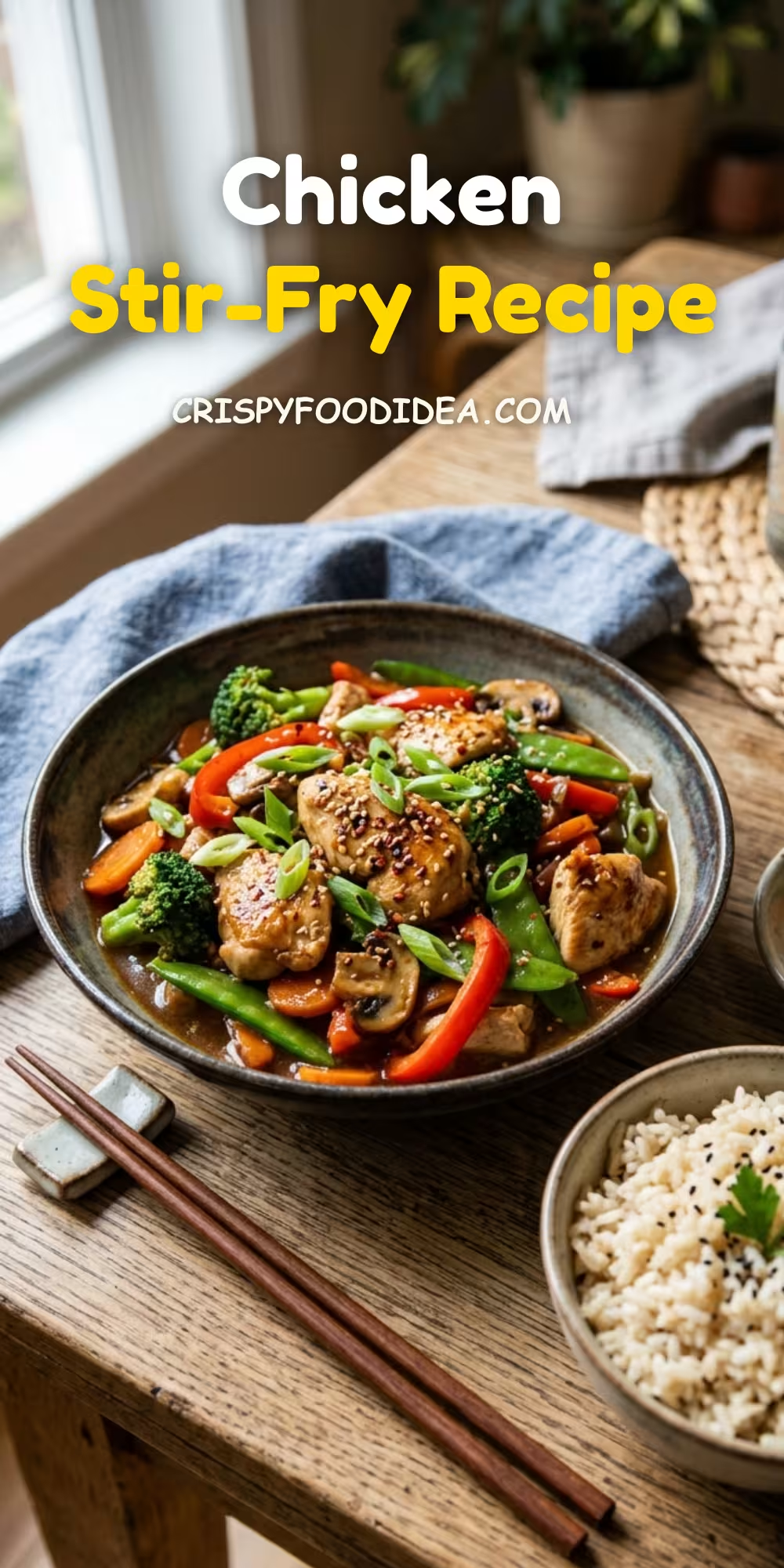
Quick & Healthy High Protein Chicken Stir-Fry Recipe
Chicken stir-fry is a very common dish, and I make it in many different ways. Believe me, all of them are my favorites, and today I am sharing one that is made with lean chicken, colorful vegetables, and plenty of flavor. This high-protein chicken stir-fry is an easy way to make a delicious homemade meal with tender chicken, crisp-tender broccoli, bell peppers, and a savory garlic-ginger sauce. It is perfect for busy weeknights when you want something fresh, flavorful, and simple to prepare.
While chicken and vegetable stir-fry is easy to make, it doesn’t always have the right texture, that is, the crispiness, because the real secret is cooking the right ingredients at the right time. However, this recipe is the most versatile recipe and I can adjust and cut everything to my liking.
That’s why I think this healthy chicken stir-fry recipe is perfect for a protein-rich lunch or dinner and I like to serve it with brown or white rice, quinoa, noodles, or cauliflower rice and I recommend the same to everyone. So let’s teach Sapna how to make it right, the way I always make it and it comes out perfect every time.
Related: Chicken Meal Prep Recipes
High-Protein Chicken & Vegetable Stir-Fry
A quick, lean, and incredibly flavorful dinner packed with tender chicken breast, colorful crisp vegetables, and a delicious garlic-ginger savory sauce. Perfect for meal prep, post-workout fuel, or a fast weeknight meal.
Ingredients
For the Chicken & Veggies:
- 1.5 lbs (680g) boneless, skinless chicken breast, diced into bite-sized cubes
- 1 tbsp olive oil or avocado oil
- 2 cups broccoli florets
- 1 large red bell pepper, sliced into thin strips
- 1 cup sugar snap peas or sliced carrots
- 1 cup sliced cremini or button mushrooms
For the Savory Stir-Fry Sauce:
- ¼ cup low-sodium soy sauce (or coconut aminos)
- 2 tbsp chicken broth or water
- 1 tbsp honey or maple syrup
- 1 tbsp cornstarch
- 1 tbsp fresh ginger, minced
- 3 cloves garlic, minced
- 1 tsp sesame oil
Garnish (Optional):
- 1 tbsp toasted sesame seeds
- 2 green onions, thinly sliced
Instructions
- Whisk the Sauce: In a small bowl, combine the low-sodium soy sauce, chicken broth, honey, cornstarch, minced ginger, garlic, and sesame oil. Whisk until smooth and set aside.
- Sear the Chicken: Heat ½ tablespoon of oil in a large skillet or wok over medium-high heat. Add the chicken cubes and cook for 5–6 minutes, stirring occasionally, until cooked through and golden brown. Remove chicken from the pan and set aside.
- Sauté the Vegetables: Add the remaining ½ tablespoon of oil to the same pan. Add the broccoli, red bell pepper, snap peas, and mushrooms. Stir-fry for 3–4 minutes until the vegetables are vibrant and tender-crisp.
- Combine & Thicken: Reduce heat to medium. Return the chicken to the pan with the vegetables. Whisk the sauce again quickly, then pour it over the stir-fry.
- Toss to Coat: Cook for 1–2 minutes, stirring continuously, until the sauce thickens and evenly coats the chicken and vegetables.
- Garnish & Serve: Remove from heat. Garnish with toasted sesame seeds and sliced green onions. Serve hot over brown rice, quinoa, or cauliflower rice.
Nutrition Information:
Yield:
4Serving Size:
1Amount Per Serving: Calories: 468Total Fat: 14gSaturated Fat: 3gUnsaturated Fat: 11gCholesterol: 145mgSodium: 1055mgCarbohydrates: 27gFiber: 8gSugar: 10gProtein: 62g
Related: Weight Loss Meal Prep Recipes
Why I Mostly Prefer This High-Protein Chicken Stir-Fry
When I want a satisfying dinner without spending a lot of time in the kitchen, a high-protein chicken stir-fry with vegetables can be a great option. It combines tender chicken, colorful vegetables, and a delicious garlic-ginger sauce in an easy and customizable dish. I also love how easily this chicken and vegetable stir-fry can fit into a busy weeknight dinner routine or meal-prep plan.
A Protein-Rich Chicken Dinner
Chicken breast provides high-quality protein, which helps maintain and grow muscle as part of a balanced diet. Served with vegetables, this easy chicken stir-fry is a great option for those looking to add more protein to their daily diet. The exact amount of protein depends on the amount of chicken and the serving size.
Colorful Vegetables in Every Serving
Broccoli, capsicum, carrots, beans, and mushrooms add different textures, colors, and nutrients to the dish. I recommend choosing vegetables that still have a bit of crunch after cooking. This gives your chicken and vegetable stir-fry a refreshing flavor and makes it easy to use whatever vegetables you have on hand.
Quick and Convenient for Busy Days
Once you have the chicken, vegetables, and homemade stir-fry sauce ready, the cooking process is very simple. Having everything ready before heating the pan helps the ingredients cook evenly and makes the recipe easier to manage on a busy evening. Follow the preparation and cooking times listed on the recipe card.
A Flavorful Homemade Stir-Fry Sauce
Garlic, fresh ginger, and low-sodium soy sauce create a savory base that complements the chicken and vegetables. A little cornstarch can help the sauce coat the ingredients, while optional chili adds heat. Making the sauce at home also lets you adjust the sweetness and sodium to suit your preferences.
Easy to Adapt for Meal Prep
This chicken stir-fry can be divided into individual portions for planned lunches or dinners. Store cooked food promptly in shallow containers and refrigerate leftovers within two hours. For the best texture, keep rice or other accompaniments separate when practical, and reheat leftovers thoroughly.
Flexible for Different Eating Preferences
Serve your chicken vegetable stir-fry with brown or white rice, quinoa, or cauliflower rice, depending on your needs. You can also swap vegetables, use chicken thighs, or make a lower-sodium version by adjusting the sauce. These simple changes make the recipe adaptable without requiring an entirely different dish.
For a complete meal, serve the chicken stir-fry with your favorite rice or grain and finish with sliced green onions or sesame seeds, if desired. If you’re planning several meals ahead, portion the food after cooking and follow safe refrigeration and reheating practices.
Related: Easy High-protein Chicken Dinner
Ingredients I Specially Used for Chicken and Vegetable Stir-Fry
When I prepare a high-protein chicken stir-fry with vegetables, I focus on fresh ingredients, lean chicken, colorful vegetables, and a savory homemade sauce. This combination creates a quick, satisfying chicken breast stir-fry with plenty of flavor, a delicious texture, and ingredients that are easy to find at most grocery stores.
The ingredient quantities below are a suggested starting point for 4 servings. Match them to your tested recipe yield before publishing the recipe card.
For the Chicken and Vegetables
Add crunch, color, and fiber. Cut into similar-sized florets so the broccoli cooks evenly.
For the Homemade Garlic-Ginger Stir-Fry Sauce
A balanced homemade chicken stir-fry sauce brings all the ingredients together. This suggested combination delivers savory, aromatic flavor with enough body to coat the chicken and vegetables.
Easy Ingredient Swaps and Variations
One reason this easy chicken stir-fry recipe is so flexible is that you can change the vegetables or sauce ingredients to suit your preferences and what you already have in the kitchen.
Use boneless, skinless thighs for a richer flavor. Cooking time may vary depending on the size of the pieces.
A convenient option when fresh vegetables are unavailable. Avoid overcrowding the pan as frozen vegetables release moisture.
Choose certified gluten-free tamari or another suitable alternative, and verify every sauce ingredient’s label.
Serve with cauliflower rice or extra vegetables instead of regular rice or noodles.
Try zucchini, cabbage, green beans, or baby corn, adjusting the cooking order to maintain a crisp-tender texture.
Add chili flakes or sliced fresh chili to give your chicken and vegetable stir-fry a spicy kick.
Related: Chicken Stir-fry Meal Prep Bowl
How to Make High-Protein Chicken Stir-Fry
Making a delicious high-protein chicken stir-fry with vegetables at home is easier than you might think. Tender pieces of chicken breast, crisp-tender broccoli, colorful bell peppers, and a savory garlic-ginger sauce come together in one pan for a satisfying weeknight dinner. The key is preparing your ingredients before cooking, searing the chicken in batches, and adding the vegetables in the right order.
Follow these simple chicken stir-fry cooking steps to create a flavorful meal that works with rice, quinoa, noodles, or cauliflower rice. You can also portion the finished dish into meal-prep containers for convenient lunches throughout the week.
Step-by-Step: How to Make High-Protein Chicken Stir-Fry
Follow these six steps for juicy chicken, colorful vegetables, and a glossy sauce that coats every bite. Cooking times may vary depending on your pan, burner, and the size of your chicken pieces.
Prepare the Chicken and Vegetables
Prep everything first for faster, more even cooking.
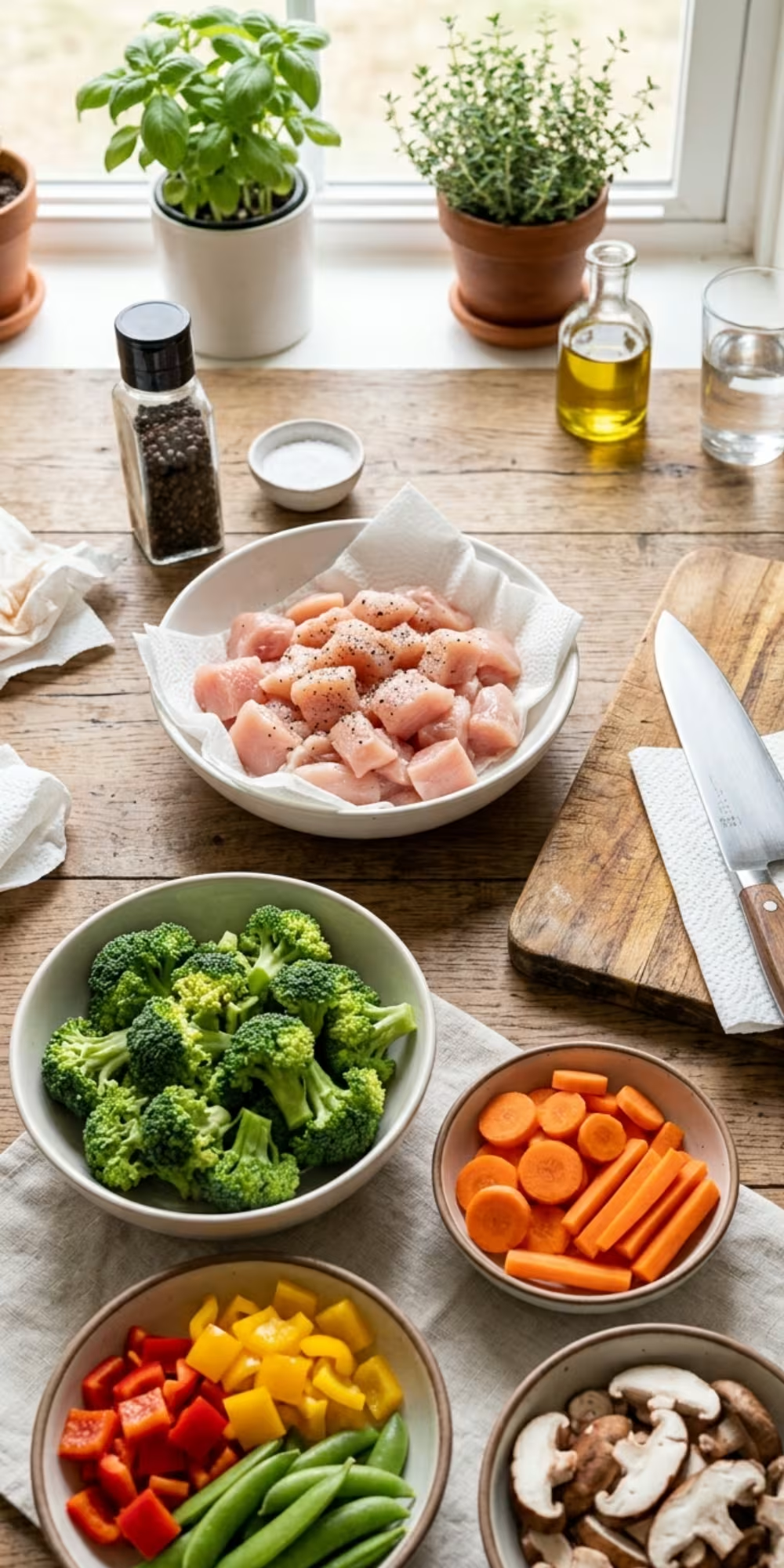
Cut the chicken breast into evenly sized, bite-size strips or cubes so the pieces cook at a similar rate. Pat the surface dry with clean paper towels, and season lightly with black pepper if desired. Wash and prepare the vegetables, cutting them into pieces that will cook quickly without becoming mushy.
Keep the prepared chicken separate from ready-to-eat ingredients, and wash your hands, knife, and cutting board after handling raw poultry. Mix the sauce ingredients in a separate bowl so everything is ready when the pan is hot.
Whisk Together the Garlic-Ginger Stir-Fry Sauce
Create a savory, lightly sweet sauce with a smooth consistency.
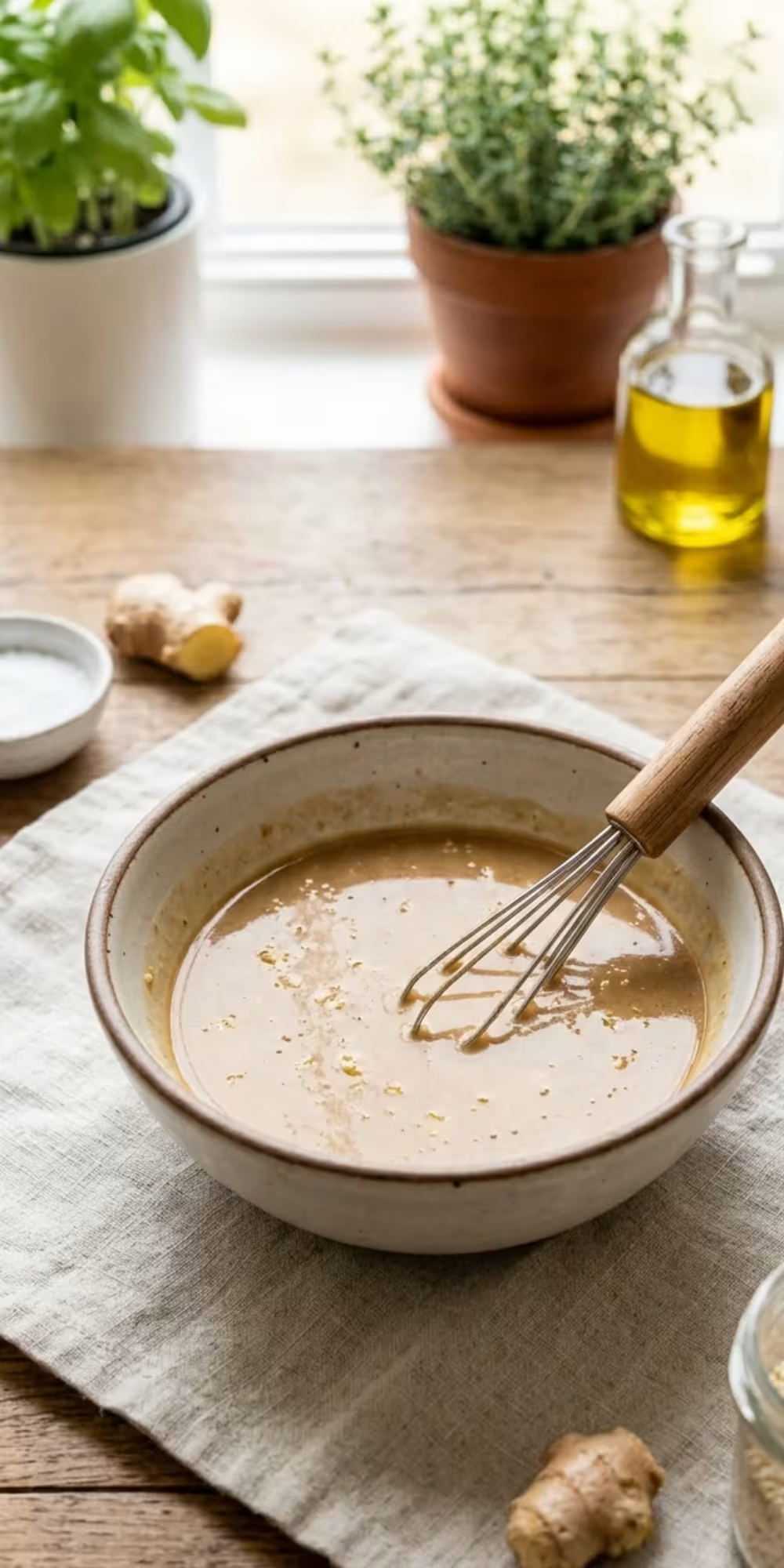
In a small bowl, whisk together the low-sodium soy sauce, chicken broth or water, cornstarch, rice vinegar, sesame oil, and optional honey. Stir until the cornstarch is fully dispersed and no dry clumps remain.
The soy sauce provides savory depth, ginger and garlic add aromatic flavor, and the cornstarch helps the sauce thicken as it heats. If you prefer a less sweet chicken stir-fry sauce, simply leave out the honey.
Sear the Chicken Until Golden and Cooked Through
Use a hot pan and cook in batches when necessary.
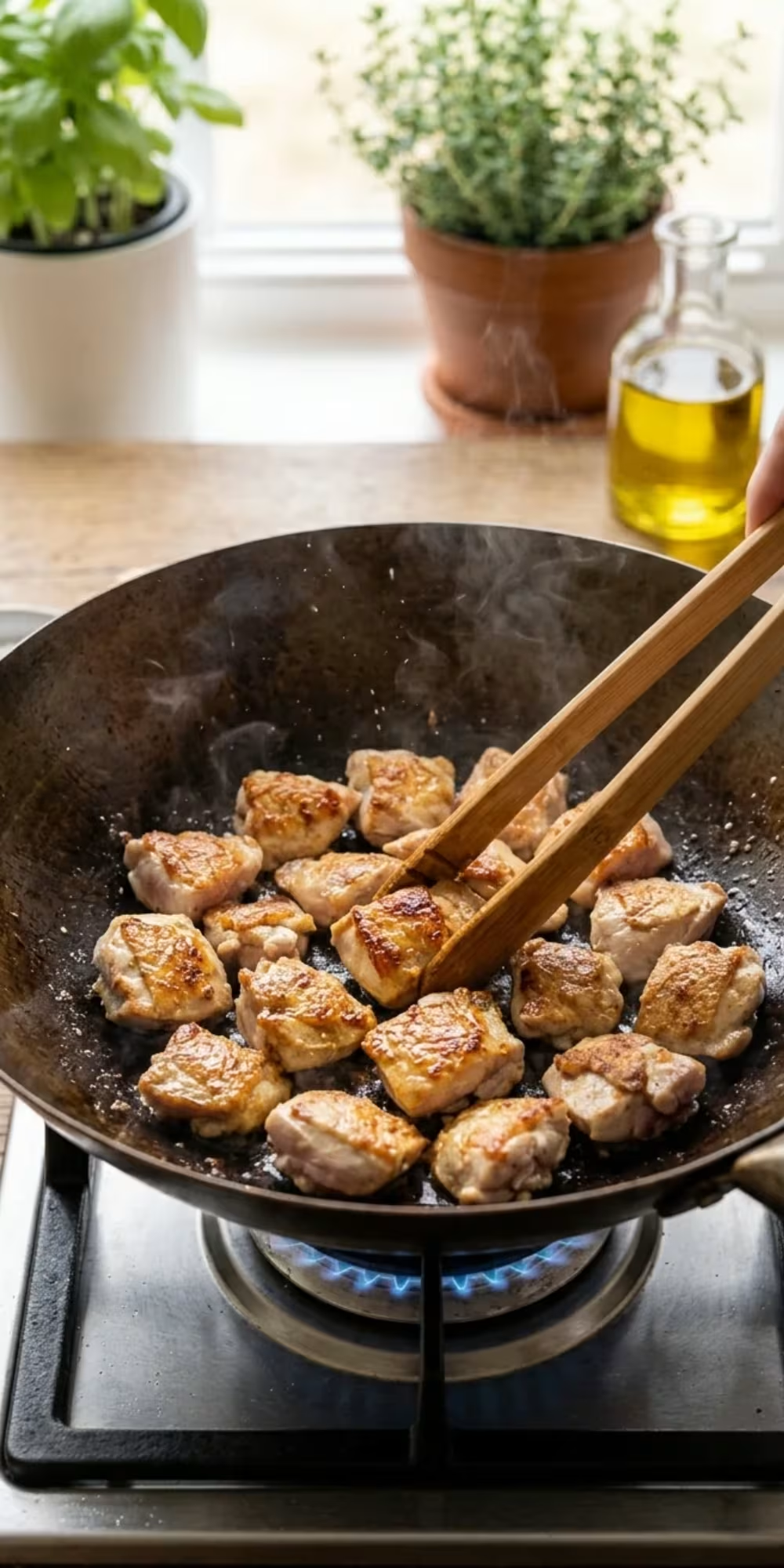
Heat a large skillet or wok over medium-high to high heat, following the cookware manufacturer’s guidance, and add the oil. Arrange the chicken in a single layer without overcrowding the pan. Let the pieces sear before turning them so they have a chance to develop light browning.
Cook until the chicken is cooked through, adjusting the time to the size of the pieces. If your pan is small, work in batches and transfer each cooked batch to a clean plate. Avoid piling raw chicken into the pan all at once, as excess moisture can interfere with browning.
Stir-Fry the Vegetables Until Crisp-Tender
Cook the firmer vegetables first to preserve their texture.
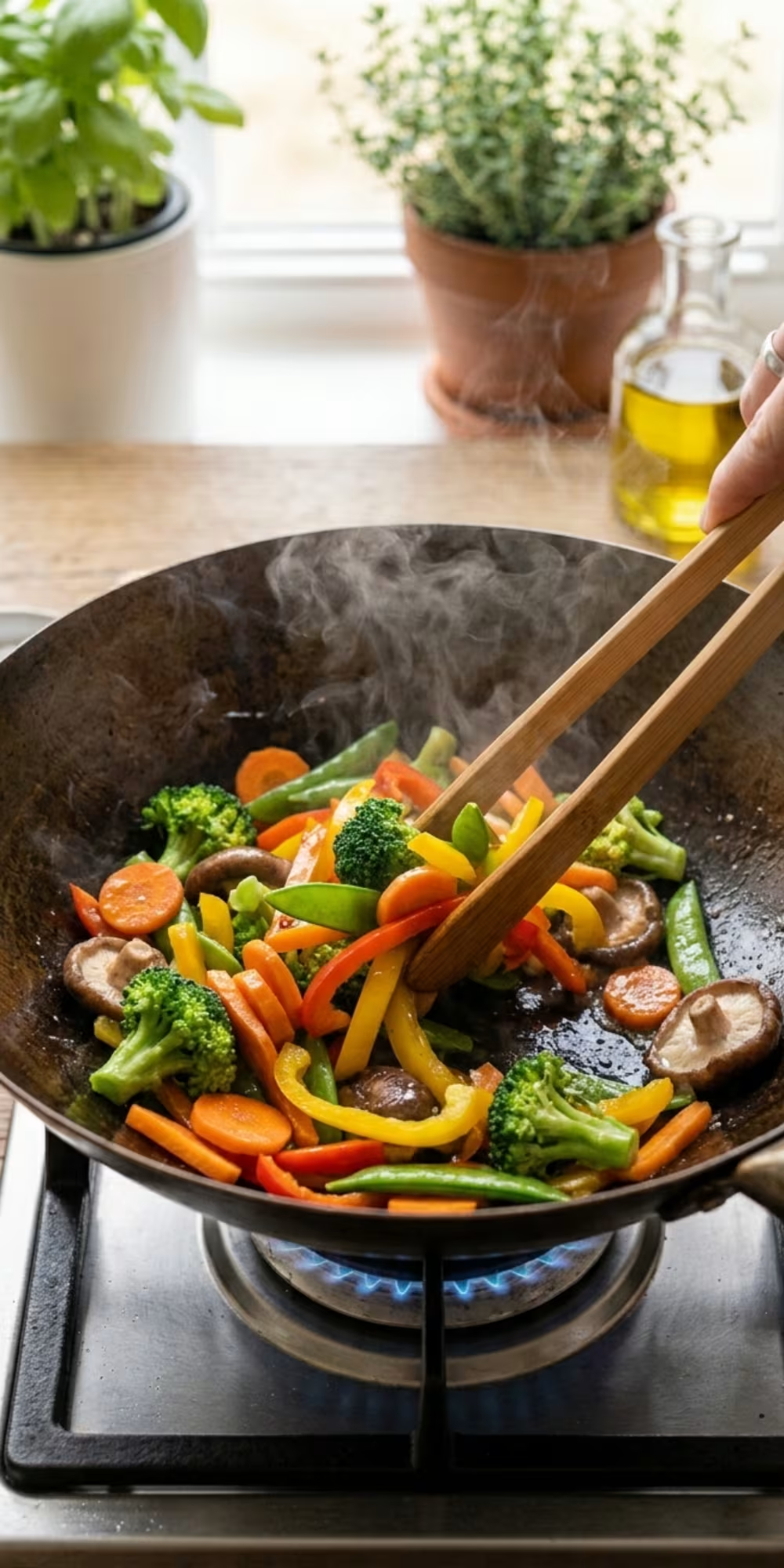
If needed, add a small amount of oil to the same skillet. Add the broccoli first and stir-fry for a couple of minutes. Add carrots or other firm vegetables next, followed by bell peppers, snap peas, and mushrooms according to how quickly they cook.
Keep the ingredients moving and cook until the vegetables are bright, hot, and crisp-tender. They should retain some bite rather than turn soft and watery. If the pan begins to steam heavily, reduce the amount of food in the pan and cook in batches.
Combine the Chicken, Vegetables, and Stir-Fry Sauce
Bring the ingredients together for a glossy, flavorful finish.
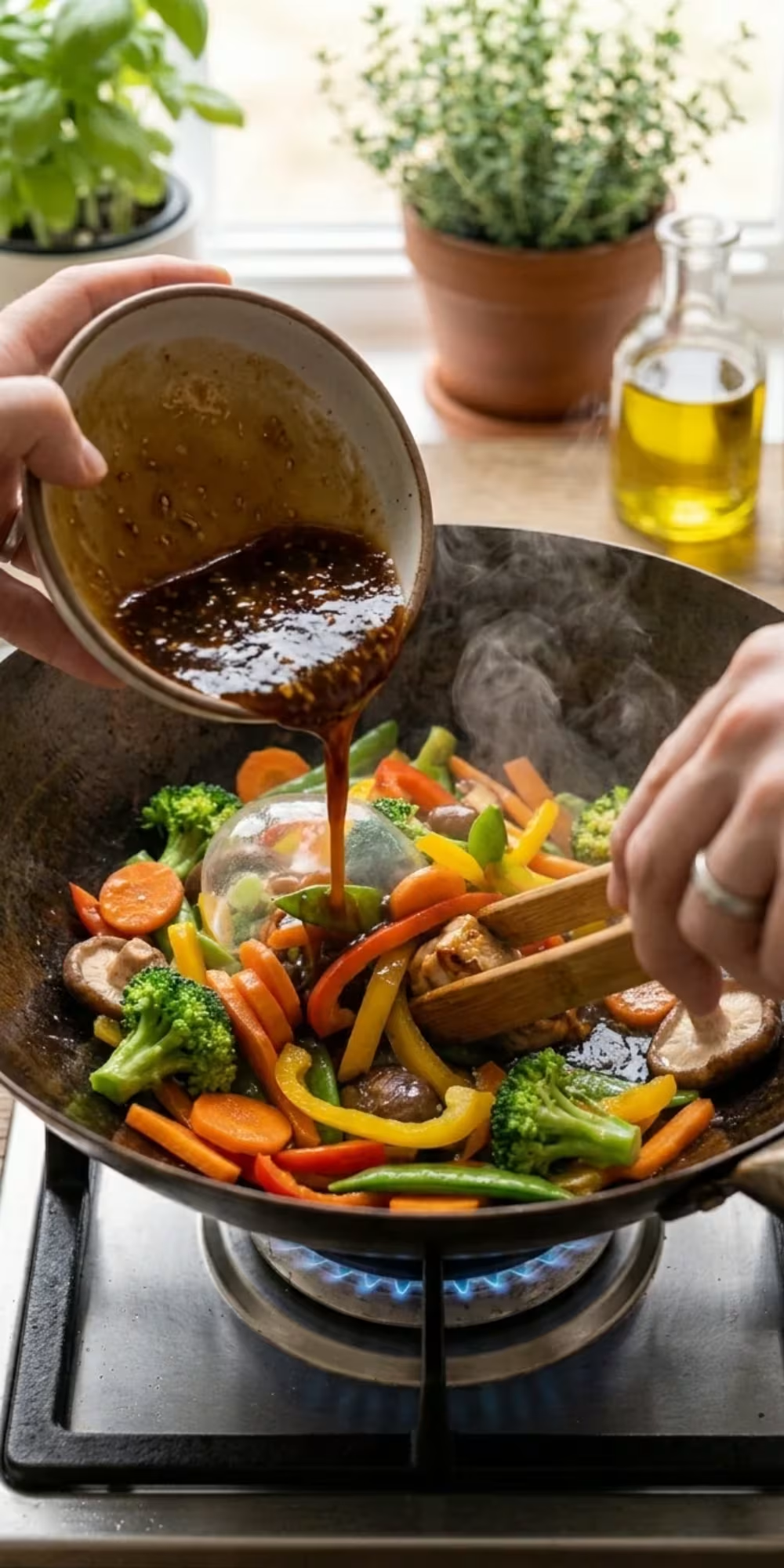
Return the cooked chicken to the skillet with the vegetables. Give the prepared sauce another quick stir, then pour it into the pan. Toss everything together so the chicken and vegetables are evenly coated.
Let the sauce bubble gently while stirring until it thickens and clings to the ingredients. If it becomes too thick, add a small splash of water or unsalted broth. If the sauce is too thin, allow it a little more time to simmer, stirring frequently.
Garnish, Serve, and Portion for Meal Prep
Finish with fresh toppings and choose your favorite side.
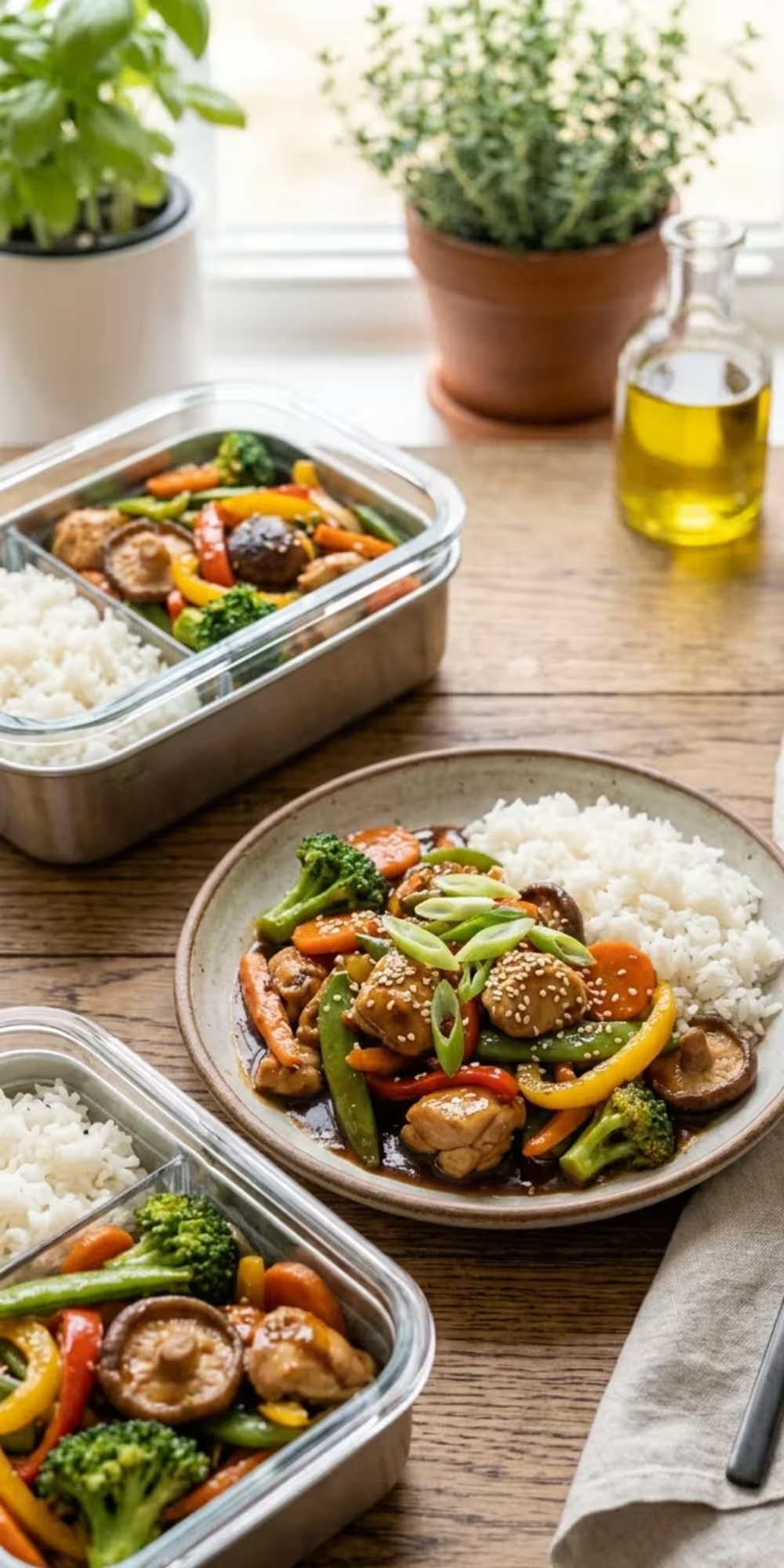
Turn off the heat once the sauce has thickened and all the ingredients are hot. Garnish with sliced green onions or sesame seeds if desired. Serve your chicken and vegetable stir-fry on its own or alongside steamed rice, quinoa, noodles, or cauliflower rice.
For meal prep, divide the finished stir-fry into clean, shallow containers and refrigerate promptly. Keep rice or other sides in separate portions if you want more control over serving sizes or prefer to maintain their texture.
Related: Healthy Chicken Stir-fry Recipe
How Much Protein Is in Chicken Stir-Fry?
A serving of high-protein chicken stir-fry with vegetables can provide around 40–45 grams of protein when prepared with lean chicken breast and divided into four servings using the ingredient quantities described below. The exact amount depends on the chicken portion, vegetables, sauce, and serving size.
Chicken stir-fry is a practical option for a high-protein dinner, healthy chicken meal prep, or a quick weeknight meal. Pair it with rice, quinoa, or cauliflower rice depending on your appetite and nutritional goals.
Protein per Serving
40–45 g of proteinEstimated protein for one of four servings made with 1.5 pounds (680 g) of raw, boneless, skinless chicken breast, mixed vegetables, and a modest amount of stir-fry sauce. This is an estimate, not a laboratory-tested nutrition result.
Values are rounded estimates. The protein range includes a small contribution from vegetables and sauce. Use your actual ingredients and final serving yield to calculate the nutrition for this recipe.
Chicken Stir-Fry Protein by Serving Size
The amount of protein in chicken and vegetable stir-fry mainly depends on how much chicken you eat. The following table shows approximate protein from the raw chicken breast alone, before adding vegetables or sauce.
| Raw chicken breast | Approximate protein |
|---|---|
| 100 g (3.5 oz) | 21–23 g |
| 150 g (5.3 oz) | 32–34 g |
| 170 g (6 oz) | 36–39 g |
| 200 g (7 oz) | 42–46 g |
Reference: USDA FoodData Central. Figures are approximate and vary by cut, trimming, and product. Weighing chicken raw or cooked can produce different results because cooking changes its water content.
What Contributes to the Protein in Chicken Stir-Fry?
Chicken breast provides most of the protein in this healthy chicken stir-fry recipe, while vegetables add smaller amounts along with fiber, vitamins, minerals, and color.
| Ingredient | Nutrition contribution |
|---|---|
| Chicken breast | Main source of protein |
| Broccoli | Additional protein, fiber, and micronutrients |
| Bell peppers | Small amount of protein and vitamin C |
| Snap peas or carrots | Additional nutrients and vegetable variety |
| Garlic-ginger sauce | Primarily flavor; protein contribution varies by ingredients |
To keep your stir-fry protein-rich, use a generous portion of chicken and enough vegetables to make the meal satisfying. Rice and noodles add carbohydrates, while their protein contribution varies by type and serving size.
Is Chicken Stir-Fry Good for a High-Protein Diet?
Yes, chicken and vegetable stir-fry can be a convenient way to include protein in a balanced meal. Protein supports the growth and maintenance of body tissues, and chicken breast is a protein-rich ingredient.
For meal prep
Divide the cooked stir-fry into evenly sized portions and measure each serving if you track protein or calories.
For a lower-carb meal
Serve with cauliflower rice or extra vegetables instead of regular rice. The total calories and carbohydrates will depend on your exact portions and sauce.
For a more filling dinner
Combine chicken, colorful vegetables, and a suitable portion of rice, quinoa, or another grain for a balanced plate.
For sodium-conscious cooking
Choose low-sodium soy sauce, measure it carefully, and adjust the sauce to suit your dietary needs.
How to Calculate Protein in Your Homemade Chicken Stir-Fry
- Weigh the chicken and record whether the weight is raw or cooked.
- Use a reliable nutrition database or the product label to find the protein per 100 g.
- Calculate protein from the vegetables, sauce, and other ingredients separately.
- Add the protein from all ingredients and divide by the actual number of servings.
Related: Best Chicken Fajita Recipe
Healthy Ways to Customize This Chicken Stir-Fry
As I mentioned at the beginning, this high-protein chicken stir-fry with vegetables is a must-try and can be easily customized because it’s so versatile. This recipe’s juicy chicken, colorful vegetables, and delicious sauce stay the same, but the rest of the ingredients can be changed as needed to make it a low-carb dinner, a low-sodium meal, or a satisfying chicken stir-fry meal-prep bowl.
1. Make It a Low-Carb Chicken Stir-Fry
If you want a low-carb chicken stir-fry, focus on lean chicken and non-starchy vegetables. Broccoli, zucchini, mushrooms, bell peppers, and bok choy all add texture, color, and fiber without relying on rice or noodles.
- Serve over cauliflower rice instead of regular rice.
- Use zucchini noodles if you enjoy a noodle-style meal.
- Choose an unsweetened sauce or reduce added sweeteners.
2. Increase the Protein
To make this high-protein chicken and vegetable stir-fry even more filling, start with a measured portion of lean chicken breast and build the rest of your meal around it.
- Use chicken breast as your main protein source.
- Add edamame for additional plant protein if desired.
- Serve with a suitable portion of quinoa.
- Measure portions so the nutrition estimate stays useful.
3. Prepare a Lower-Sodium Stir-Fry
A homemade low-sodium chicken stir-fry sauce gives you more control over salt than many ready-made sauces. You can preserve plenty of flavor with aromatics and a balanced combination of ingredients.
- Choose reduced-sodium soy sauce.
- Add fresh garlic, ginger, and a little rice vinegar.
- Use unsalted broth or water to adjust the sauce.
- Skip extra salt until you taste the finished dish.
4. Add More Colorful Vegetables
The vegetables are what make a chicken stir-fry colorful, varied, and easy to personalize. Use a mixture of textures rather than sticking to one vegetable every time.
- Broccoli and snap peas for a crisp bite.
- Red and yellow bell peppers for sweetness.
- Mushrooms for a savory, earthy flavor.
- Carrots and cabbage for crunch.
- Spinach or bok choy for leafy greens.
5. Make It Spicy or Extra Flavorful
If you prefer a bolder chicken stir-fry, adjust the seasoning instead of changing the entire recipe. Small additions can transform the sauce while keeping the chicken and vegetables at the center of the meal.
- Add red pepper flakes or finely chopped fresh chili.
- Use extra fresh ginger for a warming flavor.
- Add a squeeze of lime for a bright finish.
- Finish with sesame seeds or sliced scallions.
6. Choose Your Favorite Base
You can serve the same healthy chicken stir-fry in several ways, depending on your appetite and preferences. Your choice of base changes the overall calories, carbohydrates, and serving size of the finished meal.
- White rice for a familiar weeknight dinner.
- Brown rice for a whole-grain option.
- Quinoa for variety and additional protein.
- Noodles for a comforting stir-fry bowl.
- Cauliflower rice for a lower-carbohydrate alternative.
7. Turn It Into Chicken Stir-Fry Meal Prep
This chicken and vegetable stir-fry can be portioned into convenient lunches or dinners for the next few days. Preparing the ingredients ahead can make busy weekdays easier.
- Cut the vegetables and chicken before cooking.
- Mix the sauce and refrigerate it separately until needed.
- Divide cooked portions into clean, shallow containers.
- Store rice separately if you prefer to control portions.
8. Make a Gluten-Free Chicken Stir-Fry
You can adapt this recipe for a gluten-free diet by checking the ingredients in the sauce and choosing suitable alternatives. Soy sauce often contains wheat, so do not assume every variety is gluten-free.
- Use certified gluten-free tamari when suitable.
- Check broth, seasonings, and other packaged ingredients.
- Use cornstarch or another suitable gluten-free thickener.
- Prevent cross-contact with gluten-containing ingredients.
What I Love to Serve with Chicken Stir-Fry
The best thing about chicken stir-fry with vegetables is that it can be easily turned into a complete and satisfying meal. The tender chicken, colorful vegetables, and savory garlic-ginger sauce pair beautifully with rice, noodles, fresh salad, and other simple side dishes. Whether you’re craving a high-protein chicken dinner, a balanced meal for any night of the week, or an easy-to-make chicken stir-fry meal-prep bowl, there are so many delicious ways to serve it.
6 Delicious Side Dishes for Chicken Stir-Fry
1. Steamed Jasmine or Brown Rice
I love steamed jasmine rice, basmati rice, brown rice, noodles, quinoa, cauliflower rice, and crunchy cucumber salad as great options. Choose rice or noodles for a more nutritious meal, or add extra veggies and cauliflower rice for a lower carb option.
2. Stir-Fry Noodles
Serve your chicken stir-fry with egg noodles, rice noodles, or whole-wheat noodles for a hearty dinner. Toss the noodles with a little of the stir-fry sauce and sliced spring onions for extra flavor without making a separate complicated dish.
3. Fresh Cucumber Salad
A refreshing cucumber salad balances the warm, savory flavors of chicken stir-fry. Toss sliced cucumbers with rice vinegar, lime juice, and fresh herbs. Keep the dressing light so the salad complements the stir-fry instead of overpowering it.
4. Quinoa
Quinoa makes a useful alternative to rice when you want a slightly nutty, fluffy base for your chicken and vegetables. It also contributes plant-based protein and fiber, making it a practical option for a balanced meal-prep bowl.
5. Cauliflower Rice
If you prefer a lower-carbohydrate chicken stir-fry dinner, serve it over cauliflower rice. Its mild flavor works well with garlic, ginger, soy sauce, and colorful stir-fried vegetables. Sauté it briefly to avoid a watery texture.
6. Extra Steamed or Roasted Vegetables
If you want more vegetables on your plate, add bok choy, green beans, asparagus, or extra broccoli. For a simple side dish that goes well with the chicken stir-fry sauce, season them with garlic, lemon, or a little sesame oil.
How to Build a Balanced Chicken Stir-Fry Meal
I think the best side dish depends on your appetite, preferences, and nutritional goals. For an easy everyday dinner, combine a serving of chicken stir-fry with a grain or other vegetable. If you’re planning lunches for the week, keep the chicken, vegetables, and side dish in separate portions, as this will keep their texture intact.
- For a filling family dinner: Pair chicken stir-fry with jasmine rice or noodles.
- For a high-protein meal: Keep a generous portion of chicken and serve it with quinoa or another preferred grain. The total protein depends on portion sizes.
- For a lower-carb meal: Choose cauliflower rice and add extra non-starchy vegetables.
- For meal prep: Divide the stir-fry and your chosen side into individual containers and refrigerate promptly.
- For extra freshness: Add cucumber salad or a squeeze of fresh lime just before serving.
Make It a Complete Meal-Prep Bowl
For an easy chicken stir-fry meal prep, divide the cooked chicken and vegetables among meal-prep containers, then add your preferred rice, quinoa, or cauliflower rice. Keep any fresh salad or crunchy toppings separate until serving. Refrigerate leftovers promptly, and reheat thoroughly before eating.
Chicken Stir-Fry Meal Prep, Storage, and Reheating Tips From Me
If there’s one thing I love about making chicken stir-fries with vegetables, it’s how easily they can be transformed into another delicious meal the next day. This high-protein chicken stir-fry is a convenient choice for busy workdays, as you can make it in batches, store it safely in the fridge, and reheat it when you need a quick lunch or dinner. With a little planning, you can keep the chicken tender, the vegetables flavorful, and your meals convenient without having to cook from scratch every day.
Why This Chicken and Vegetable Stir-Fry Works for Meal Prep
Protein-Rich Portions
Chicken breast provides lean protein, while vegetables add fiber and variety. Divide the finished recipe evenly to keep portions consistent throughout the week.
Less Weekday Cooking
Preparing a few servings at once can reduce the time you spend making lunch or dinner on busy days. Prepare only the quantity you can safely store and enjoy.
Flexible Vegetables
Broccoli, bell peppers, snap peas, mushrooms, and carrots all work well. Choose firm vegetables if you want them to retain more texture after reheating.
Easy Portion Control
Use individual food-safe containers to divide the chicken stir-fry into ready-to-eat meals. Add your preferred grain or side separately.
How to Meal Prep Chicken Stir-Fry for the Week
For a simple chicken stir-fry meal prep routine, start by gathering all your ingredients and preparing the vegetables before cooking. This keeps the process organized and helps you avoid overcooking the chicken while chopping ingredients.
- Prepare the ingredients. Cut the chicken into evenly sized pieces, wash and dry the vegetables, and mix the garlic-ginger stir-fry sauce in a separate bowl.
- Cook the chicken thoroughly. Cook the chicken in a hot pan without overcrowding it. The thickest pieces must reach an internal temperature of 165°F (74°C), checked with a food thermometer.
- Stir-fry the vegetables. Cook the vegetables until they reach your preferred tender-crisp texture. Avoid leaving them in the pan longer than necessary.
- Combine and divide. Toss the cooked chicken and vegetables with the sauce, then divide the finished dish into clean, shallow containers to help it cool quickly.
- Refrigerate promptly. Refrigerate the portions within two hours of cooking, or within one hour when the ambient temperature is above 90°F (32°C). Do not leave cooked chicken stir-fry on the counter until it reaches room temperature.
How to Store Chicken Stir-Fry in the Refrigerator
Proper storage is essential when preparing healthy chicken stir-fry ahead of time. Transfer leftovers into clean, shallow, airtight containers and refrigerate them promptly. Keep your refrigerator at 40°F (4°C) or below, and label each container with the date it was prepared.
| Storage method | Recommended guidance | Best practice |
|---|---|---|
| Refrigerator | 3–4 days | Store at 40°F (4°C) or below in covered, shallow containers. |
| Freezer | About 2–6 months for best quality | Use freezer-safe containers, remove excess air, and label the date. |
| Room temperature | No more than 2 hours | Reduce this to 1 hour above 90°F (32°C). |
| After reheating | Reheat only the portion you need | Heat leftovers to 165°F (74°C) throughout. |
Food-safety note: The refrigerator and freezer recommendations above follow general USDA guidance for cooked leftovers. Freezer storage times are primarily quality recommendations; food kept continuously frozen at 0°F (-18°C) remains safe indefinitely, although its texture and flavor may deteriorate. See the USDA leftovers and food safety guide.
Can You Freeze Chicken Stir-Fry?
Yes, cooked chicken stir-fry can be frozen. For the best results, divide it into meal-sized portions and place them in suitable freezer-safe containers or bags. Remove excess air, seal securely, and label each portion with the date.
Thaw frozen chicken stir-fry in the refrigerator, or use your microwave’s defrost setting if you plan to reheat it immediately. You can also reheat suitable frozen leftovers directly, provided they reach 165°F (74°C) throughout. Avoid thawing cooked chicken on the kitchen counter.
Keep in mind that vegetables with a high water content can soften after freezing and thawing. Broccoli, bell peppers, and carrots may hold their texture better than more delicate vegetables, but the final result will depend on how they were cooked and stored.
How to Reheat Chicken Stir-Fry Without Drying It Out
The best way to reheat chicken stir-fry depends on how much you are preparing. For a single serving, a skillet or microwave works well. For either method, add a small splash of water or unsalted broth if the sauce has thickened too much in the refrigerator.
1. Reheat in a Skillet
Add the leftovers to a skillet over medium heat with a small splash of water or broth. Stir occasionally, cover briefly if needed, and heat until the chicken and vegetables are steaming hot throughout and reach 165°F (74°C).
2. Reheat in the Microwave
Transfer one serving to a microwave-safe dish and cover loosely with a microwave-safe lid. Heat in short intervals, stirring midway so the food heats evenly. Check several spots with a food thermometer and reach 165°F (74°C).
3. Keep the Sauce Moist
If the chicken stir-fry looks dry, add a little water or unsalted broth before reheating. Avoid adding too much liquid at once, or the vegetables may become watery.
4. Reheat Only What You Need
Portion out individual meals so you do not repeatedly warm and cool the entire batch. Return unused portions to the refrigerator promptly.
Important Chicken Leftover Safety Tips
- Keep raw chicken separate from cooked food and ready-to-eat vegetables.
- Wash your hands and clean utensils and preparation surfaces after handling raw chicken.
- Use a food thermometer to verify that chicken reaches 165°F (74°C).
- Refrigerate cooked leftovers within two hours, or one hour above 90°F (32°C).
- Use refrigerated cooked chicken leftovers within 3–4 days.
- Reheat leftovers to 165°F (74°C) and avoid relying on smell or appearance to determine safety.
My Favorite Ways to Serve Chicken Stir-Fry for Meal Prep
One reason I recommend chicken and vegetable stir-fry for weekly meal prep is that it pairs well with several sides. You can change the base to suit your appetite and nutritional goals without needing a completely different main dish.
- Classic chicken stir-fry bowl: Serve with steamed white or brown rice.
- High-protein lunch: Pair with an appropriate portion of quinoa or another protein-containing grain.
- Lower-carbohydrate meal: Serve with cauliflower rice or extra stir-fried vegetables.
- Quick office lunch: Pack one portion in a microwave-safe container for convenient reheating.
- Family dinner: Serve the stir-fry with rice or noodles and let everyone choose their portion.
Common Chicken Stir-Fry Mistakes to Avoid
Making high-protein chicken stir-fries with vegetables at home is easy, but a few minor cooking mistakes can result in dry chicken, mushy vegetables, or a watery sauce. Follow these effective chicken stir-fries cooking tips to get juicy chicken, crunchy vegetables, and a delicious garlic-ginger sauce every time.
Overcrowding the Pan
The mistake:
Adding too much chicken and too many vegetables at once lowers the pan temperature. Ingredients release moisture and begin to steam instead of developing a flavorful sear.
How to fix it:
Cook the chicken in batches when necessary, leaving enough room for the pieces to brown. Transfer each batch to a clean plate while you prepare the next ingredients.
Cutting Chicken into Uneven Pieces
The mistake:
Large chunks take longer to cook than thin strips. By the time the thickest pieces are done, the smaller pieces may already be dry.
How to fix it:
Slice boneless, skinless chicken breast into uniform, bite-sized pieces. Keep the pieces similar in thickness so they cook at a more consistent rate.
Cooking Chicken for Too Long
The mistake:
Chicken breast can become dry and tough when it stays in the pan longer than necessary, particularly after it has already reached a safe temperature.
How to fix it:
Sear the chicken until nearly cooked, then return it to the pan when the vegetables and sauce are ready. Check the thickest pieces with a food thermometer.
Adding All the Vegetables at Once
The mistake:
Broccoli, carrots, bell peppers, mushrooms, and snap peas soften at different rates. Cooking them together for the same amount of time can leave some vegetables undercooked and others mushy.
How to fix it:
Start with firmer vegetables such as carrots and broccoli. Add bell peppers and snap peas later, adjusting the timing for your preferred texture and the size of each piece.
Using a Cold Pan
The mistake:
Adding chicken before the pan and cooking oil are properly heated can prevent good browning and encourage moisture to accumulate around the meat.
How to fix it:
Preheat your skillet or wok, add the oil, and then carefully add the chicken. Use medium-high to high heat as appropriate for your cookware, oil, and stove.
Adding the Stir-Fry Sauce Too Early
The mistake:
Adding soy sauce, broth, or a thickened garlic-ginger sauce too early can cause the ingredients to simmer in excess liquid instead of stir-frying.
How to fix it:
Mix your sauce before cooking. Add it after the chicken and vegetables have been seared, then toss briefly until the sauce thickens and coats the ingredients.
Making the Sauce Too Salty or Too Sweet
The mistake:
Regular soy sauce, bottled stir-fry sauces, and extra sweeteners can quickly make a healthy chicken stir-fry higher in sodium or sugar than intended.
How to fix it:
Begin with measured amounts of low-sodium soy sauce, garlic, ginger, and broth or water. Taste the finished sauce and adjust gradually rather than adding extra seasoning all at once.
Using Too Much Cornstarch
The mistake:
Too much thickener can turn the stir-fry sauce gluey, cloudy, or excessively thick instead of giving it a light, glossy coating.
How to fix it:
Measure the cornstarch and dissolve it completely in cool liquid first. Add the mixture gradually and allow the sauce to simmer briefly until it reaches the desired consistency.
Skipping Ingredient Preparation
The mistake:
Stir-frying moves quickly. Chopping vegetables, measuring seasonings, and mixing the sauce while the chicken cooks can lead to burnt garlic or overcooked ingredients.
How to fix it:
Prepare the chicken, vegetables, aromatics, and sauce before turning on the stove. Arrange everything within easy reach so you can cook without unnecessary interruptions.
Storing and Reheating Stir-Fry Incorrectly
The mistake:
Leaving cooked chicken at room temperature for too long or reheating it repeatedly can compromise food safety and quality.
How to fix it:
Refrigerate leftovers within two hours, or within one hour when the ambient temperature exceeds 90°F (32°C). Store in shallow, covered containers and use refrigerated leftovers within three to four days.
Frequently Asked Questions About High-Protein Chicken Stir-Fry
Is chicken stir-fry with vegetables high in protein?
Yes. Chicken breast is a lean source of protein, making chicken and vegetable stir-fry a useful option for a protein-rich lunch or dinner. The exact protein content depends on the amount of chicken, the number of servings, and the other ingredients. For accurate nutrition, calculate the protein using the quantities in your recipe rather than relying on a generic estimate.
How much protein is in one serving of chicken and vegetable stir-fry?
Protein per serving varies with the chicken portion and recipe yield. Chicken breast generally provides around 30–31 grams of protein per 100 grams when cooked, although values vary by preparation and the data source. Vegetables contribute additional protein in smaller amounts. Check the nutrition information in the recipe card for the estimated protein in one serving of this particular chicken stir-fry.
Is chicken stir-fry healthy for a high-protein diet?
Chicken stir-fry can fit into a balanced, high-protein eating pattern. Chicken supplies protein, while vegetables contribute fiber, vitamins, and minerals. To keep the meal balanced, adjust the oil, sauce, and serving size to suit your needs. You can serve it with brown rice, quinoa, whole-grain noodles, or cauliflower rice, depending on your preferences and nutritional goals.
How many calories are in chicken stir-fry with vegetables?
Calories depend on the quantity of chicken, cooking oil, sauce, vegetables, and any rice or noodles served alongside the stir-fry. A portion made with lean chicken, plenty of vegetables, and a measured amount of oil may contain fewer calories than a larger restaurant-style portion with a generous amount of sauce. Use the recipe card’s nutrition estimate for this recipe and remember that serving sizes and ingredient brands can change the result.
How do you keep chicken tender in a stir-fry?
Cut the chicken into evenly sized pieces, pat the surface dry, and cook in a properly heated pan. Work in batches if necessary so the chicken sears instead of steaming. Avoid overcooking, and use a food thermometer to check that the thickest pieces reach an internal temperature of 165°F (74°C). These steps help produce juicy chicken without sacrificing food safety.
What vegetables work best in chicken stir-fry?
Broccoli, bell peppers, snap peas, carrots, mushrooms, cabbage, and zucchini all work well in chicken vegetable stir-fry. Choose a colorful combination with a variety of textures. Add firmer vegetables first and quicker-cooking vegetables later so everything finishes at approximately the same time. Fresh or frozen vegetables can both work, although frozen vegetables may release more moisture.
Can I use frozen vegetables for chicken stir-fry?
Absolutely. Frozen stir-fry vegetables are convenient for quick weeknight dinners and meal prep. Add them directly according to the package instructions, using a hot pan and avoiding overcrowding. If excess water collects, allow it to evaporate before adding the sauce. This helps the vegetables retain a better texture and prevents the finished dish from becoming watery.
Can I make chicken stir-fry without soy sauce?
Yes. Depending on your dietary needs, you can use coconut aminos or another suitable sauce alternative. The flavor and sweetness will differ, so adjust the remaining ingredients to taste. If avoiding gluten, choose certified gluten-free ingredients and check every sauce label. If limiting sodium, compare product labels rather than assuming every substitute contains less sodium.
Is chicken stir-fry good for meal prep?
Yes. Chicken and vegetable stir-fry can be prepared ahead for convenient lunches or dinners. Divide the cooked food into shallow, airtight containers and refrigerate promptly. For best texture, store rice separately if you prefer. Refrigerate leftovers at 40°F (4°C) or below and generally use within 3–4 days. Reheat leftovers to 165°F (74°C).
How do you reheat chicken stir-fry without drying it out?
Reheat chicken stir-fry in a skillet over medium heat with a small splash of water or unsalted broth. Stir gently and cover briefly if needed to warm the food evenly. You can also use a microwave-safe container, covering it loosely and stirring partway through. Always reheat leftovers to 165°F (74°C), checking the temperature before serving.
Can I use chicken thighs instead of chicken breast?
Yes. Boneless, skinless chicken thighs are a flavorful alternative and often remain juicy because they contain more fat than chicken breast. Cut them into evenly sized pieces and cook until they reach a safe internal temperature of 165°F (74°C). Keep in mind that using thighs can change the calories, fat, and protein values shown in the original recipe.
How can I make chicken stir-fry lower in carbohydrates?
For a lower-carbohydrate chicken stir-fry, serve the chicken and vegetables with cauliflower rice or extra non-starchy vegetables instead of regular rice or noodles. You can also reduce or omit added sugar in the sauce. Check the ingredients in bottled sauces and thickeners, as they may contribute carbohydrates. Your final nutrition values will depend on the ingredients and portion sizes you use.
Can I freeze homemade chicken and vegetable stir-fry?
Yes. Cool and freeze the stir-fry promptly in suitable, airtight, freezer-safe containers. For best quality, use it within about 2–3 months, although continuously frozen food remains safe longer when stored properly. Thaw in the refrigerator and reheat thoroughly to 165°F (74°C). Keep in mind that some vegetables may become softer after freezing and reheating.
What should I serve with high-protein chicken stir-fry?
Serve chicken stir-fry with steamed rice, brown rice, quinoa, whole-grain noodles, or cauliflower rice. A simple cucumber salad or another vegetable side also pairs well with the savory garlic-ginger sauce. Choose the accompaniment according to your appetite, preferred flavors, and nutritional goals.